
August 2026
Part One
The Relic Room
An interview with Susan Aberth
There is a particular feeling that art can produce when it seems to make the world more alive, mysterious, and charged with possibility. For some artists, rituals can become a way into that feeling, a means of approaching something that feels almost divine. Contemporary art, however, often places this experience within increasingly professionalized systems of production, circulation, and interpretation. The question becomes how art can remain embodied, social, and spiritually charged without reducing ritual, theatricality, or occult practice to aesthetic styles.
Part of keeping that spark alive is making intellectual material and media art with others, grounded in a shared love of art. Drawing from Susan Aberth’s reflections on the Masonic history of the Marciano Art Foundation and her idea of the “numinous residue,” the aura that may remain within objects after they are removed from their original ritual context, this two-part series considers art as both an object and a condition: a way of organizing attention, symbols, relationships, and belief.
– Saul Appelbaum
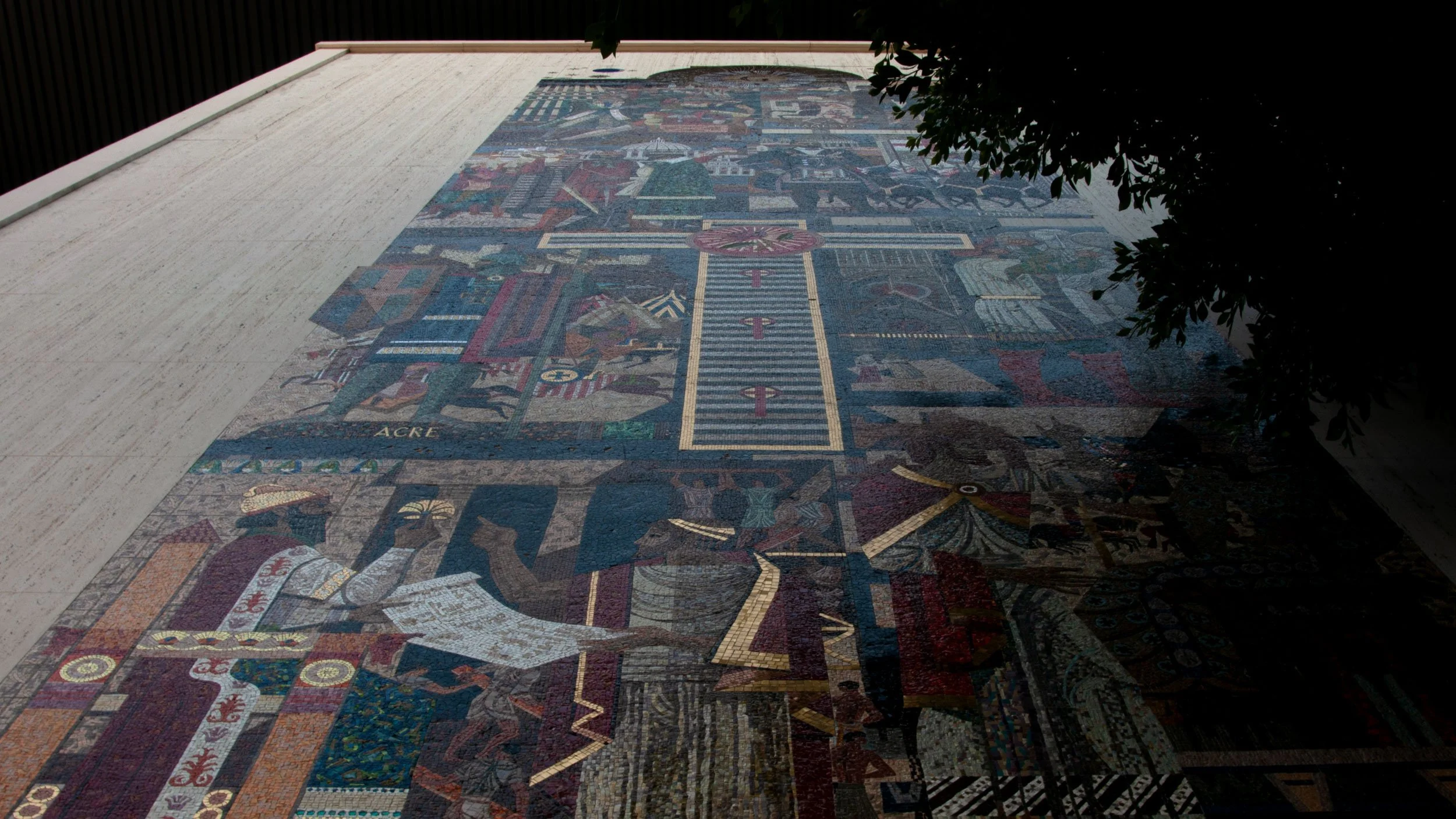
Exterior view, Marciano Art Foundation, 2025. Photo: Saul Appelbaum.
Saul Appelbaum: The Marciano Art Foundation’s engagement with the building’s Masonic past, through your exhibition The Relic Room, suggests that contemporary art institutions can operate almost like ritual spaces themselves. Do you think locating an art organization in a ritual space changes the reception of contemporary art?
Susan Aberth: The fact that hundreds of Theosophical and Masonic Lodges have been allowed to close, be demolished, or reused in inappropriate manners is a disgrace. Their architectural significance, the beauty of their décor and ritual implements, and the important role they played in American history mark them as integral to understanding who we are. Why did we allow this to happen? Freemasonry gets it from all sides – some view it as anti-Christian, a relic of the past, and a sexist institution. I disagree with all of this, I firmly believe in gender specific spaces and men needed, and I think still need, safe places to be vulnerable, learn spiritual lessons, and have fun acting out fantasies. There was a time when the majority of men in America belonged to some sort of Fraternal Lodge where they had strong relationships outside of the domestic sphere. Now men play video games in isolation and we wonder why they feel so disenfranchised.
I am grateful that some of these lodges, like the Marciano Art Foundation, are hosting artists and poets who increasingly, in our secular age, are becoming spiritual bellweathers. And while much performance art is powerful with its ritualistic repetitions and spectacle it does NOT replace real esotericism. All forms of esoteric membership, if taken seriously, require study and understanding of principles, intense initiatory experiences that go beyond what words can describe, and create an irreplaceable sense of fellowship and loyalty. This is not to be found in the art world which is increasingly commercial. While artists can have communities based on ideals, institutions have to be more concerned with other things like grants, memberships, donations and the public opinion. The privacy of the Lodge cannot be compared to the public outreach of the museum and gallery.
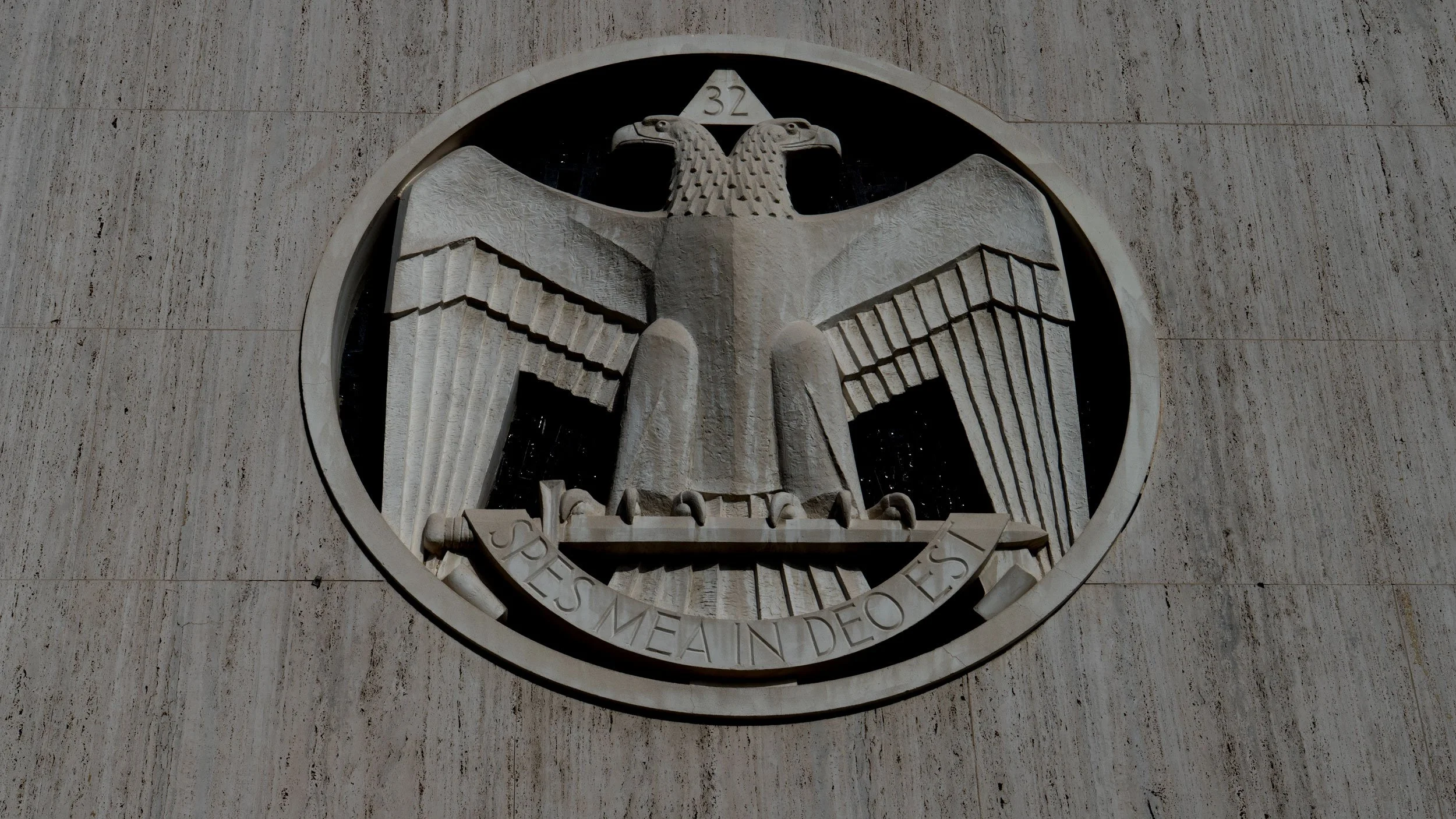
Exterior view, Marciano Art Foundation, 2025. Photo: Saul Appelbaum.
SA: Do you think surrealism and occult traditions complicate the distinction between representation and abstraction? And what happens to a representational and abstract work of art when it becomes embedded within a ritual or initiatory structure rather than simply viewed as an image?
S.Aberth: Globally, many different cultures outside the European traditions have always used abstraction directly alongside ritual, as an integral part of magic and spiritual activation. Symbolic codes constitute the core of religious spectacle, from Christianity through Freemasonry and ceremonial objects and theatrical costumes are part of this multi-sensory experience. When such accoutrements are removed from their ritual context and, let’s say exhibited in a gallery or museum, do they lose their numinous power? Yes and no. Viewed alone, and presumably by the uninitiated and/or unknowledgable individual they take on different meanings, mostly based on the viewers own background socially (education level, class, gender, etc.). However, and this is where it gets interesting, it is possible that the object communicates certain things subconsiously to the viewer, again depending on their level of psychic development. I call this numinous residue, the aura an object puts off that draws one to it, not always understanding why and developing over time. This is why cultures destroy or “kill” art, because it is very powerful and uncontrollable and cirumvents traditional avenues of domination and indoctrination. Occult traditions of course have always understood this and this is why secrecy is absolutely mandatory.
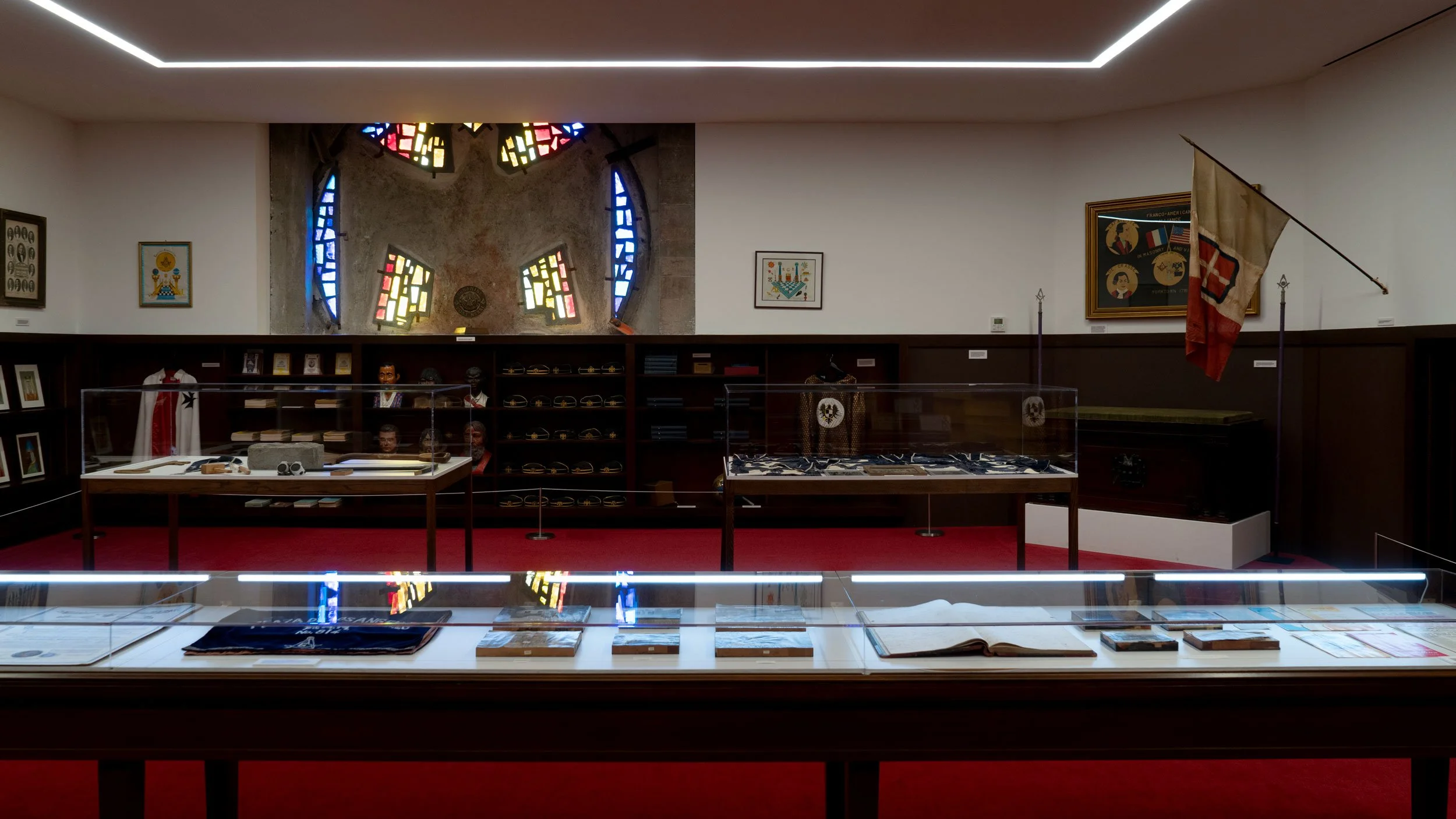
Installation view, The Relic Room, Marciano Art Foundation, 2026. Photo: Saul Appelbaum.
S.Aberth: The modern art world represents a whole other trajectory, especially the development of abstraction, which we now have begun to realize has esoteric underpinnings. With current new scholarship into mediums who created abstract artwork or “messages” such as Georgiana Houghton in the mid-19th century, and then later on medium/artists like Hilma af Klint – abstraction was THE visual language of the spirit world, not always understood as literally translatable, but rather as a different kind of multi-dimensional language communicating to the spirit in ways that are not immediately detectable to the logical workings of the brain as we understand it. Again, many spiritual leaders have emphasized this, for example, P.D. Ouspensky in his remarkable book Tertium Organum. Wassily Kandinsky, Piet Mondrian, both well-ready in Theosophy, also understood the spiritual power of abstraction, especially as a hopeful influence for a world torn apart by war. The Surrealists will approach all art-making as emerging from the unconsious, and only later during World War II, will fully understand and activate all of the magical implications of their artistic techniques and goals.
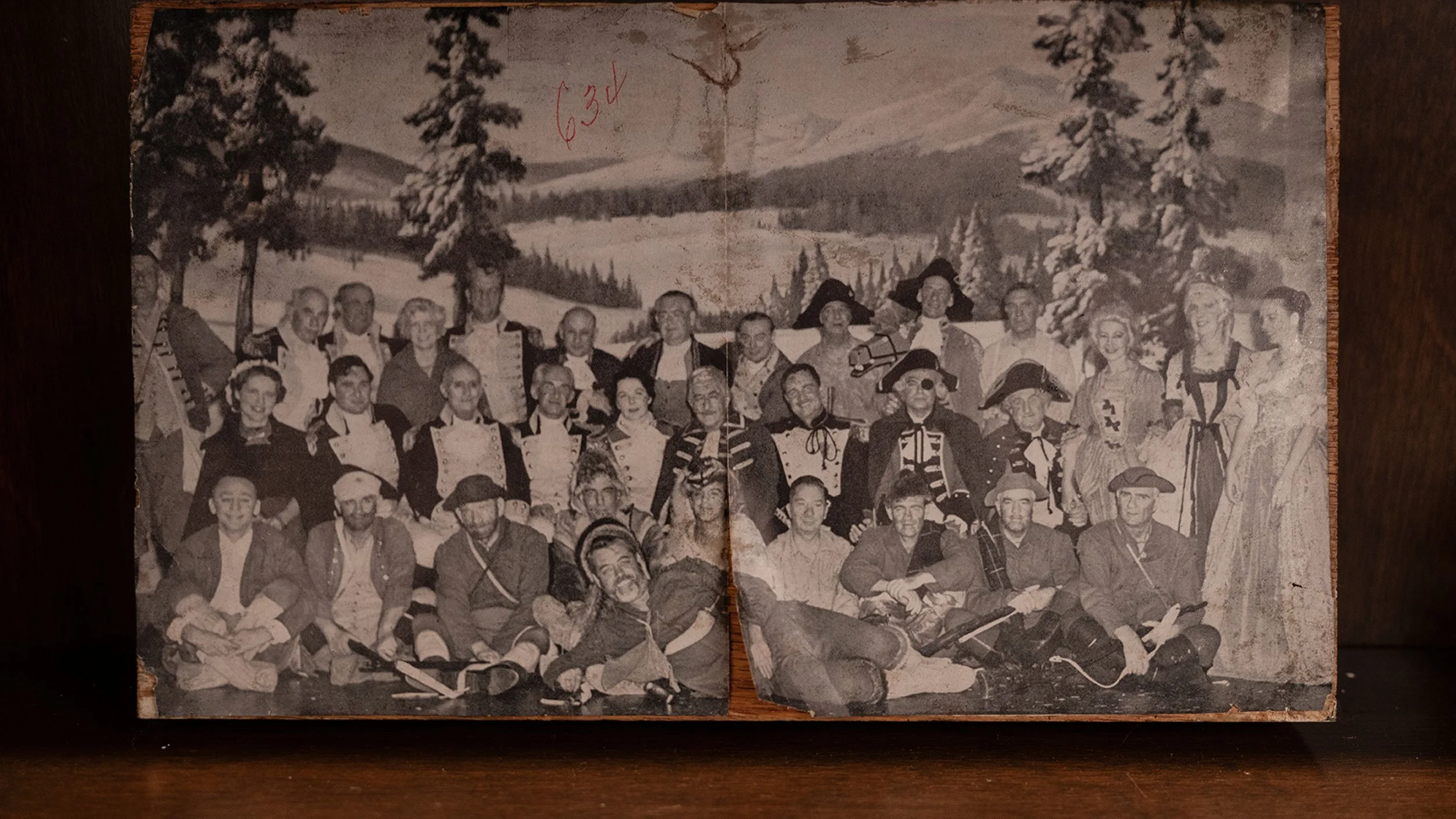
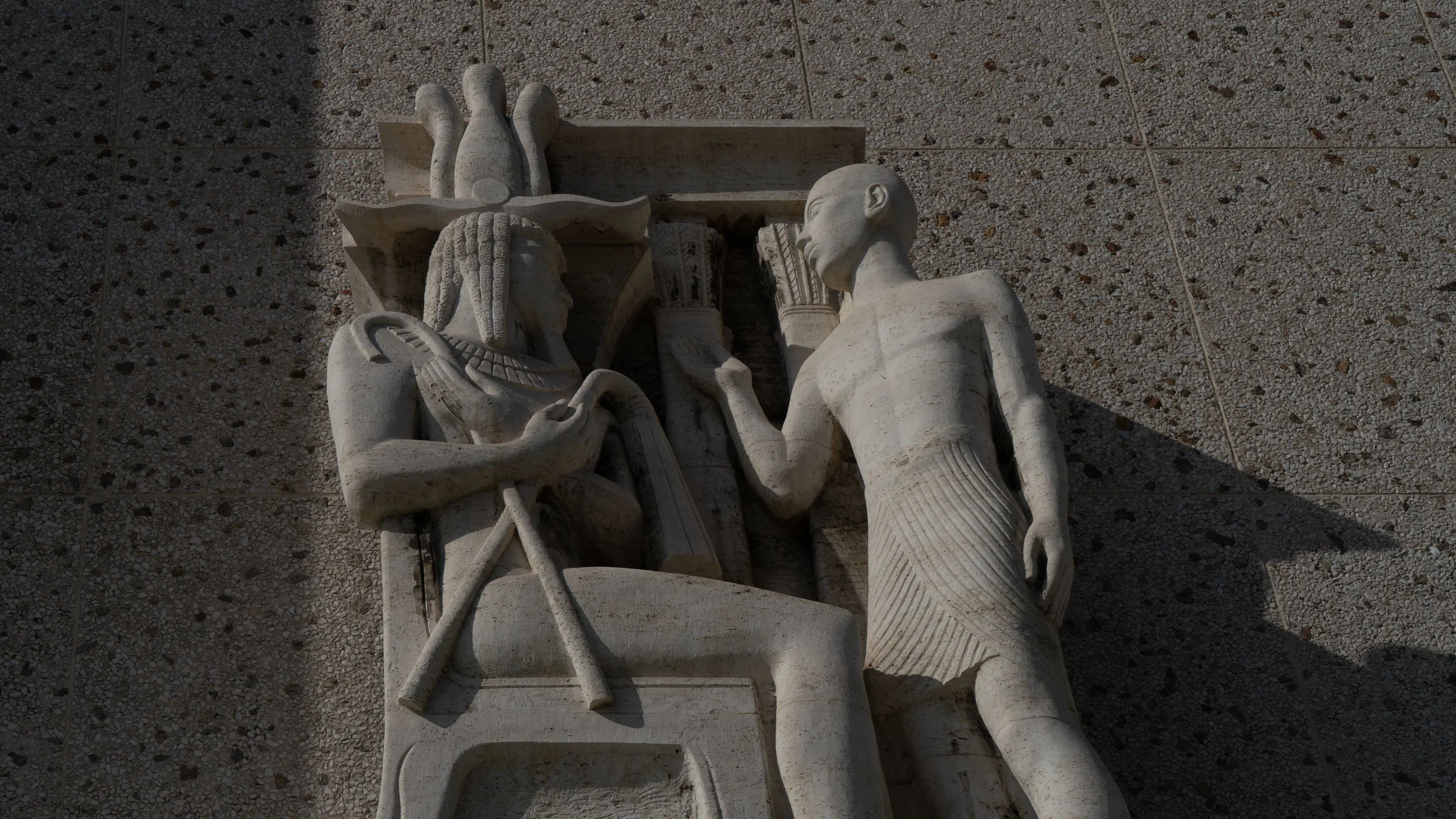
Detail, The Relic Room, Marciano Art Foundation, 2026. Photo: Saul Appelbaum.
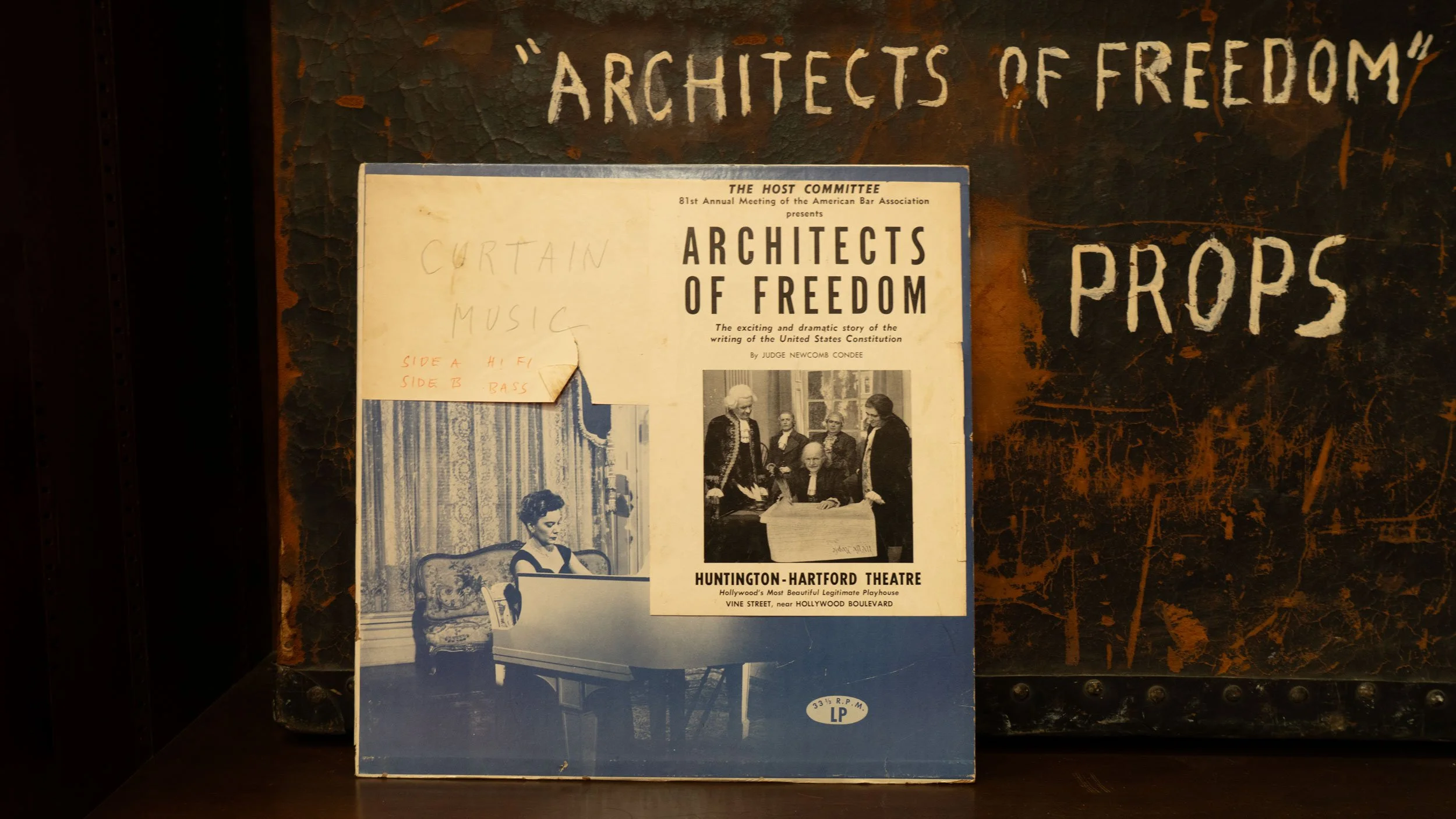
Detail, The Relic Room, Marciano Art Foundation, 2026. Photo: Saul Appelbaum.
SA: Another thread I’d love to bring into this is the distinctly regional quality of spirituality in California, particularly Southern California’s longstanding relationship to occultism, performance, and esoteric spectacle.
S.Aberth: Theosophy in particular cited “the West” as the future of a New Age, due to the quality of the light and vibrations and many artists of a spiritual bent migrated westward – for example Agnes Pelton to Palm Springs and the Transcendentalists to New Mexico. Southern California had many Theosophical enclaves such as Point Loma in San Diego, and Lodges in Altadena, Los Feliz and of course all the different lodges in Ojai. Northern California has the Rosicrucian Headquarters, a Swedenborg Church, Spiritualist Church, and of course San Francisco was known to be a Masonic city. But the point you make of performativity is an interesting one with Southern California and the film industry adding to creating an environment condusive to ritual. This strain of thought needs to be validated by a much deeper study because actually, as a person who spent long stretches of time in both of these areas, I believe that they are more similar than different. Although you mention Buddhist spiritual cultures in Northern California, remember Anger shot his Invocation of My Demon Brother in Haight-Ashbury, San Francisco. When doing research for the Trophy Room at the Marciano Art Foundation in the magnificent Scottish Rite Temple on Wilshire Blvd I learned that many members of this Lodge were employed in the film industry, especially as set builders. That connection, between those literally painting imaginary film sets by day, and Masonic ritual backdrops by night, seems somehow important.
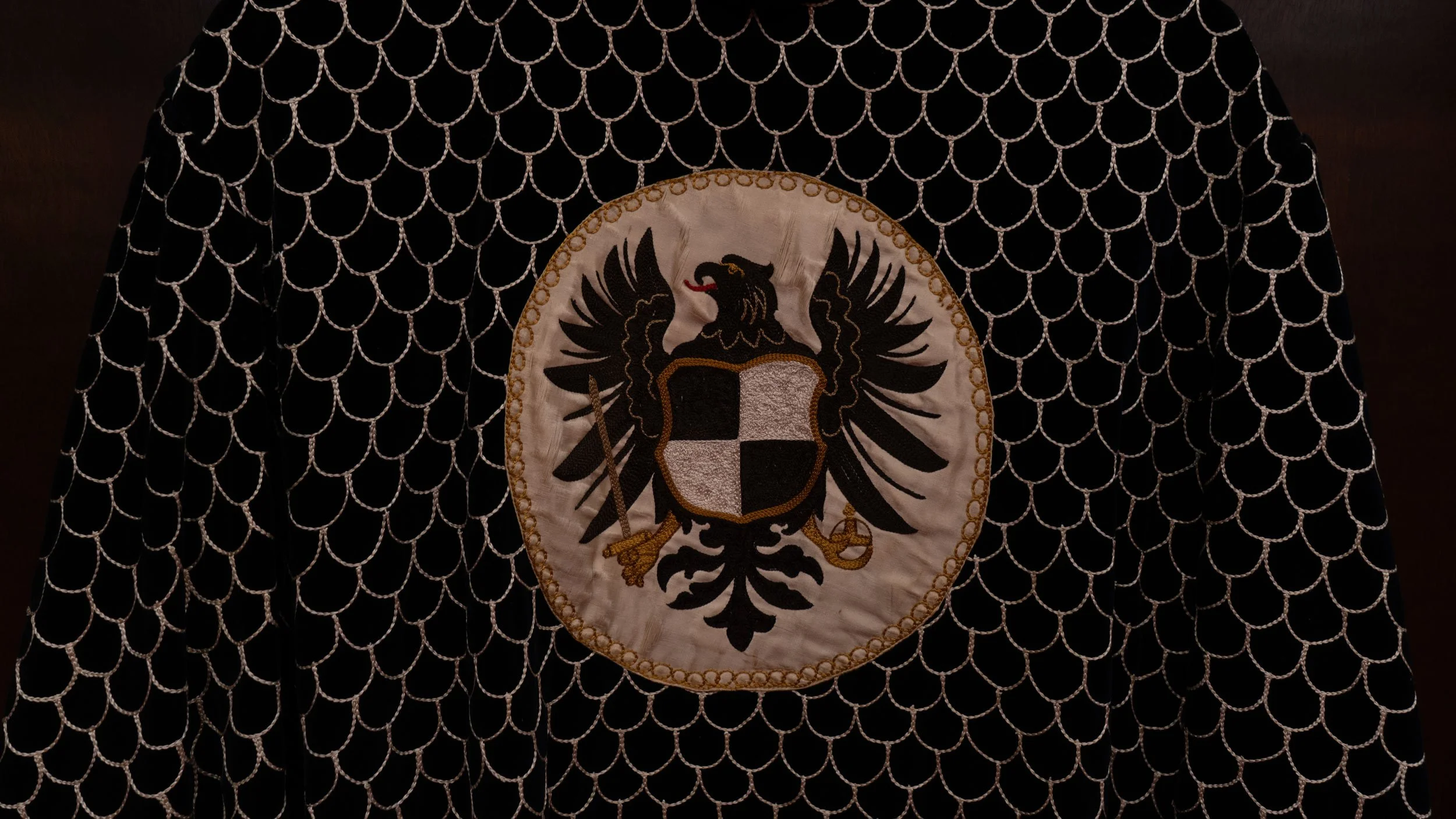
Detail, The Relic Room, Marciano Art Foundation, 2026. Photo: Saul Appelbaum.

Detail, The Relic Room, Marciano Art Foundation, 2026. Photo: Saul Appelbaum.
SA: My mind has been on theatricality, performance, film, symbol, sign, and visual art. Kenneth Anger’s films are an excellent example of extending Surrealism into a more embodied, performative, and occult practice. How important is theatricality, not simply as a visual device but as a social one, to the transmission of symbolic systems?
S.Aberth: Anger spent many important formative years in Paris in the forties and early fifties and was profoundly influenced by Surrealist filmmakers, most noteably the queer Jean Cocteau whom he knew personally. There is his 1951-52 film, Les Chants de Maldoror, a direct inspiration from the 1868 classic text of the same title by Isador Ducasse (Le Comte de Lautrément) that so inspired early Surrealist literature and art. Anger’s poetic Eaux d’Artifice (1952), was dedicated to the Russian set designer and painter Pavel Tchelichew, who was also partially influenced by Surrealism. Surrealism and occultism work well together and after the return to Paris after World War II many artists connected to the movement began to explore symbolic forms of performance/art. What comes to mind immediately is Antonin Artaud’s 1947 radical radio play To Have Done with the Judgement of God, and then the 1959 performances by Jean Benoît, The Execution of the Testatment of the Marquis de Sade, and Meret Oppenheim, Spring Feast for the Surrealist intrnational E.R.O.S. exhibition in Paris. These were ritualistic and involved costumes and a kind of Surrealist sex magic that Anger would amplify, but in accordance with specific Thelema texts and practices. I don’t see Surrealism as highly structured, with the exception of the behavior of its founder Breton who was notorious for “excommunicating” those whom displeased him for various reasons, thus lending him the nickname, “Pope of Surrealism”. Another thing Anger might have picked up from Paris and perhaps from Surrealism, was working within a community of like-minded creative individuals. The Inauguration of the Pleasure Dome, with its amazing and varied cast of characters, is reminiscent of this – a much more difficult prospect in spread out Los Angeles than in café society Paris.
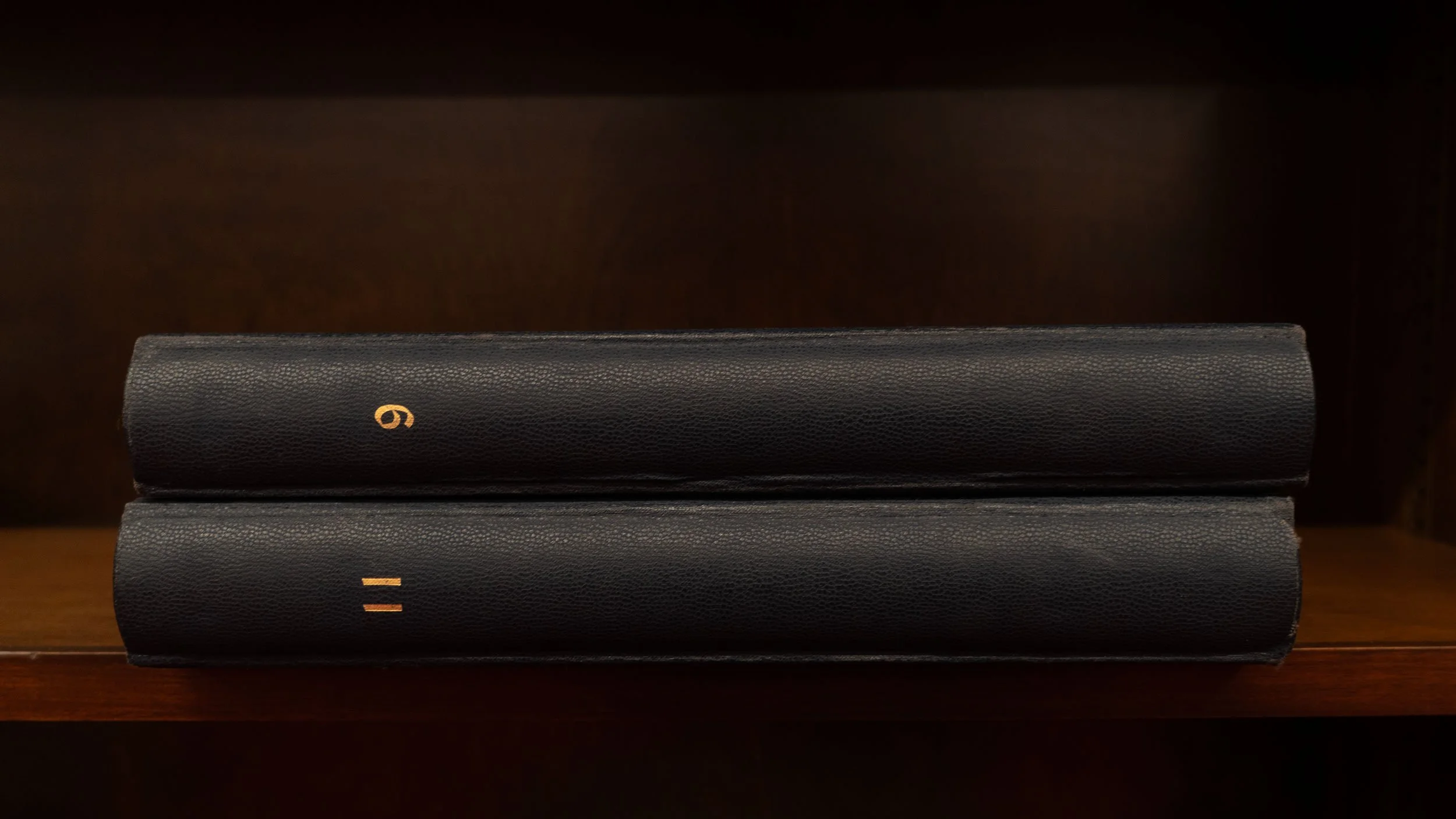
Detail, The Relic Room, Marciano Art Foundation, 2026. Photo: Saul Appelbaum.

Detail, The Relic Room, Marciano Art Foundation, 2026. Photo: Saul Appelbaum.
SA: I keep returning to the idea that painting may now function more like a conduit than a self-contained composition: a meeting point between distribution systems, rituals, performances, and collective feeling. That seems connected to surrealism’s interest in shared authorship, transmission, and the movement between visible and invisible structures.
Do you think painting still retains a unique symbolic authority today? Or has its role shifted into something more infrastructural, less an image to contemplate than a medium for organizing relationships, projections, and forms of collective imagination?
S.Aberth: I do think painting continues to retain symbolic power, not authority, the two are different. Artists have always been magicians, making something out of something else in ways sometimes even they don’t fully understand. That will never change, that communication with higher powers to channel visions from the ether. Painting can take other forms than traditional canvases hung in homes and museums. A good example is the recent explosion in artist created Tarot cards. There are many on-line and in-person communities of Tarot creators, readers and scholars and I believe that is a type of collective imagination. More and more museums and galleries are giving esoteric art forms academic attention, and commercial as well. The Surrealists were anti-institutional, and more or less all communists. That said, they did introduce ritualistic performances into their post-World War II gallery shows in Paris. Although I am all for the current interest in the occult and alternative spiritualities, I will criticize the superficiality of some adherants. One needs to devote serious time, over long periods of time, to learning and participating in these practices. Going to Yoga twice a week and “meditating” on making the world a better place seems terribly surface and non-productive to the true expansion of consciousness and I think this trend needs to be called out. Likewise, many artists are taking on the occult mantle as a market trend and it reads as narcissistic and silly and does a disservice to it being taken seriously. There is a reason serious esoteric groups require secrecy, and their collectivity extends to members only.
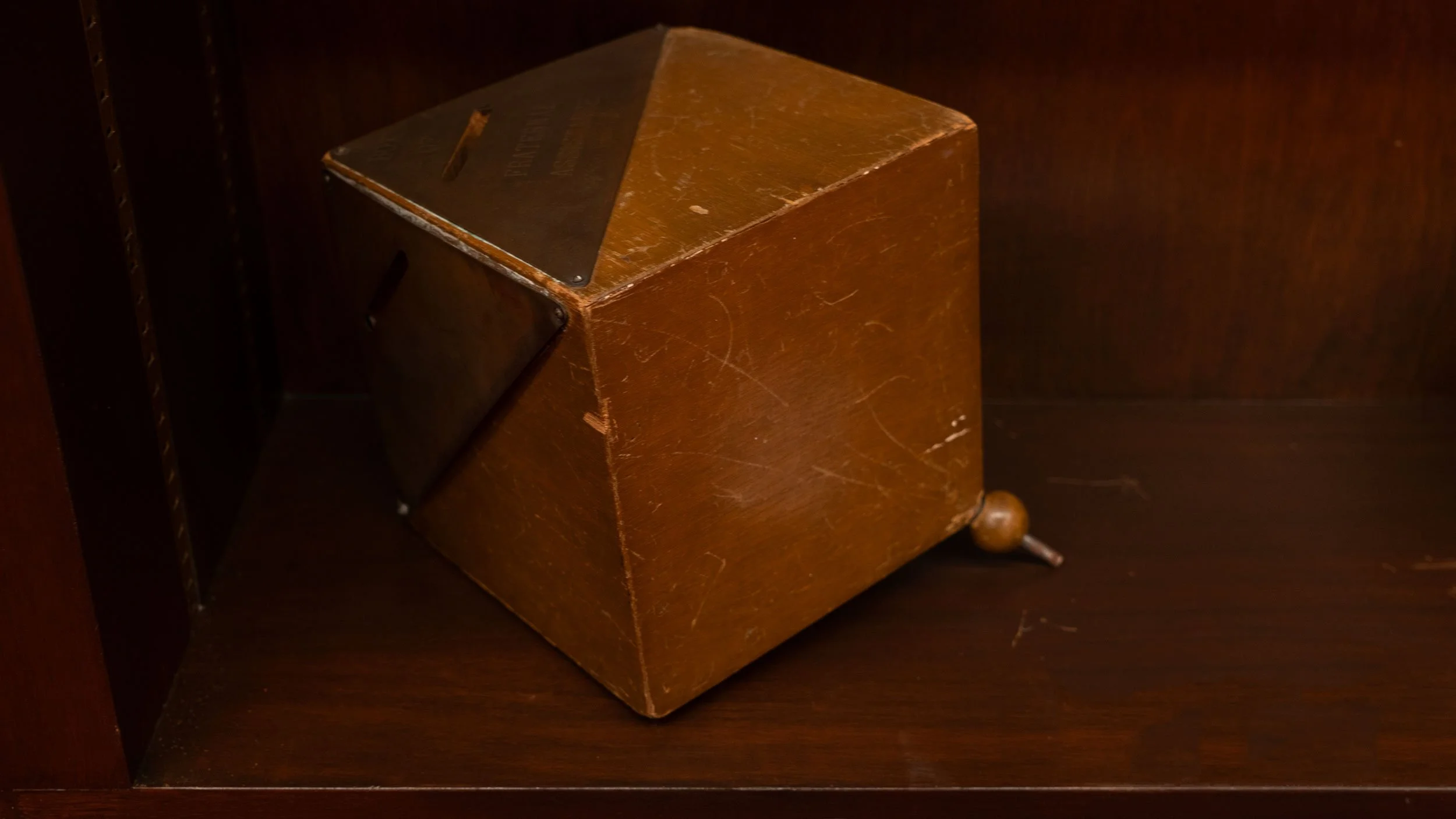
Detail, The Relic Room, Marciano Art Foundation, 2026. Photo: Saul Appelbaum.
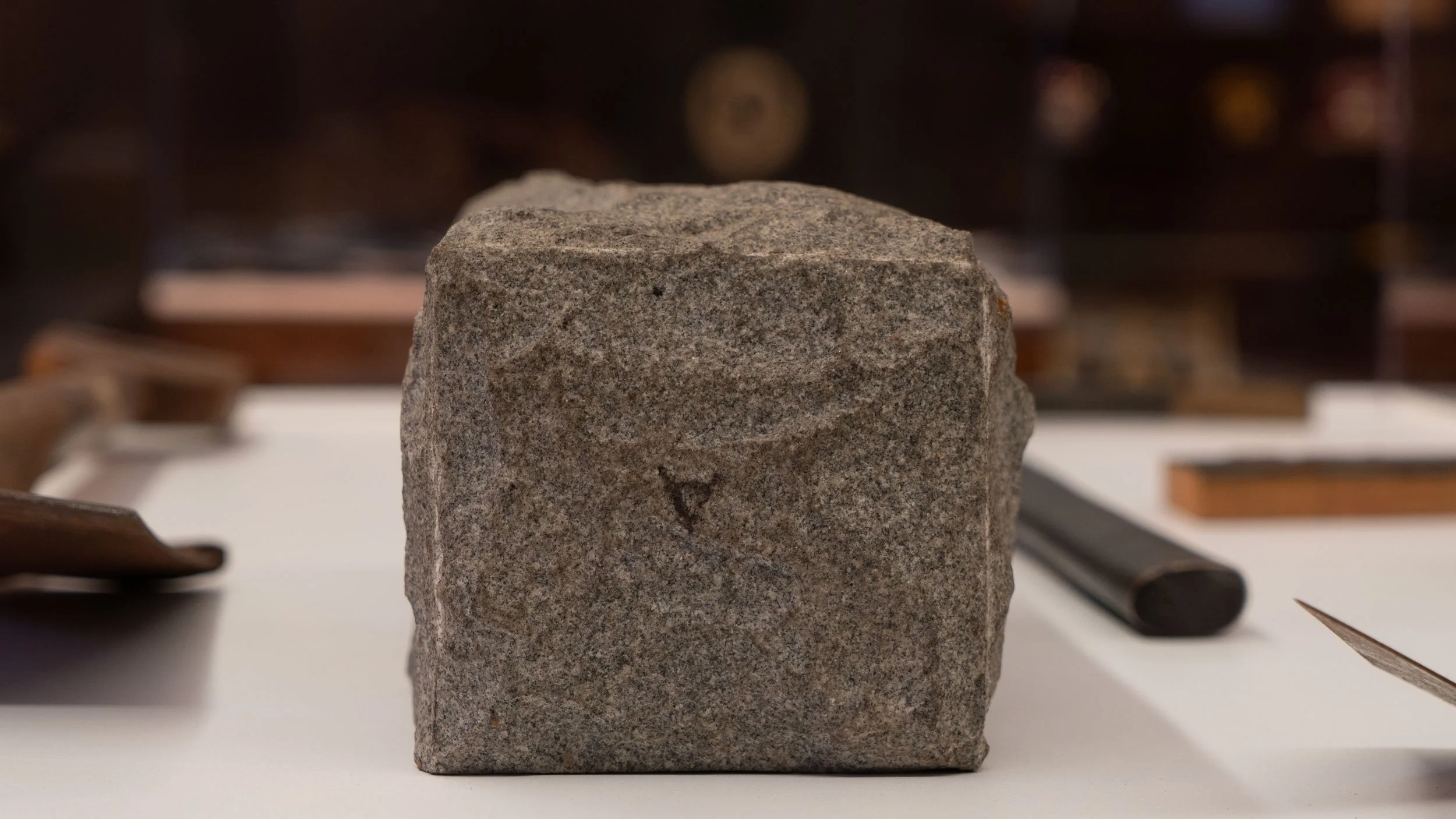
Detail, The Relic Room, Marciano Art Foundation, 2026. Photo: Saul Appelbaum.
SA: Speaking of market trends, Do you think occult or surrealist frameworks help us understand contemporary art markets or the Internet differently, not simply as economic systems, but as systems of belief, initiation, and symbolic exchange?
S.Aberth: Absolutely not! That is a very utopian concept. Perhaps the internet or at least aspects of it might be involved in symbolic exchange and systems of belief. Nothing, however, takes the place of real initiation.
