October 2026
Ross Bleckner
A conversation about light and dark, studio as laboratory, and why being an artist is a little childlike. (That's a good thing.)
Interview by Dan Golden
I first discovered Ross Bleckner's work in the early '90s, when I was studying painting in San Francisco. The way he painted felt like the way I thought: ideas emerging and receding into a sea of blackness. Sad and true.
A couple of years later, Ross had his mid-career retrospective at the Guggenheim, and I saw the exhibition monograph in the SFMOMA store. I still remember exactly what it cost: $60. For a struggling young artist, that was right at the line where a purchase needed justifying. (I justified it.) I'd never sell my copy, but they're going for $200 and up now.
You could say I've been waiting thirty years to talk with Ross.
We spoke over video recently, amid exhibitions at Guild Hall and Madoo Conservancy, and a new show, Octopus, at Petzel in New York. He began by noticing the stacks of books behind me—and, not wanting to overcommit, suggested they could be totally uninteresting. The books opened up our conversation, which turned out to be as engaging as I'd hoped and surprisingly funny.
Dan Golden: Hi Ross!
Ross Bleckner: Hello, Dan. I’m impressed by all the books I see behind you. I mean, I don’t know what they are—they could be totally uninteresting.
DG: Ha! Thank you. I have stacks of books running all the way down the hall—mostly monographs. In fact, I have several of yours… one of my favorites is your 1995 monograph, which coincided with your Guggenheim retrospective. I’m a fan.
RB: Thank you.
DG: You got me started… I also have a really nice David Salle monograph that I believe was published around the same time as yours.
RB: David Salle and I are really good friends—I just did a talk with him at Guild Hall last week.
DG: I read that you and David were friends. How was the talk?
RB: It was really good. David and I have known each other forever. We’re very close, so it felt comfortable to be on stage and talk with him.
DG: I went to a gallery talk David gave in New York a while back. His approach was very intellectual and academic. I am a bit envious of people who can think and communicate in that mode. It can go over my head sometimes, and I think, “Can’t we have a simple conversation here?”
RB: It’s funny because my mind fluctuates between those modes. It depends on the day and how well I sleep.
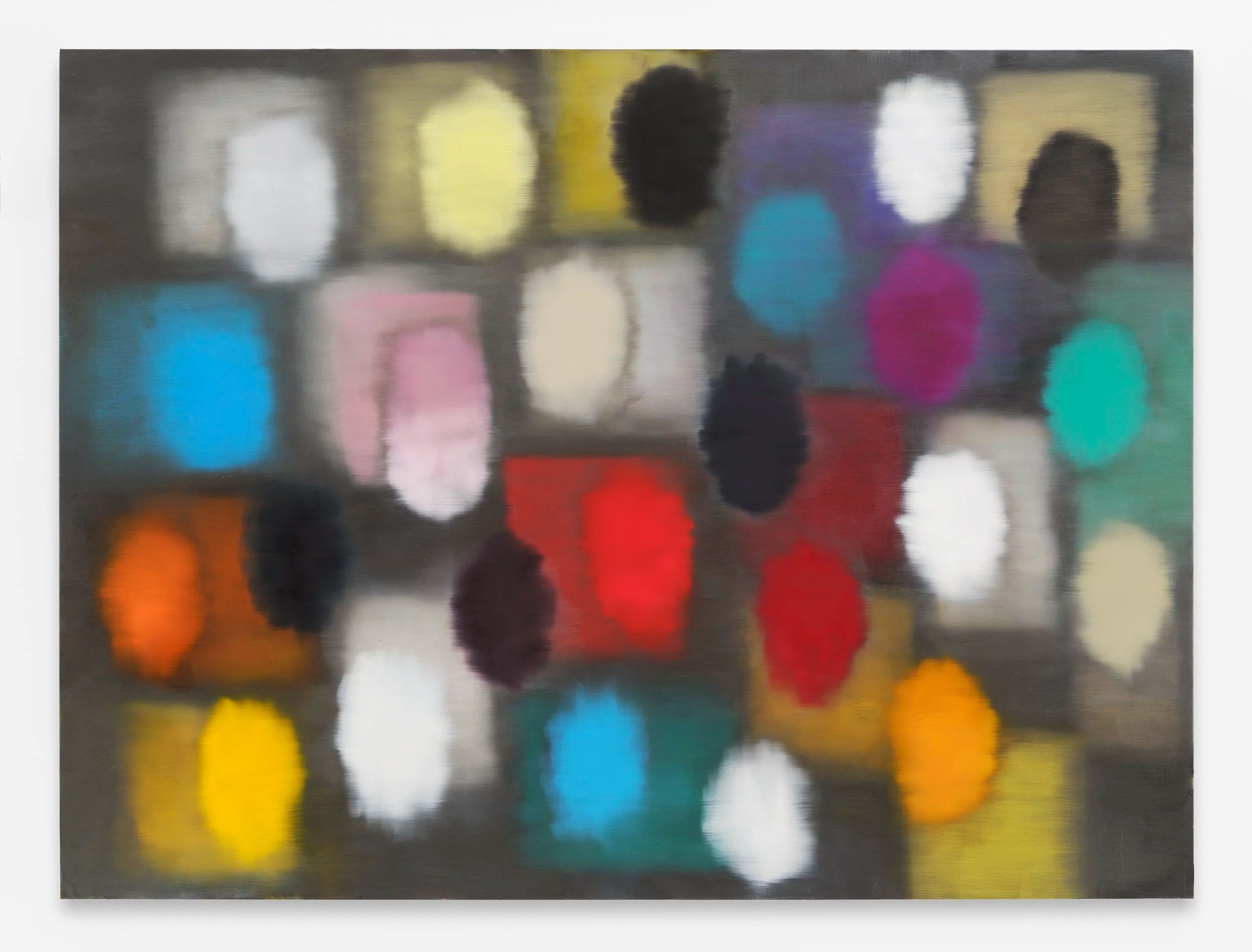
Ross Bleckner, Everyone, Someone, 2023, oil on linen, 72 × 96 inches (182.9 × 243.8 cm). Courtesy of the artist, Guild Hall, and Petzel, New York.
DG: That’s interesting that you mention how your mind works—one thing I wanted to ask you about was your Buddhist practice and mindfulness. I read that you sweep and organize your studio before you start work to prepare your mind.
RB: Absolutely. I need things to be in order. To paint well, my studio has to be organized. That process is a kind of meditation—getting everything assembled so I know where everything is. It’s about comprehending your environment, which is essentially what Buddhism teaches.
It helps us understand how things are interconnected. In that interconnectedness, we all experience the same phases of life. Nobody escapes suffering, and ultimately, no one escapes death. In Buddhism, that’s not seen as morbid; it’s actually life-affirming.
I’ve been reading obituaries for many years as a reminder of how little time we have. The key to getting things done is staying aware of time, not thinking you can always do it tomorrow. There are only so many tomorrows.
DG: I hear that.
RB: That’s been a theme in my work my whole life—ever since I started in graduate school, for some reason. It’s not a strange reason; it aligns with a modernist notion, which was the first art that captured my emotions.
Barnett Newman spoke about the oneness of life and aimed to represent that idea in his paintings. Rothko addressed the tragedy of life—its brevity and sadness. For him, it was about light and dark, where the simple representation of light and dark meant more than just those two elements. That’s what made their work so powerful for me.
DG: Absolutely.
RB: I read Arnold Hauser’s The Social History of Art and Leo Steinberg—those books had a significant impact on me. I always feel that, although I’m not a pure modernist, a part of me reflects modernism’s idealism. However, I believe that idealism is long gone.
DG: What do you mean?
RB: I mean, we’ve gone through postmodernism. I always kid around and say, “How could we have gone through modernism if we haven’t even become modern yet?” You know, the way the world works is really a version of the late Middle Ages—the cruelty, the war, the poverty, the unequal distribution of resources. The administration that we’re living under now encapsulates it.
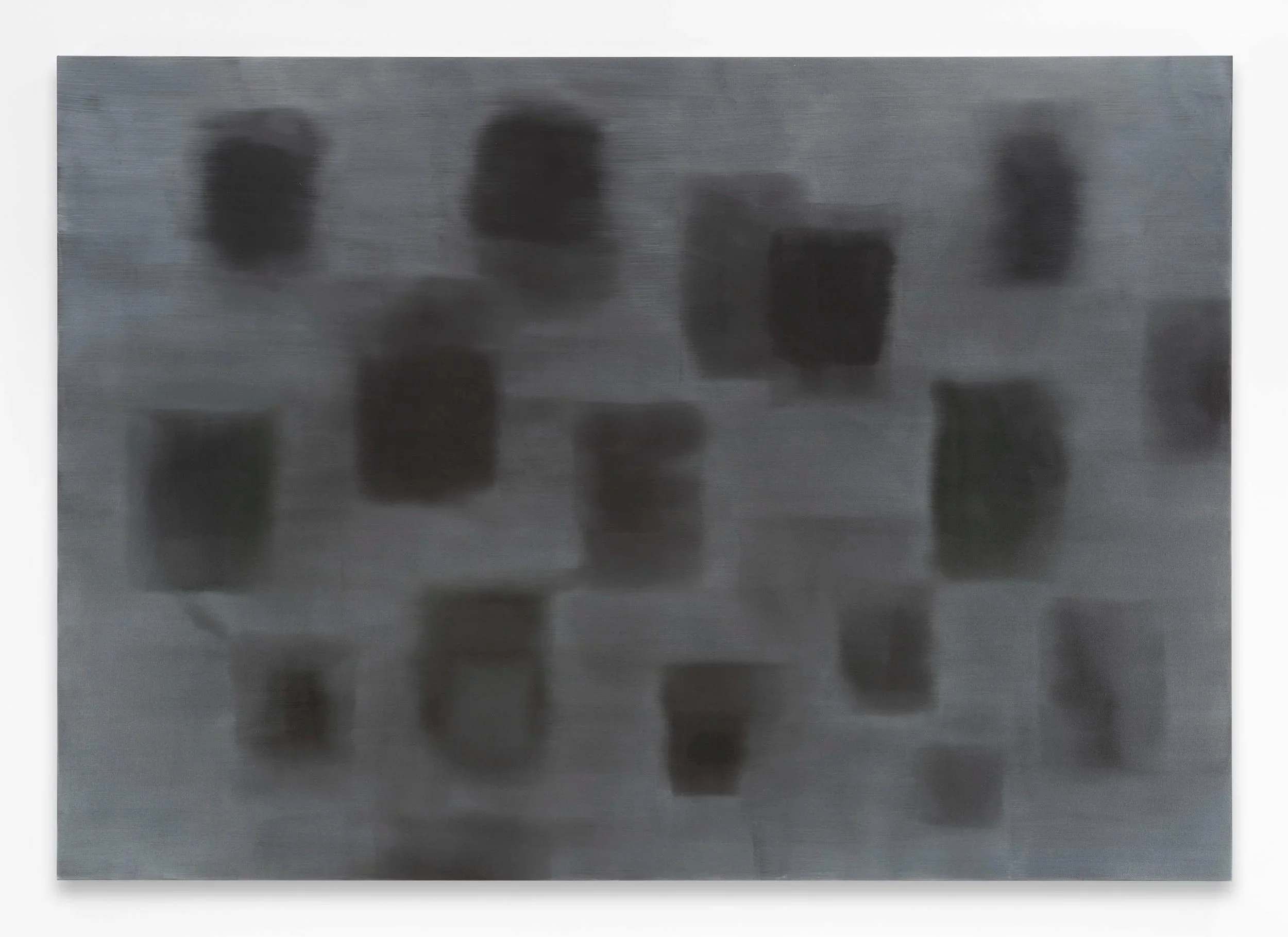
Ross Bleckner, To Speak Lower, 2023, oil on canvas, 84 × 120 inches (213.4 × 304.8 cm). Courtesy of the artist, Guild Hall, and Petzel, New York.
RB: Cruelty has become the normative exchange, the behavioral exchange, based on some childish, toxic view of masculinity. My work isn’t political, per se, but when you live in the world, read the paper, and keep up with things, you are part of it. That’s the interconnectedness I was talking about, and where I draw my imagery or lack of imagery from.
DG: Can you expand on that idea a bit?
RB: My work goes between image and non-image. I like it to hover somewhere between recognizable and unrecognizable, because it reflects the way I think. Sometimes my thoughts are clear and coherent, and other times things flow and blur so fast that I can’t really follow them.
DG: I can totally relate. I remember when I discovered your work—it was a bit of a revelation for me—the way it reflected how the mind works, with things going in and out of focus and ideas emerging.
RB: I think that's my curiosity. I mean, I’ll be working on a painting, and suddenly I’ll be interested in something completely different because the painting will somehow trigger other things, other ideas, other images, other memories. I want to capture them before I lose them. So, I’ll start one painting, and then I’ll suddenly start another.
What I don’t get is how some artists keep making the same work over and over. I mean, more power to them, but I don’t get how a lot of artists could come up with a way their work should look and repeat that for years. That’s not the way your mind works. That’s the way the marketplace works.
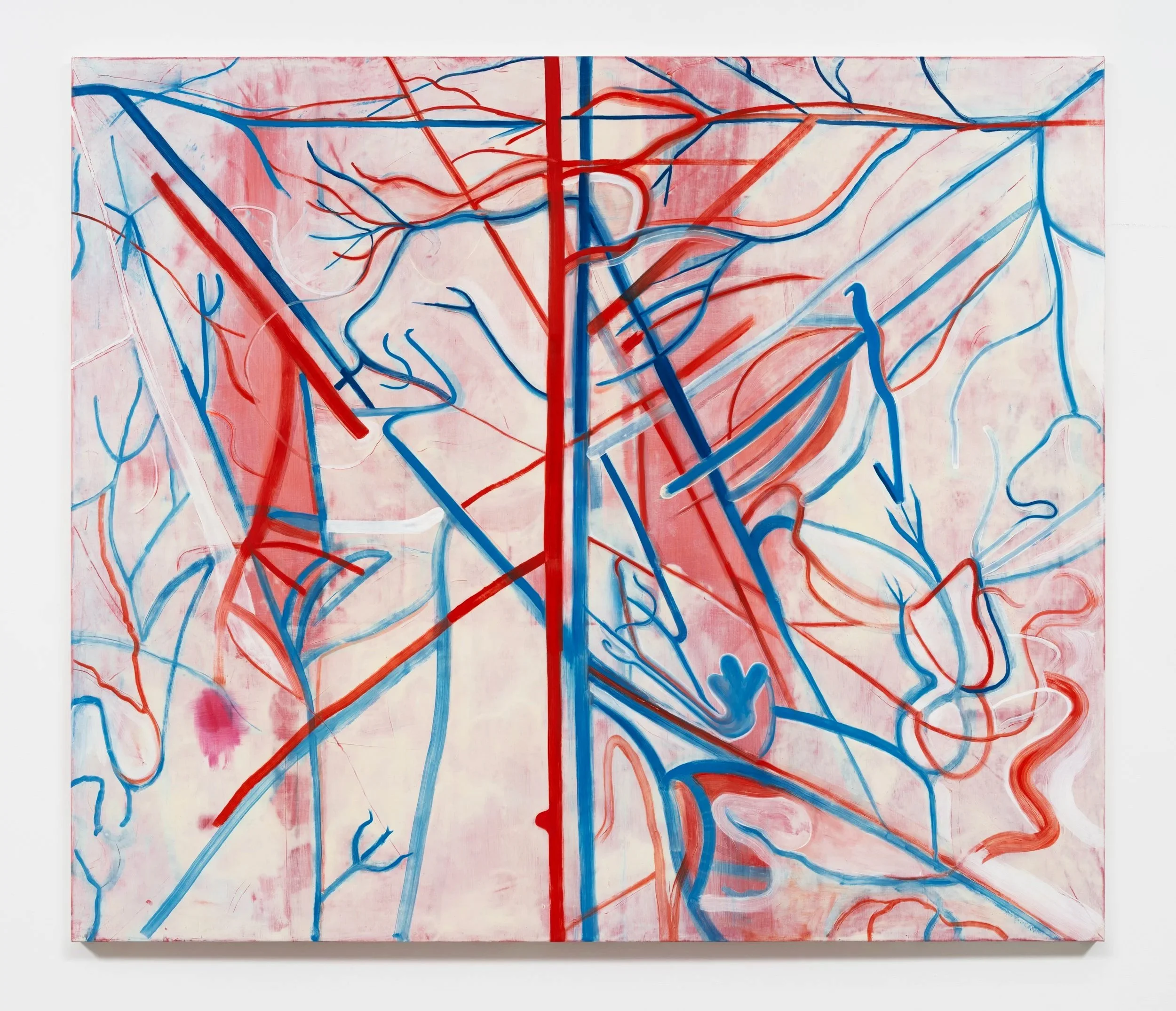
Ross Bleckner, Two Chests and a Brain I, 2026, oil on canvas, 72 × 84 inches (182.9 × 213.4 cm). Courtesy of the artist and Petzel, New York. Photo: Jason Mandela.
DG: Art as product. But your work feels to me like it’s you exploring ideas, and those ideas naturally change and go in different directions.
RB: Someone who worked for me wrote a piece for Artforum commenting on two different bodies of work I had produced, and how different they were from one another. From my perspective, they’re not different bodies of work—they’re connected. There are different ways of approaching how you think, and your mind coheres through your consciousness, through curiosity about the things you have. So you go around. It’s like an ellipse, you know—it’s not a tight little circle of images that you just do again and again. It’s a kind of meandering ellipse.
Anyway, so I just had a show at Guild Hall in East Hampton and another show at a conservatory out here called Madoo, which was works on paper. And a show last month in Aspen, and I’m having a show this month at Petzel.
DG: Wow—a lot of shows at once. Tell me about your show at Petzel, Octopus.
RB: The paintings at Petzel are an extremely elliptical meditation on the body and body parts. I try to cast the biggest net possible in terms of images and how I use them. As if you’re not just a painter standing there looking with your eyes; you’re a person, a citizen, constantly scanning the world—above as in sky, in front of us as in landscape, on us as in skin, inside us as in organ (and their fragile alignment that keeps us in health), and what’s under us. It’s my way of staying curious and not having painting as a brand, but as the search. I think of the image not just as our being, but as our being consciousness itself—the ultimate mystery, and interconnected with identity.
When you think of an octopus, you think of intelligent tentacles reaching out in multiple directions to explore an environment. Its many arms represent different emotions and memories that reach into different parts of a person’s life. An octopus changes color, shape, and identity, suggesting the shifting nature of our thoughts. Octopuses are consciousness made visible —everywhere and nowhere… like we all sometimes feel—I know I do—and it keeps “the search” a source of surprise and, occasionally, awe.
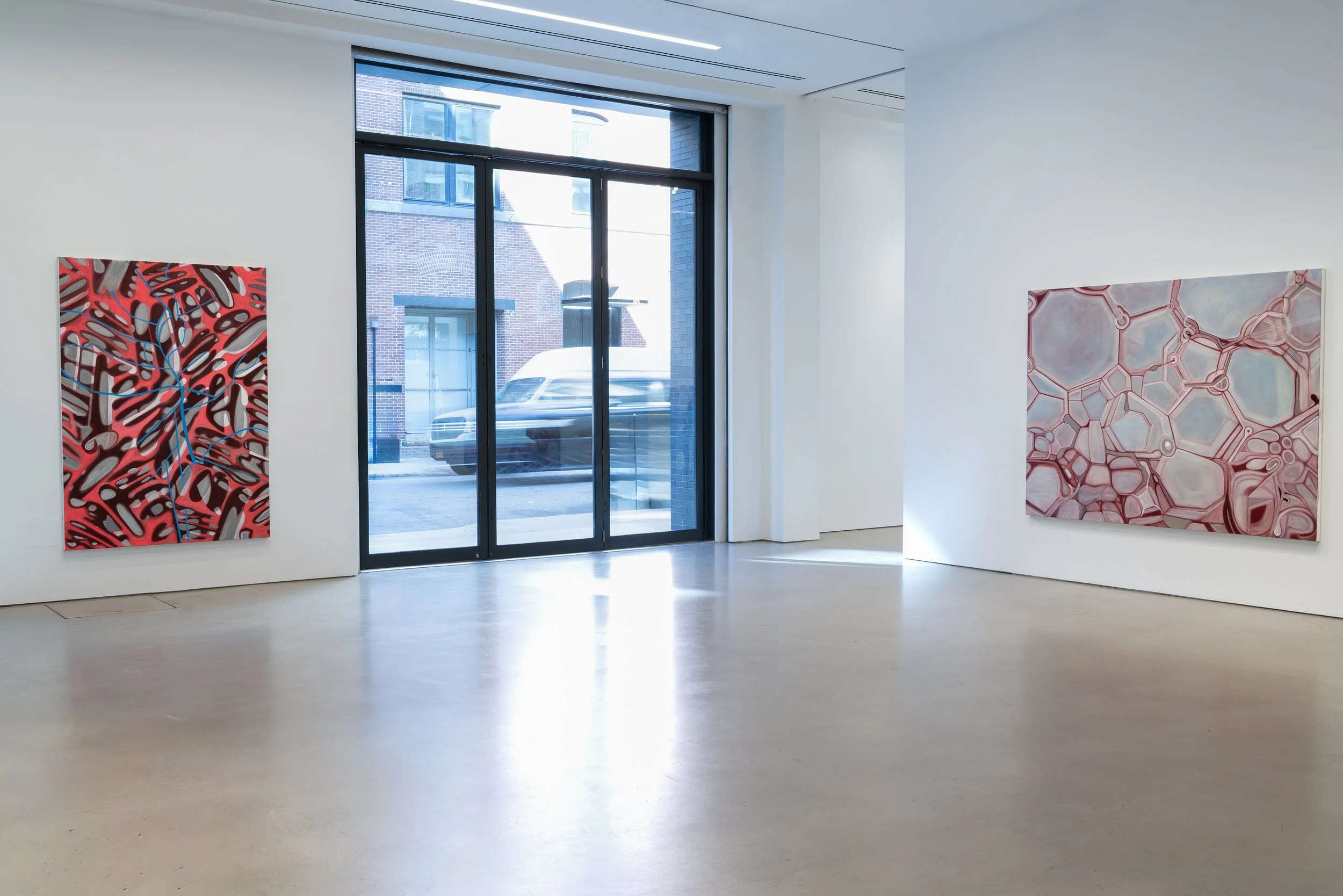
Installation view, Ross Bleckner, Octopus, Petzel, New York, September 17—October 24, 2026. Courtesy of the artist and Petzel, New York.
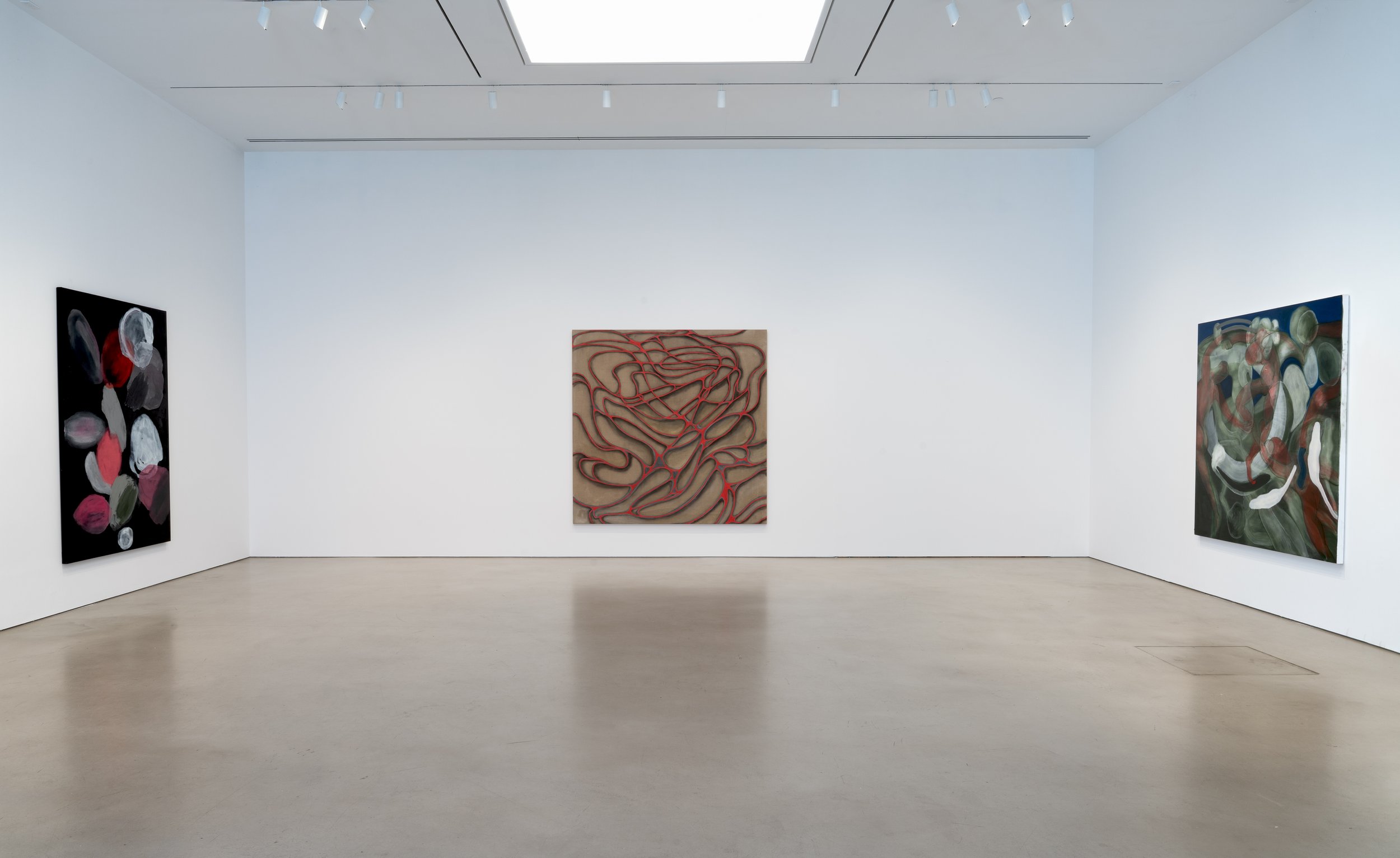
Installation view, Ross Bleckner, Octopus, Petzel, New York, September 17—October 24, 2026. Courtesy of the artist and Petzel, New York.
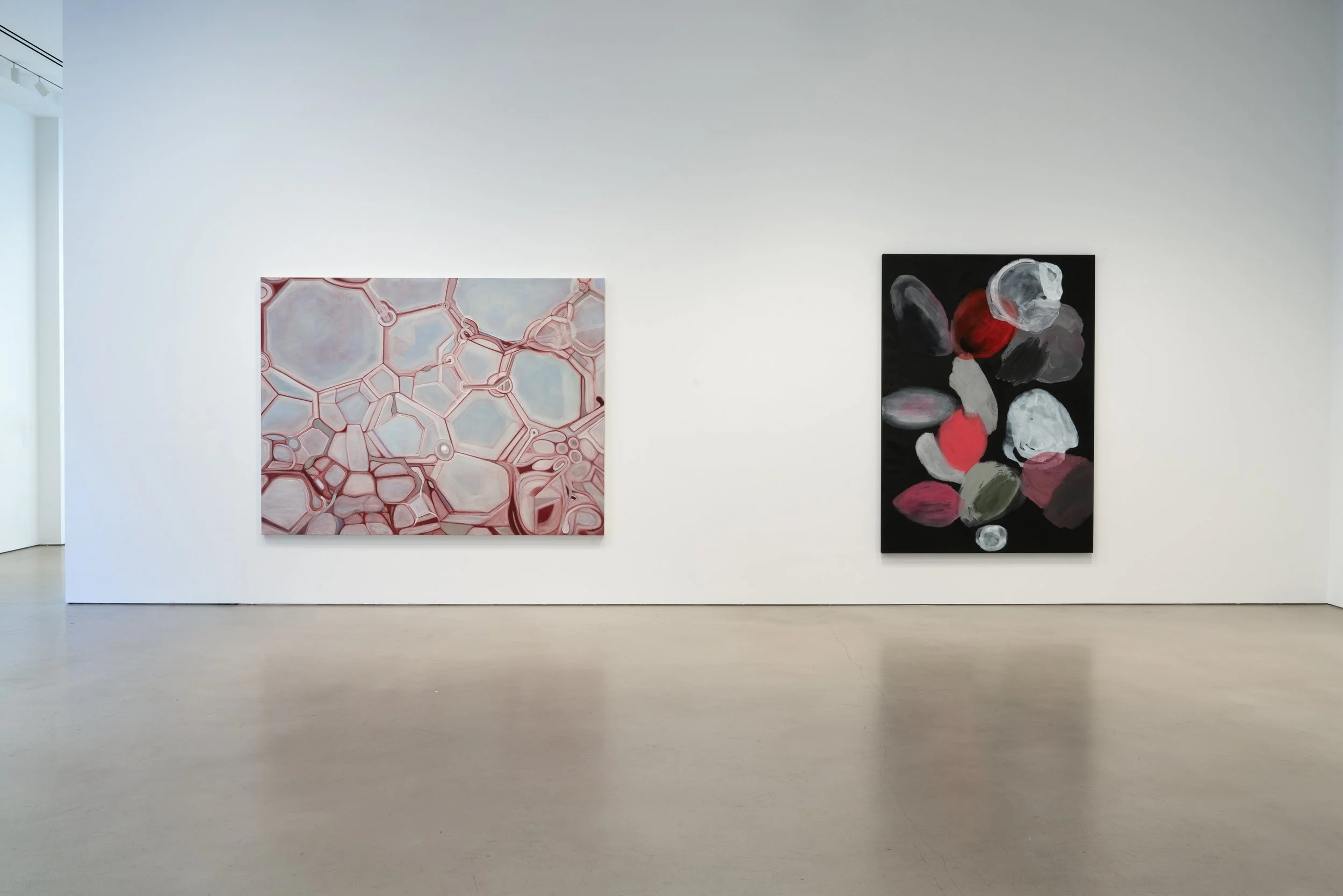
Installation view, Ross Bleckner, Octopus, Petzel, New York, September 17—October 24, 2026. Courtesy of the artist and Petzel, New York.
DG: Tell me about the materials you work with—I was reading you use a blowtorch?
RB: It started as an experiment in drawing through destruction—painting a light color under a dark color, then wiping away the dark layer with fire to create an interesting, organic line as the paint accumulates and wears away.
I think of my studio as a wacky laboratory. One day I’ll be mixing all these different potions, pigments, and mediums, and something will mutate and bubble up. Hopefully it will be something new, never seen before.
DG: I love the idea of your studio as a laboratory. What inspired you to start making your own paint versus going out and getting some Gamblin?
RB: Well, I do that, too. I mix regular paint into mine as a binder, so it holds together and conserves. I’ve always been interested in how paint captures and reflects light. In graduate school, I watched videos of Richard Serra throwing molten lead, and that inspired me to mix graphite into my paint to give the paintings a kind of shine. It’s a kind of miracle how certain pigment blends do what they do.
It’s almost like the awe, the divinity in a way, the grace of when you look into the sky, and you feel the infiniteness of everything and the beauty. So I use that metaphorically as the image of light coming out of the dark. I always start with dark, and I go toward the light.
DG: I like that—it’s positive.
“I think of my studio as a wacky laboratory. One day I’ll be mixing all these different potions, pigments, and mediums, and something will mutate and bubble up. Hopefully it will be something new, never seen before.”
DG: When I was painting, I never had a set idea of where the paintings would go. It always felt like a high-wire act, like I was either onto something great, or what I was doing was shit.
RB: Well, that’s the way my mind goes.
DG: How do you handle that mentally?
RB: A lot of that has to do with why I make those small paintings. They’re the way I build up the courage. I experiment to give myself confidence that maybe something could work out.
DG: Ah! How do you think of scale then?
RB: For me, scale has to do with experiential quality. In a way, I’m making mood paintings, so I need space to create the atmosphere I’m looking for. But I’m also perfectly happy with paintings that are three by two feet or even 20 by 10 inches. A lot of the small ones are tryouts for bigger ones. When you have a show, you want to create an impact.
DG: That makes total sense. I mean, large paintings are immersive; they envelop the viewer.
RB: Most of my big paintings are around human scale. I tend to prefer vertical over horizontal because it reaches upward. Even though I don’t believe in mystical nonsense. The child in you holds onto those early feelings of awe.

Installation view, Ross Bleckner, Never The Less, Guild Hall, August 29—October 25, 2026. Courtesy of the artist, Guild Hall, and Petzel, New York.
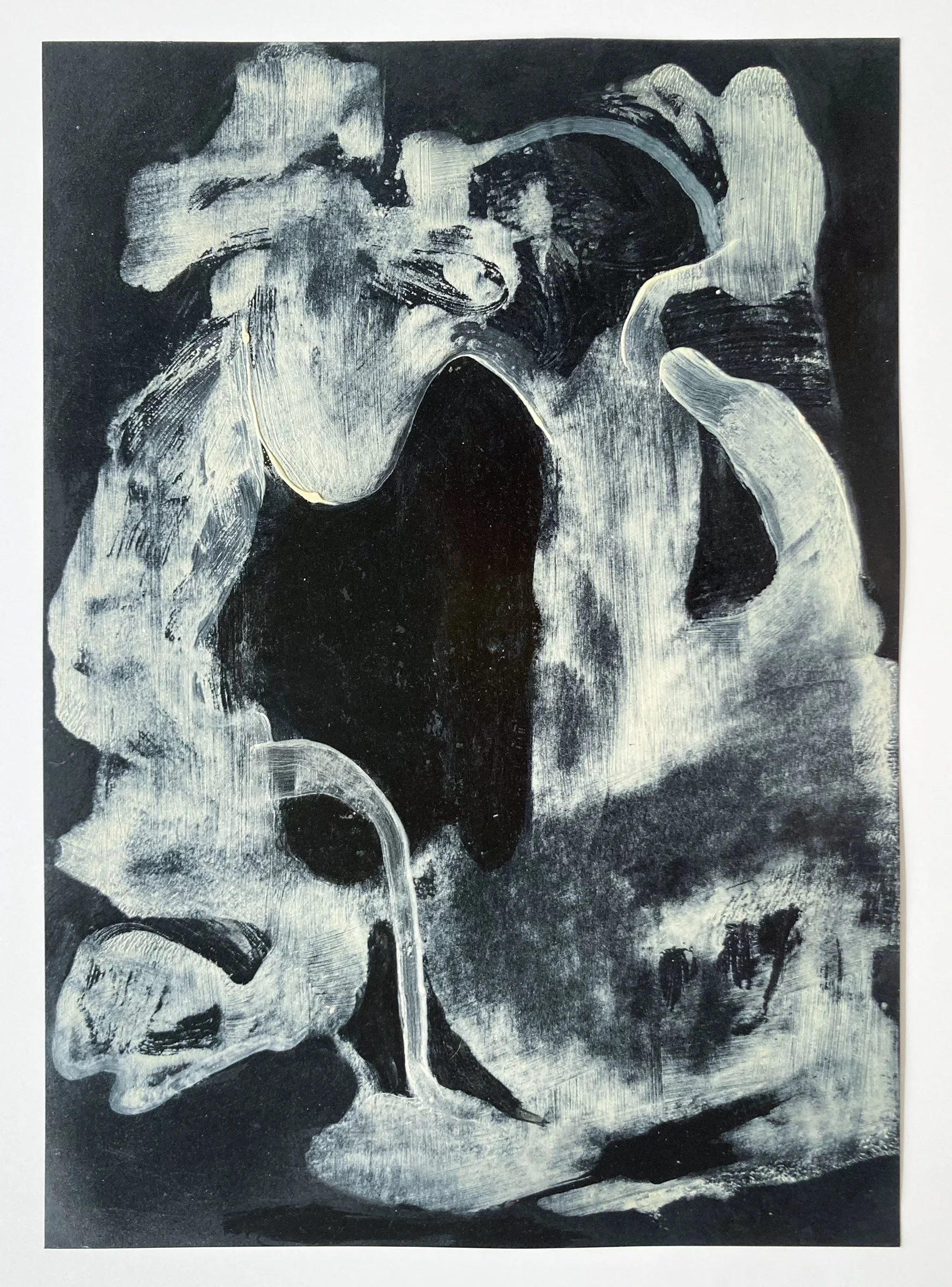
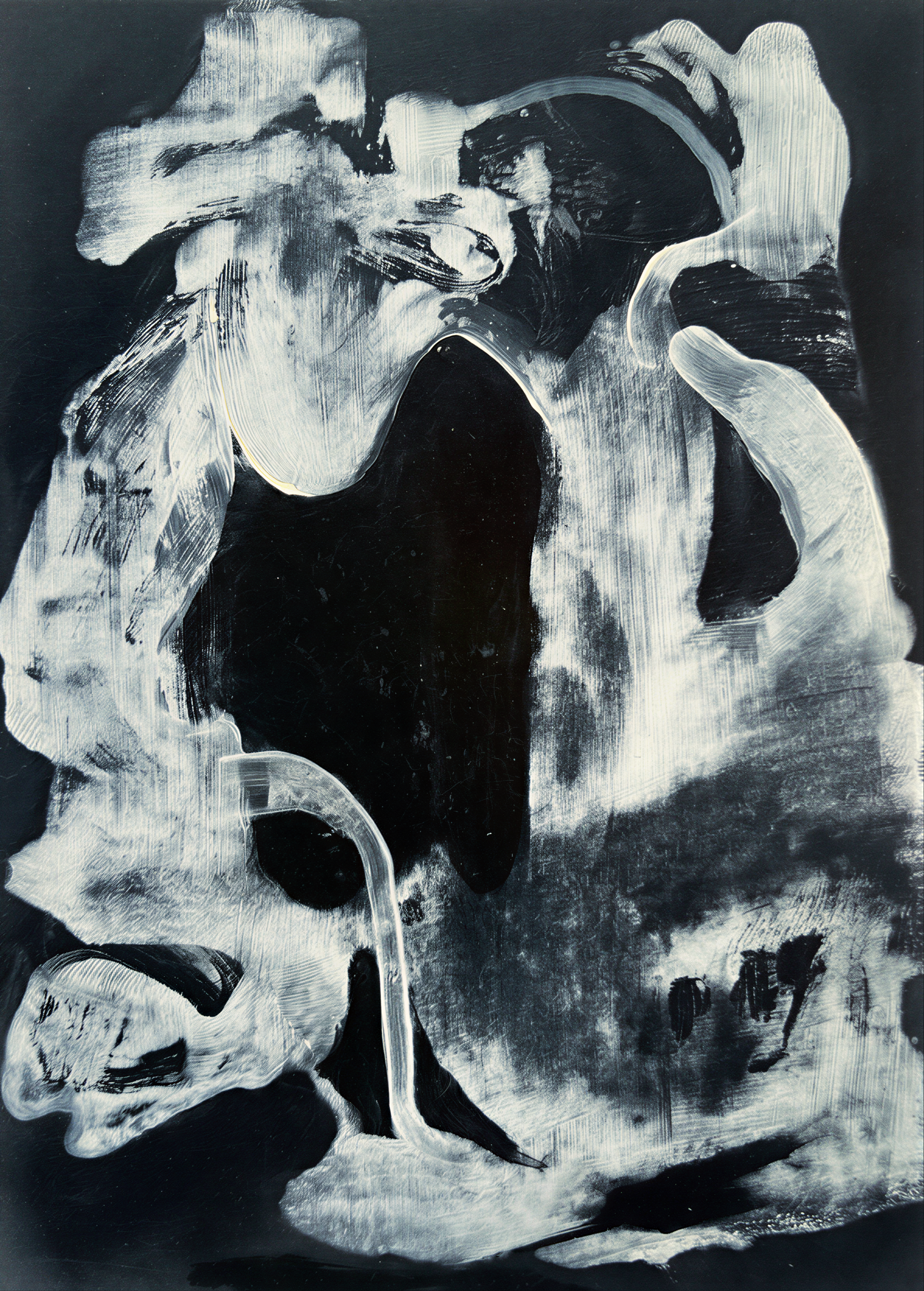
Ross Bleckner, Untitled, oil on paper, 16 × 11 inches (40.64 x 27.94 cm). Courtesy of the artist, Madoo Conservancy, and Petzel, New York.
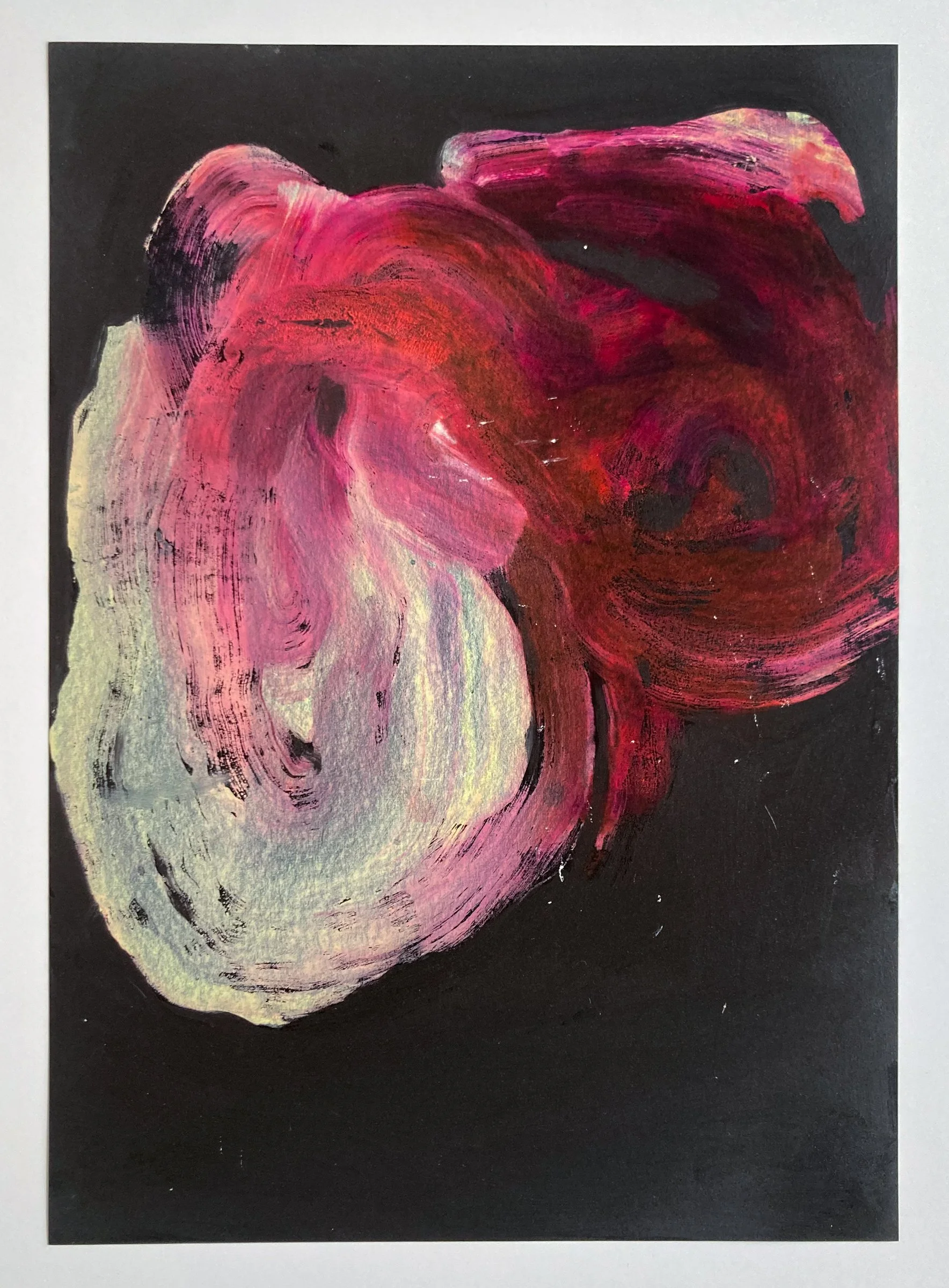
Ross Bleckner, Untitled, oil on paper, 16 × 11 inches (40.64 x 27.94 cm). Courtesy of the artist, Madoo Conservancy, and Petzel, New York.
DG: Can we step back in time and talk about your work from the 1980s?
RB: Sure. In the early 1980s, I made abstract, optical paintings that were almost like a dialogue; the space between the painting and the viewer became the image, because it was about vibrational, sensory experience. Anyway, I was making those paintings, and then AIDS hit New York pretty hard, and I felt like I had to address what I saw around me, especially as a gay man. So I became an activist. I became president of an organization called ACRIA, the AIDS Community Research Initiative of America, and we did research, clinical trials, outreach and education in minority communities, and prevention. It included many doctors and scientists. It was a great organization. It folded eventually into Gay Men's Health Crisis.
My point is that I felt like I couldn’t keep thinking about all these abstract ideas, apart from the reality. So my paintings became very commemorative—they dealt with friends I’d known: memorials, names, numbers. You know, you live your life, and the world intervenes in ways so monumental that you can’t keep doing what you were doing. You have to acknowledge the realities that underlie how you think about the world, and that comes out in your heart.
DG: The shift then was from the optical stripe paintings, which were painterly and conceptual, to work that was addressing what was actually going on?
RB: Yes—I stopped making the optical stripe paintings, and I started doing more representational paintings, with trophies and lights and names and numbers. And then I started going back and forth, obviously, because I’m dealing with my mind and the way I think. I moved on, but a lot of times I stayed, and I think biology became kind of an overriding adhesive. Even still—a lot of my paintings deal with the body, because that’s where we live.
DG: I love hearing about that transition—you getting more personal, finding your authentic voice. So much art feels surface-level—there’s the physical surface, but no depth. What you’re describing feels like what an artist is supposed to do: listen to their voice, not just produce something for the sake of the surface.
RB: I can’t do that. It’s just not the way I think. I would get bored. So I’m always looking for the way through the work I’m doing—where is it taking me? What do you want to communicate? How do you want a viewer to respond to your work? I want them to feel something, to have an emotional reaction.
My work tends toward the melancholic. And I say that with a certain degree of humor, because life tends toward the melancholic. But you know what? We all find moments of joy. We all find moments of relief. We all try our best to make things have meaning. That’s the light through the dark. It might be a little childish, but I think in the end being an artist is a little childish. You go into a room and play with minerals and other stuff that’s been crushed up.
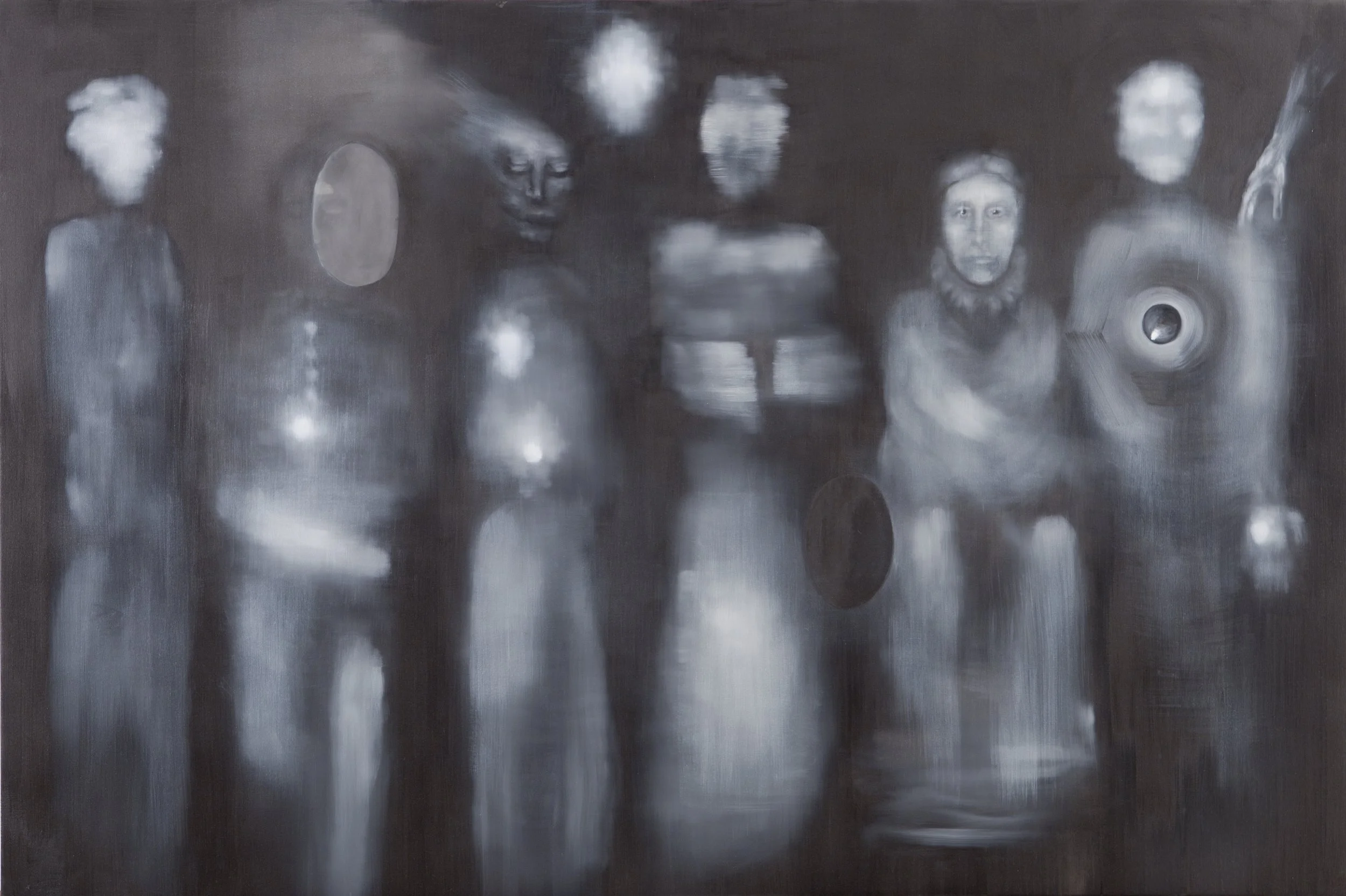
Ross Bleckner, The Centuries, 2018, oil on paper, 72 × 108 inches (182.9 × 274.3 cm). Courtesy of the artist, Guild Hall, and Petzel, New York.
DG: Stepping back even further, you went to CalArts for graduate school in the 70s, right? As an East Coaster, what drew you to CalArts?
RB: Yes—I was there for two years for grad school, and stayed another year. That was 1970 to 1973. I grew up in New York and went to NYU for undergrad, so I wanted to leave for a few years. What drew everybody there was the reputation it had developed very quickly. Chuck Close was one of my teachers at NYU, and he told me, “There’s this cool school in California. Maybe you should check into it.” So I applied, got in, and went. It was intense.
DG: What was Chuck Close like as a teacher?
RB: Chuck and I became friends. He was gregarious and generous; he was very involved in supporting younger artists.
DG: I remember being a bit surprised to see him show up in the movie Six Degrees of Separation. You’ve been in a couple of movies yourself, right?
RB: Yeah, I played a lawyer in As Good as It Gets. James L. Brooks was a collector and came to my studio to see how I worked, then asked me to be in the movie. My artwork was also featured in Curb Your Enthusiasm. I love Larry David—I always feel like I live right at the intersection of Jerry Seinfeld and Larry David.
DG: How would you describe your own humor?
RB: A little dark, dry, and complainy—but ultimately accepting of things once you’ve complained enough.
“We all find moments of joy. We all find moments of relief. We all try our best to make things have meaning. That’s the light through the dark.”
DG: Going back to CalArts for a moment, what was intense about it?
RB: People were very competitive and worked hard. Everyone was ambitious; nobody came there to lounge around. Everyone tried new things, except me—I didn’t try much new. I just tried to learn how to paint and stuck with painting, as Eric Fischl did. Everyone was playing with video and interdisciplinary forms, and I just felt that if I looked at a video camera, I’d have a breakdown. I’m the same way now. My mind doesn’t get around technology, so I use as little as I can. I’m never going to do AI paintings—it’s way above my pay grade.
DG: In an increasingly AI-driven world, the human hand and touch become even more essential and rare.
RB: AI does a very good semblance of the hand, though. David invited me over to see some paintings he did with AI, and I kept pointing to the parts I liked. He said, “Oh, that’s the AI part.” I thought it was the painterly part he had done around it, and I told him, “No, I like this part way better.”
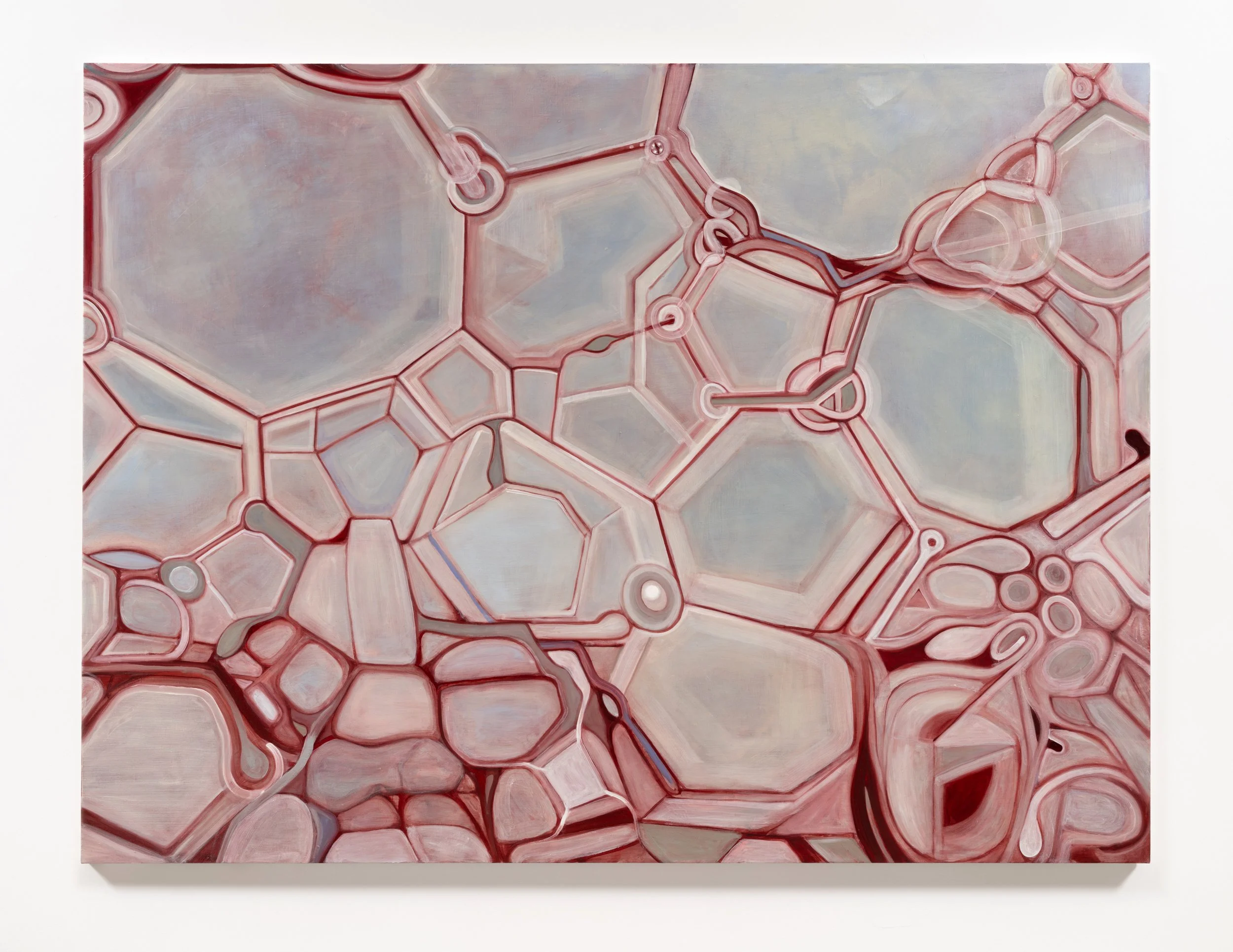
Ross Bleckner, Where Is My Body, 2025, oil on linen, 72 × 96 inches (182.9 × 243.8 cm). Courtesy of the artist and Petzel, New York. Photo: Jason Mandela.
DG: Before we wrap up, I wanted to ask you about your partner, Eric Freeman, who passed away a few years ago. His work at Guild Hall looked beautiful.
RB: He started painting late. He didn’t really think about being an artist, but I knew he was a terrific artist. He was interested in a lot of things, and he was very gentle. He painted things in the world, like James Turrell, Dan Flavin, or Richard Serra. The way they moved and undulated—his paintings don’t stay still. The quality of light in his painting is ravishing. It just glows. He started late, and he was doing okay, and unfortunately he died.
DG: I can’t even imagine what that’s been like for you.
RB: Grief is something you just learn to live with. There’s no solution, there’s no fixing it. That goes back to basic Buddhist teachings: we all experience sickness, old age, and death. You know, you only have so much time if you really think you have something to say.
Most successful artists I know are extremely disciplined. Look at Jean-Michel Basquiat—as fucked up as he was, he died at 27, but he produced so much work. He obviously worked his ass off. It’s an artist’s responsibility to keep moving forward and changing. Would Jackson Pollock have kept doing drip paintings for another 20 years? They would have looked idiotic.
DG: Speaking of Pollock, you live on the same road in Springs where Jackson Pollock and Lee Krasner lived, right?
RB: Not only do I live on the road, but my driveway is very close to where he crashed his car and got killed. Willem de Kooning lived just a block away, too. I was actually in de Kooning’s studio about a year before he passed away, to watch him work. I feel like he had dementia by then—he was off in another world, floating around. The paintings were so minimal because there was nothing left to say. He was disappearing. I feel like he was representing disappearance.
DG: It has been a pleasure talking with you, Ross. One last question: when someone stands in front of your paintings, what do you hope they find there?
RB: I want my paintings to have a little piece of heaven in them.
Ross Bleckner
Octopus
Petzel
New York
September 17—October 24, 2026