
February 2026
Notes from Athens
Selected Artists, Curators, Writers
Sascha Behrendt
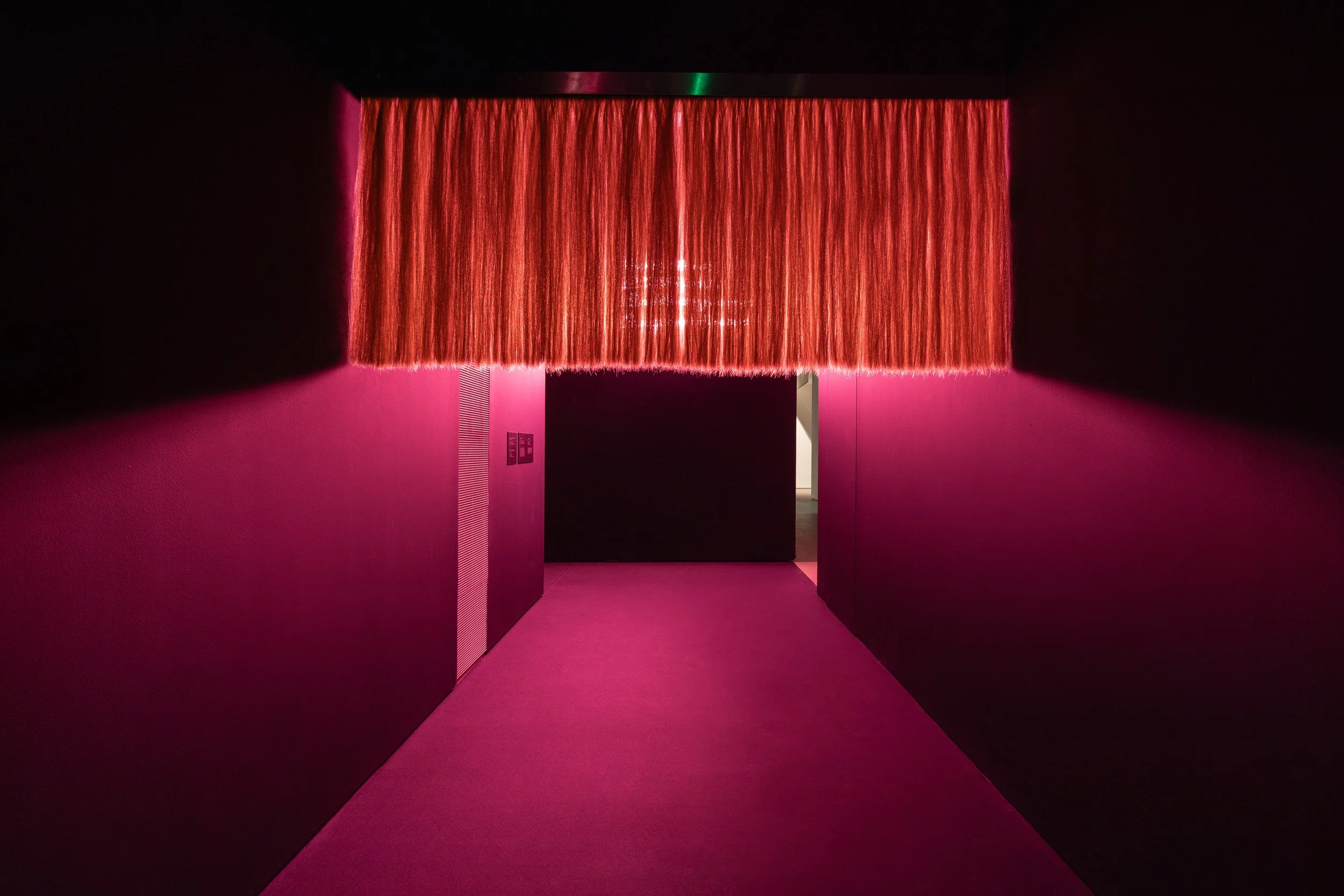
Janis Rafa, We Betrayed the Horses, solo exhibition, EMΣT | National Museum of Contemporary Art, Athens, 2025. Photo by Paris Tavitian.
Tech bros with crypto want safe investments, not decades-long, deep collections reflecting risky intellectual and cultural inquiry. Subsequent to these shifts, art fairs, gallery exhibitions, and biennales have been awash with figurative or semi-ironic second-rate paintings. Much of this has to do with expediency. Post-COVID, higher shipping, studio, and storage costs make difficult-to-decipher installation art a luxury to forgo. In addition, buyers are more interested in their living rooms and lifestyles looking good with a quick fix. No wonder auction houses see moving laterally into upscaling and selling luxury fashion items on par with art as a sensible, lucrative move.
Many paintings suffer the demise or existential crisis that photography as art struggles with today. Without a decent concept, what’s the point, other than luxuriating in brilliant technique? It's hard to get both. The current evolution in AI informed or adjacent painting can feel like an intellectual maze devoid of sensory pleasure, and then add the performative influencer life as meaningful 'content' to further drive these shifts.
Art produced, shown, and sold within the art industrial complex has changed. Graduates must transform debt-laden, fine art MAs into career-worthy work and cash at speed, alongside a generational shift of the collector class.
When I met and talked to some Greek artists and curators whose work had some conceptual chops outside the New York, Paris, London paradigm, it felt like a relief.
These contemporary arts practitioners have broken away from the discourse stuck on modernism that belonged to Greek artists of the 1960s and 1970s, and instead have engaged with regional socio-politics, migration, history, feminism, and LGBTQ rights. They are a generation that had to survive the devastating economic shocks of “The Crisis” from 2008 (The Great Recession) and the protracted Greek Sovereign Debt Crisis (2010-2018). Despite these and the contradictory inequities and opportunities exposed by the 2017 dual Kassel/Athens Documenta 14 experiment, there is a sense that art can offer today a space for artists, curators, and writers to review and claim their own Greek history and narratives.
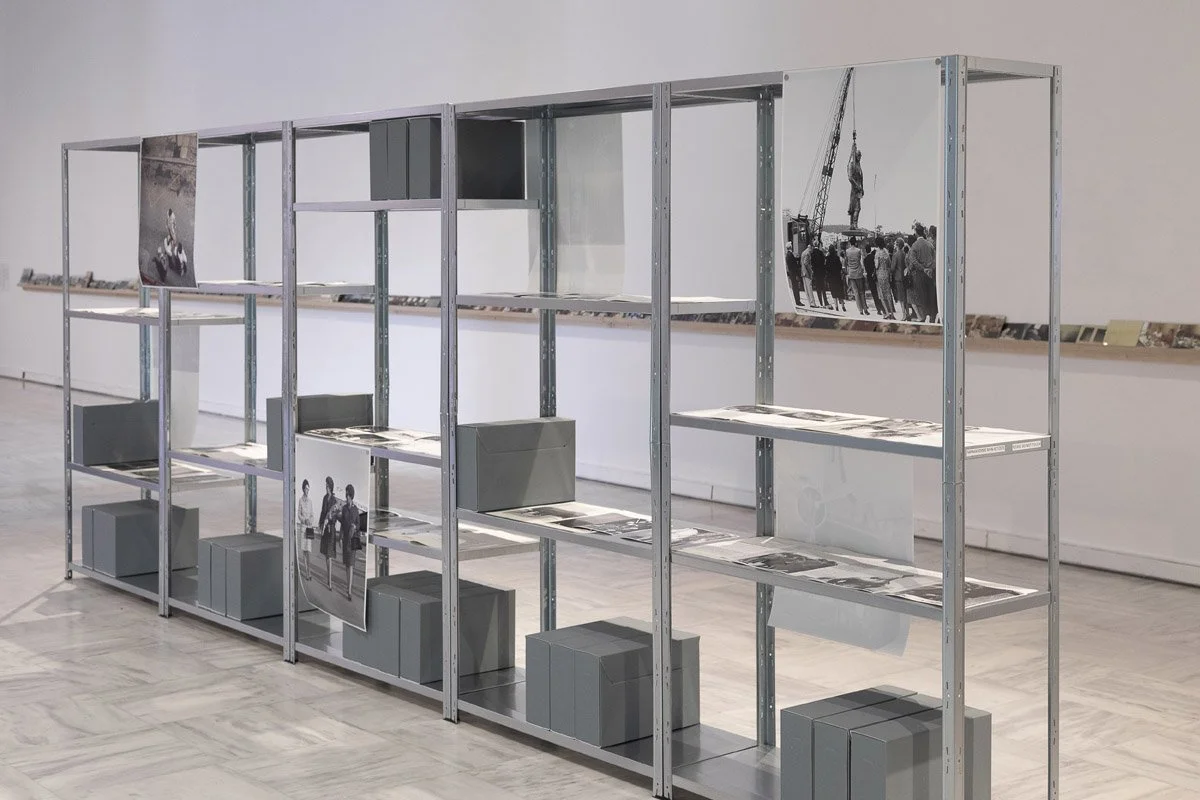
Stefanos Tsivopoulos, Shake Shake Shake (The Shelves of History), 2020 Installation view from When the Present is History, curated by D. Vitali at MOMus, Thessaloniki, 2021. Photo by Stefanos Tsakiris.
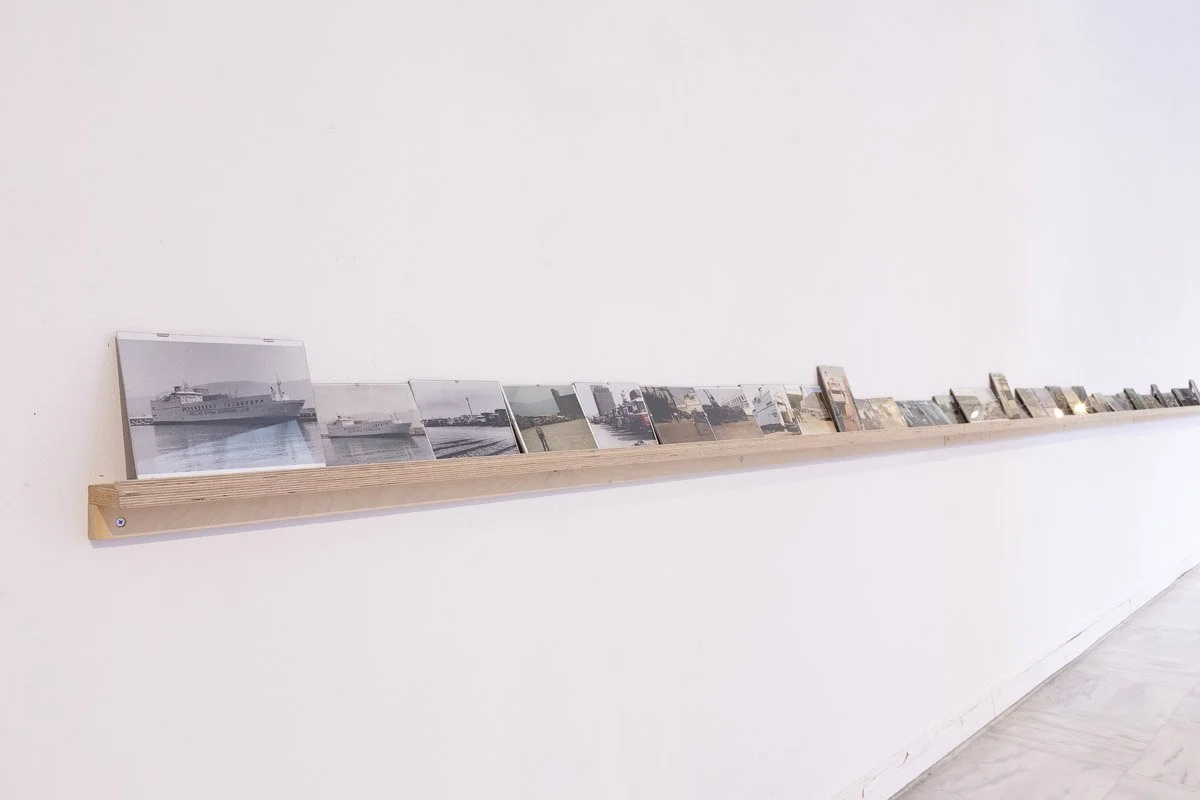
Vangelis Vlahos, The Bridge, 2013-2015 detail. Installation view from When the Present is History, curated by D. Vitali at MOMus, Thessaloniki, 2021.Photo by Stefanos Tsakiris
Greek-Italian Daphne Vitali is a curator with interests and practices rooted in social, political, and ecological issues who has presented important shows on these emerging artists and themes. She focuses on research-based artistic work and the "historiographic turn in contemporary art as a means to investigate and interpret the present." A curator at the National Museum of Contemporary Art Athens (ΕΜΣΤ), she put together its exhibition, Afresh, A new generation of Greek artists (2013) with curators Daphne Dragona and Tina Pandi, which featured 34 artists born between 1979 and 1990. This show reflected the artist's experiences studying and exhibiting abroad, whilst also commenting on national socio-economics, heritage, and the digital era.
Another group exhibition by Vitali, When the Present is History (2019), in the parallel program of the 16th Istanbul Biennial, led by Nicolas Bourriaud, looked at unsettling established narratives through re-edited and visualized found texts, video footage, and audio materials.
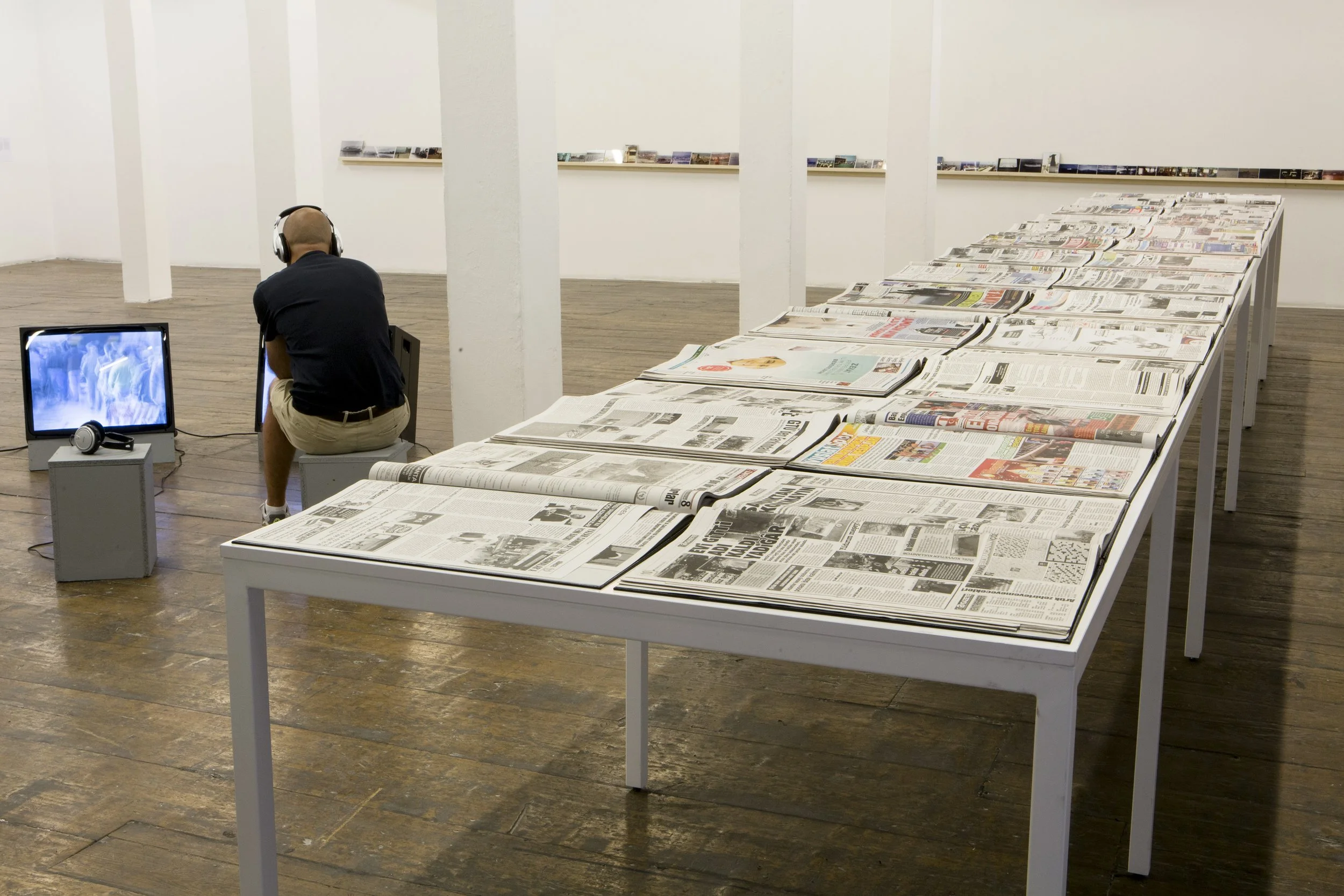
Banu Cennetoğlu, 14.04.2019, 2019 Installation view from When the Present is History curated by D. Vitali at DEPO, Istanbul, 2019.
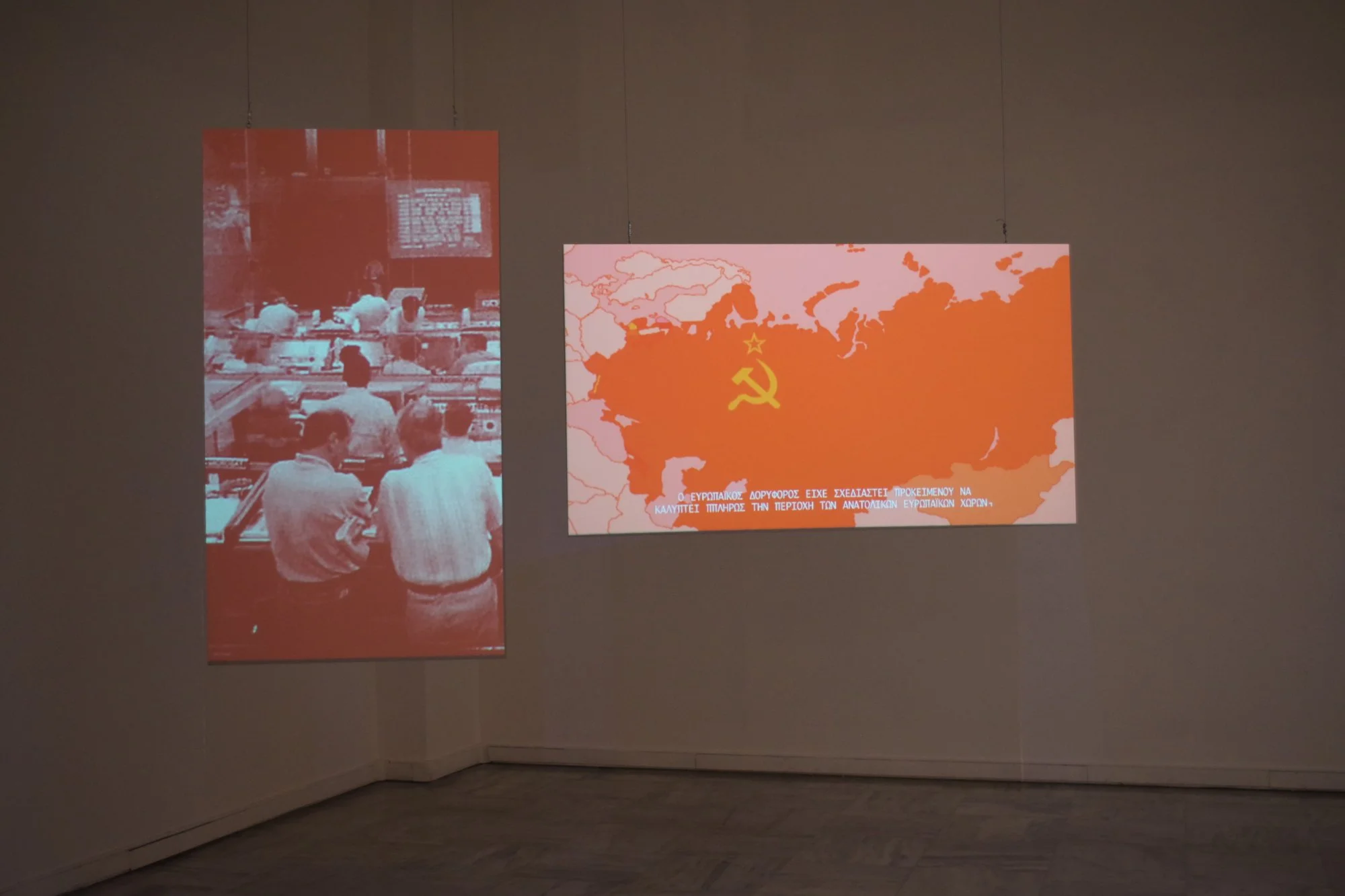
Barış Doğrusöz, 12 minutes 12 seconds, 2019. Installation view from When the Present is History curated by D. Vitali at DEPO, Istanbul, 2019.
In 2023, Vitali curated, in timely form, Erica Scourti's Profiles of You at ΕΜΣΤ, the artist's first solo exhibition in Greece, and major museum show. Recording herself in audio-visual diaries and collages, Scourti willfully handed over personal data and images online to survey their networked afterlives and our questionable entanglement within socio-technological infrastructures. Currently completing her PhD at Goldsmiths in London, though actively still participating in Athens with performances and readings, it will be interesting to see, with the acceleration of AI, how Scourti's meta practice evolves.
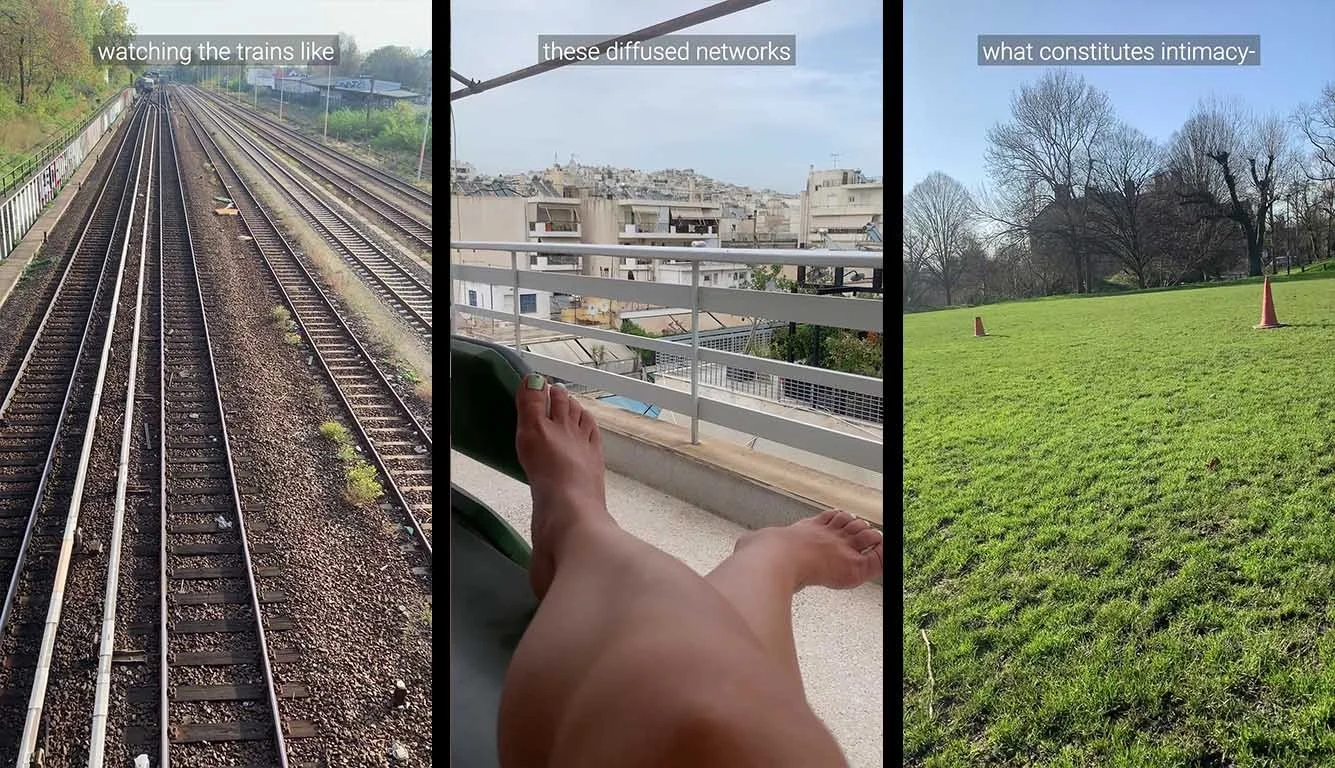
Erica Scourti, 8 Things to be Scared of Instead of Death, 2020-21. Video still. Courtesy the artist and EMΣT | National Museum of Contemporary Art, Athens
One artist included in When the Present is History was Vangelis Vlahos, who was born during the rule of the right-wing military junta in Greece (1967-1974). He belongs to a first generation engaging through art on the socio-political conditions of Greece after Metapolitesfi (the 1974 regime change to democracy). Presenting archives, texts, videos and architectural models, Vlahos elegantly uses context and absence to conceptually bring attention to alternate realities of the recent past. He proceeds in the manner of an archeologist or forensic scientist, who begins with a small artefact or detail, then researches publicly available material from which a series of events and a wider story is collated and uncovered.
Buildings that proclaim a nation’s identity to the world should not be misunderstood (2003) is a 1:150 scale model of the original American Embassy in Athens, that was designed in the late 1950s by Walter Gropius in the International Style.
A curved wire illustrates a rocket attack in 1996 onto the building by the Greek militant group 'November 17.' Designed as an emblematic showpiece of democracy to the world, over decades, the American embassy retreated into a fortress-style building in response to Greek civilian protests and perceived extremist threats.

Vangelis Vlahos, Buildings that proclaim a nation’s identity to the world should not be misunderstood, 2003. One architectural model 1:150, 5 dossiers, collage on cardboard 50 x 70 cm. Installation view at The Breeder gallery, Athens, 2003. Collection of Teixeira de Freitas Collection in Lisbon, Portugal. Photo: Vivianna Athanassopoulou

Vangelis Vlahos, Buildings that proclaim a nation’s identity to the world should not be misunderstood, 2003. Detail. Courtesy of the artist.
A series of works beginning with titles, Objects to relate to a trial, or This event has now ended, explore important political trials and events by using excerpts of original film footage overlaid with cinematic decoupage, a technique where the narrative action is converted into a script-like text. Subjects range from a 2023 naval dispute involving Greece, a Russian tanker, and Iranian oil; anti-authoritarian clashes during President Barack Obama's 2016 Athens visit; to security footage of a Greek student, later imprisoned, leaving the chemical company where she was suspected of buying bomb making materials. Another, traces the Yugoslav wars through the complex relations surrounding the different hats worn by Bosnian-Serb military general and convicted war criminal Ratko Mladić.
These works offer us a moment to read between the lines and ask bigger questions, such as what is an event, and how do we understand it within a specific and geographical context? The mechanism by which Vlahos does this, through a series of lateral facts, data, and visual documentation, contains a satisfying formal beauty as conclusions slowly reveal themselves. To me, this mechanism is more important than the physical artworks themselves, as Vlahos stealthily nudges the viewer into critical thinking and discovery. Like conceptual artists Cameron Rowland or Ghislaine Leung, his implicit approach reveals through information and their relations what may seem like neutral presentations of innocuous objects and events, but in fact, point to murky stories of power and corruption. Today, this art feels prescient and more urgent than ever.

Vangelis Vlahos, Objects to relate to a trial (the door), 2020 Video 04:19. Video still. Courtesy of the artist.
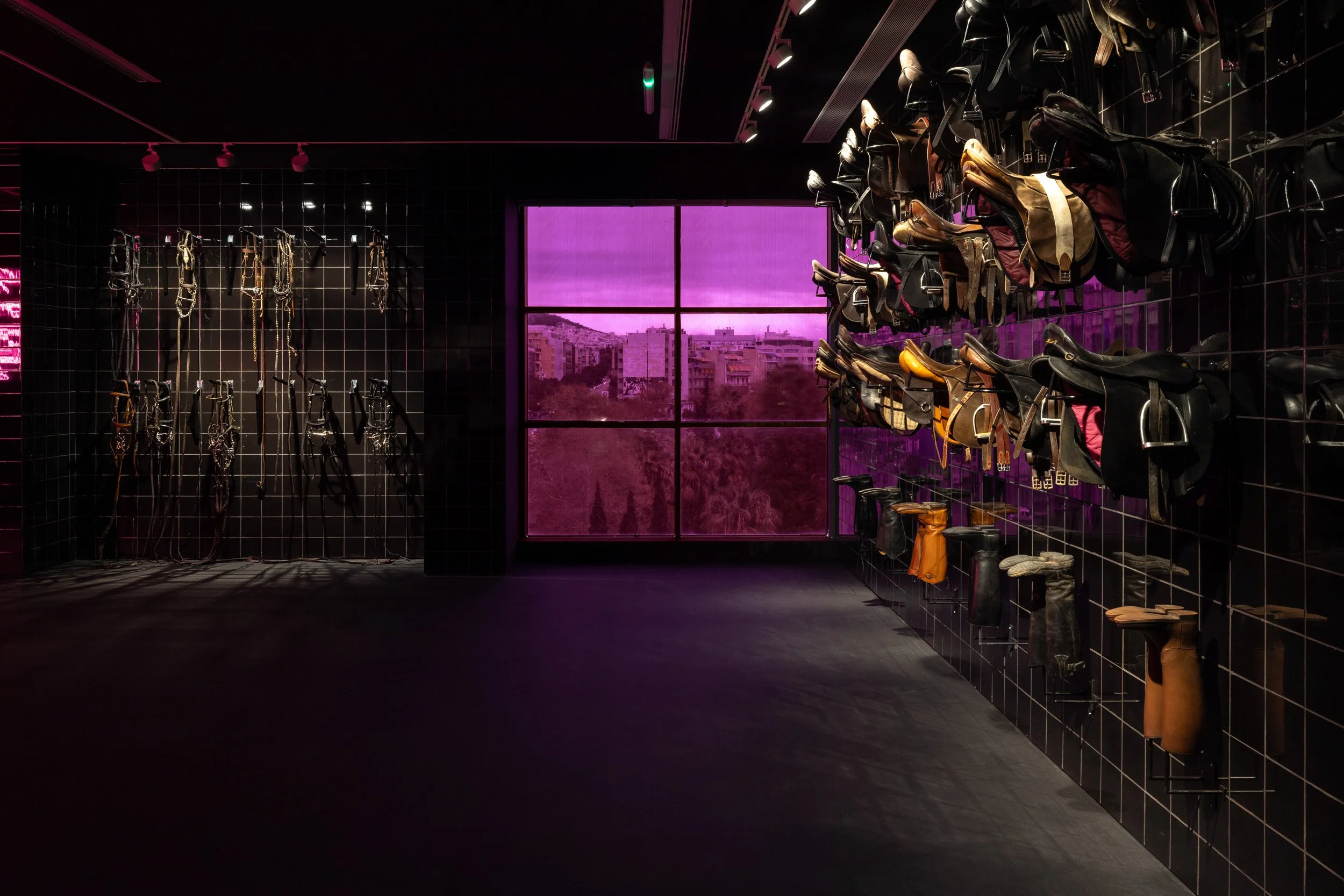
Janis Rafa, We Betrayed the Horses, solo exhibition, EMΣT | National Museum of Contemporary Art, Athens, 2025. courtesy the artist. Photo by Paris Tavitian.
Janis Rafa (b.1984) is a Greek artist who works with very different means to reveal repressed societal shadows. Included in the acclaimed 59th Venice Biennale, The Milk of Dreams (2022), curated by Cecilia Alemani, she has successfully presented art tackling gender-based violence. In her Athens solo show, curated by Daphne Vitali, We Betrayed the Horses (2025), at ΕΜΣΤ, using films and immersive installations, Rafa portrayed animals as ciphers for human disowned or unconscious cruelty. Bathed in magenta filtered light, bridles and saddles were showcased on walls as if in a glamorous play chamber with trophies and tools party to a BDSM night. Films such as The Space Between Your Tongue & Teeth (2023) showed horses trapped within industrial training circuits, or with wet, naked men soaping down muscular equine bodies in an uneasy eroticism.
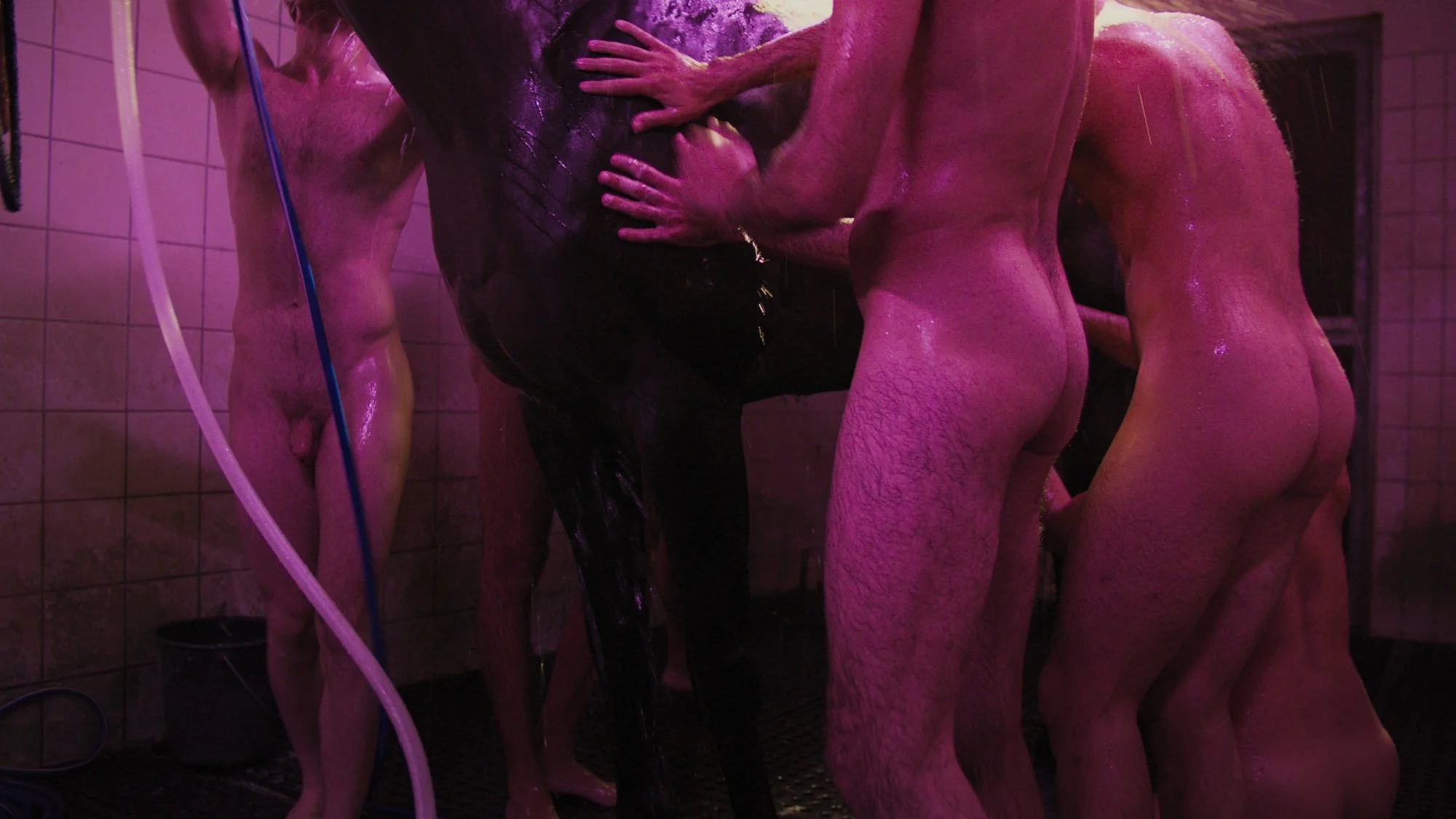
Janis Rafa, Film Still, The Space Between Your Tongue & Teeth (2023) courtesy the artist and EMΣT National Museum of Contemporary Art, Athens, 2025. Photo by Paris Tavitian
Her videos are grim, relentless, and beautifully rendered. They possess the taut claustrophobia and horror of films such as Under the Skin, 2013, by Jonathan Glazer, or anything by Michael Haneke, where what is not shown becomes framing and context devices that build up unbearable tension.
I was wary of the slick visual sophistication of Rafa's work in this exhibition, conscious of its manipulative pull. Yet despite my resistance, emotions and atmosphere stayed with me, getting under my skin.
In the service of serious, worthy subject matter (animal cruelty, gender violence), I had to acknowledge the power good art has to draw our emotional attention back to neglected subjects. As Rafa told me, "I love the possibility of making it not too complex, to not need words. It's interesting for people to experience the work, and get as far as they can with it."
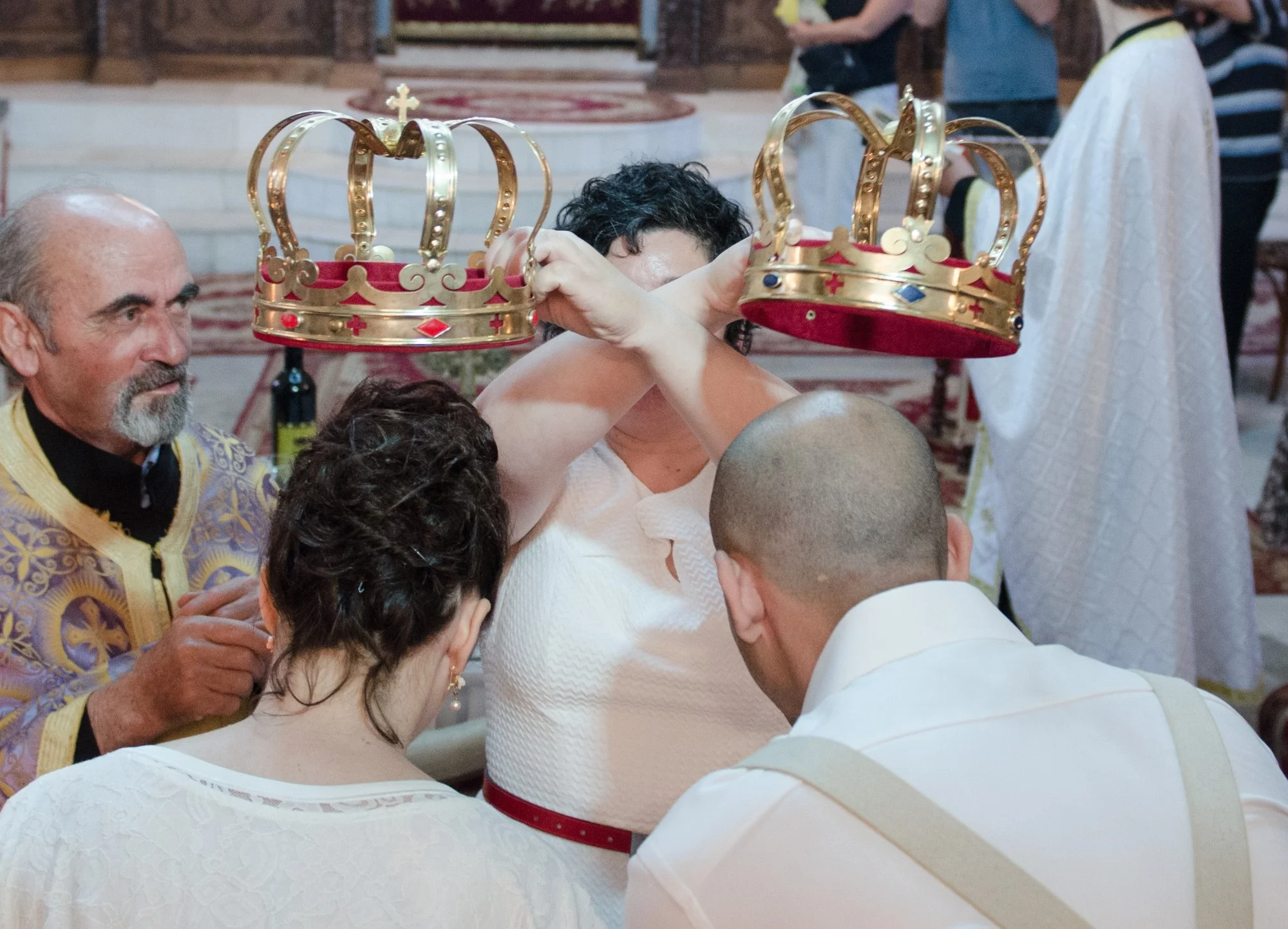
Fotini Gouseti, Renkonto-Krushevo, 2014. Detail of wedding ceremony. Courtesy the artist Photo credits: Foto Dano.
In contrast, the Athens-based artist and academic Fotini Gouseti (b.1974) tackles through her playful conceptual installations and art performances, deeply serious Greek history and politics. These range from Renkonto (2014), her wedding and celebration, held over three days in Krusevo town in North Macedonia, a country bordering Greece, to bring a reconciliation of two similar, but historically feuding countries and communities; to a video in 2017, co-created with social anthropologist Eleana Yalouri, of the TV star astrologist Bella Kydonaki reading the astrology chart of the contentious Athens/Kassel Documenta 14 as if it were a human being. In Gouseti's work, Kalavryta, (2012), one in an ongoing project dealing with the intergenerational historical effects of war and trauma on the key Greek town, she re-enacts the experience of a family post-World War II, suffering impoverishment, who instead of food, were sent two thousand silk ties by the United Nations Relief and Rehabilitation Administration (UNRRA). The mother, not knowing what else to do, wove these into a traditional Kourelou carpet. Gouseti re-created this carpet with volunteers in Athens using modern day ties in honor and solidarity with the villagers' history, highlighting the absurdity of the situation as told by the original son, “We were starving, but walking on silk.”
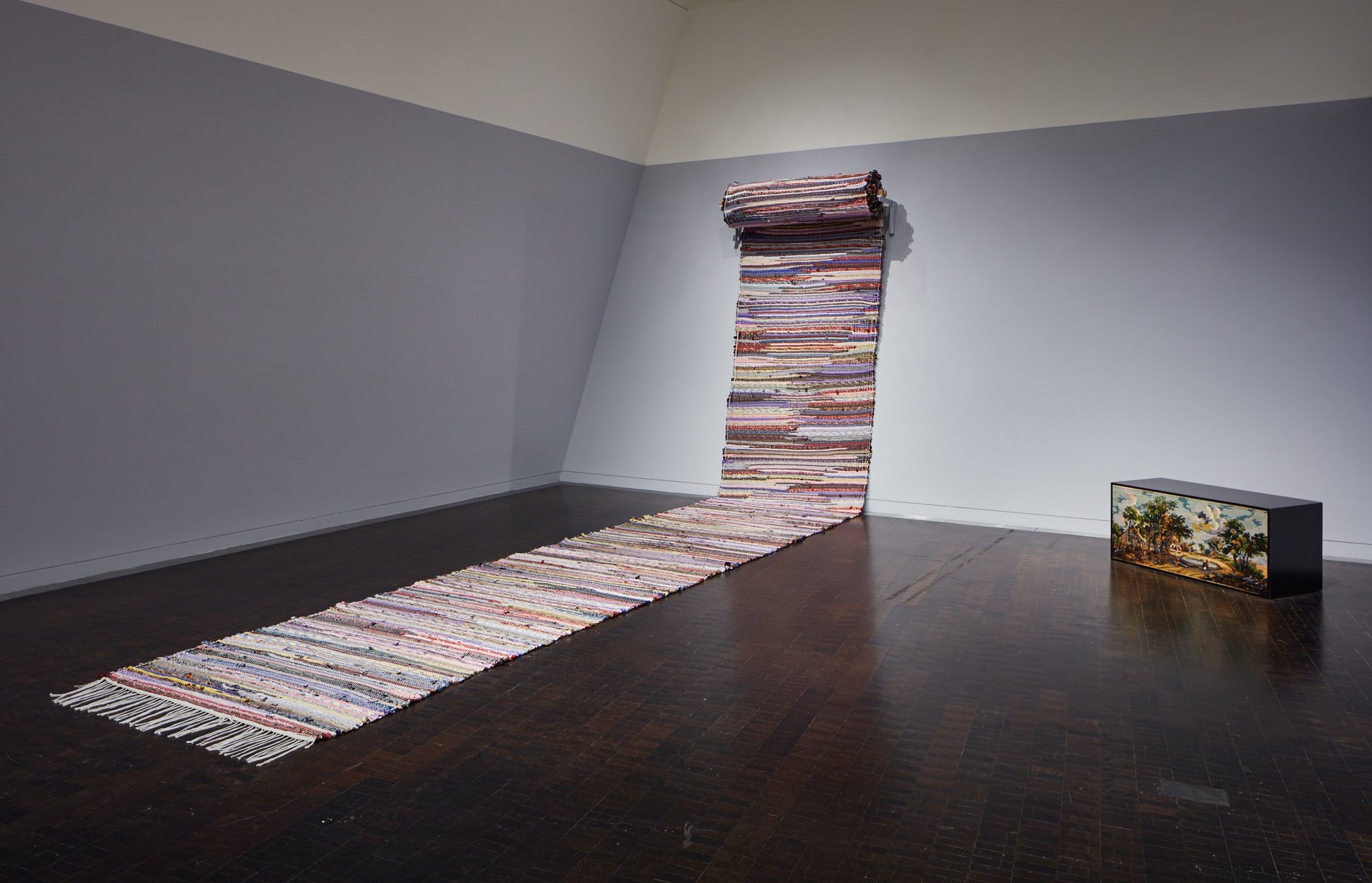
Fotini Gouseti, Kalavryta 2012, in exhibition From Generation to Generation: Inherited Memory and Contemporary Art, Contemporary Jewish Museum, San Francisco, USA, 2016, Photo by JKA Photography.
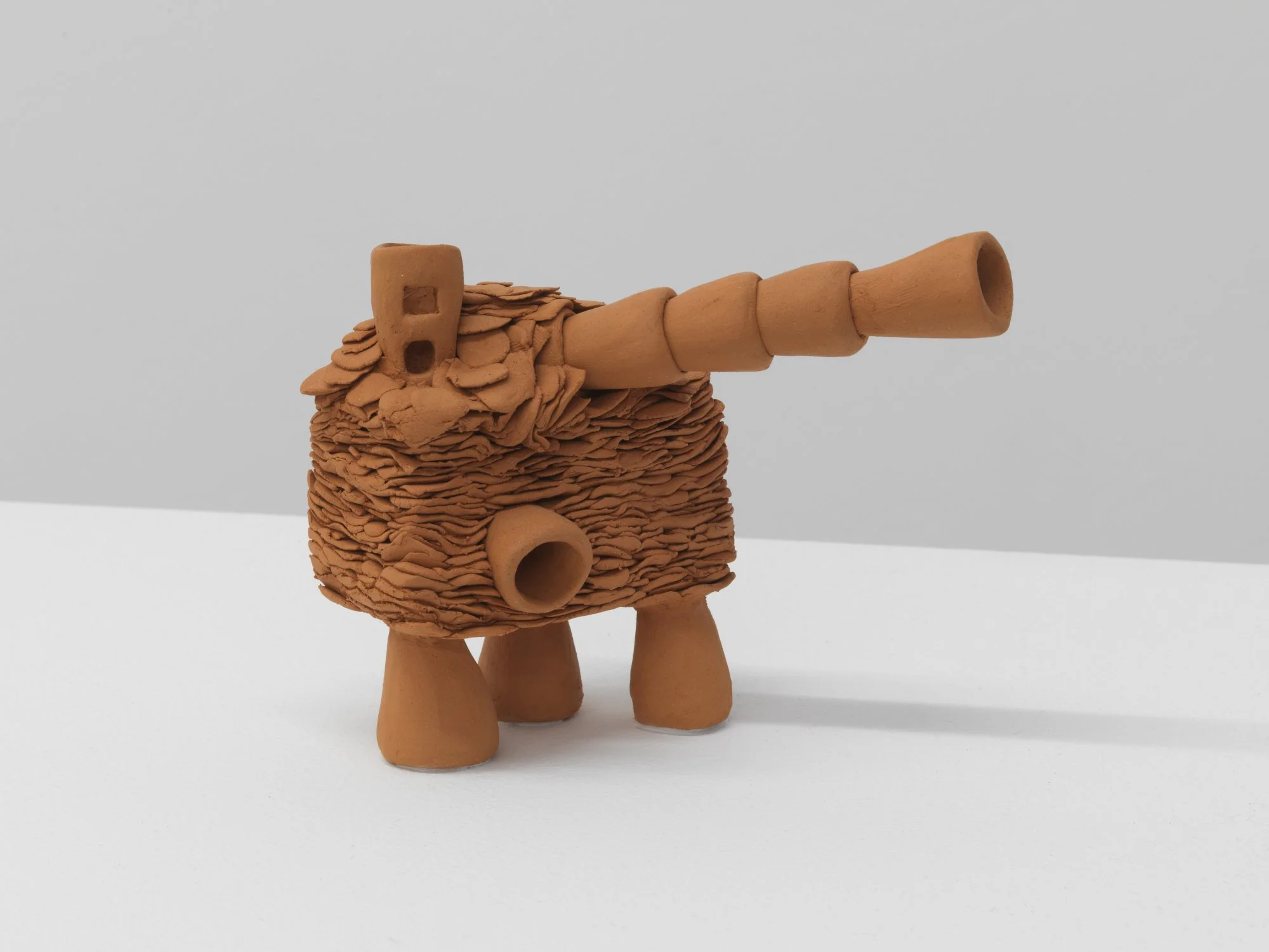
Paky Vlassopoulou, People trying to get themselves homes, 2024, Terracotta, 11 x 7.5 x 4 cm Courtesy: the artist and private collection Photo: Stathis Mamalakis.
Paky Vlassopoulou (b.1985) is an artist whose sculptural forms and installations are imaginative, contextually driven responses to human bodies, socio-political histories, environment, and the passage of time. Sometimes tender, sometimes poetically bleak, her work expresses the primacy of touch and the felt experience, whilst questioning class, power structures, and autonomy.
In 2012, as a response to the dearth of art funding or spaces in Athens after the 2008 crash, she founded the important collective 3 137 with artists Chrysanthi Koumianaki and Kosmas Nikolaou, inspired by a desire for dialogue, collaboration, and institutional critique. They have presented many experimental books, exhibitions, performances, and talks together.
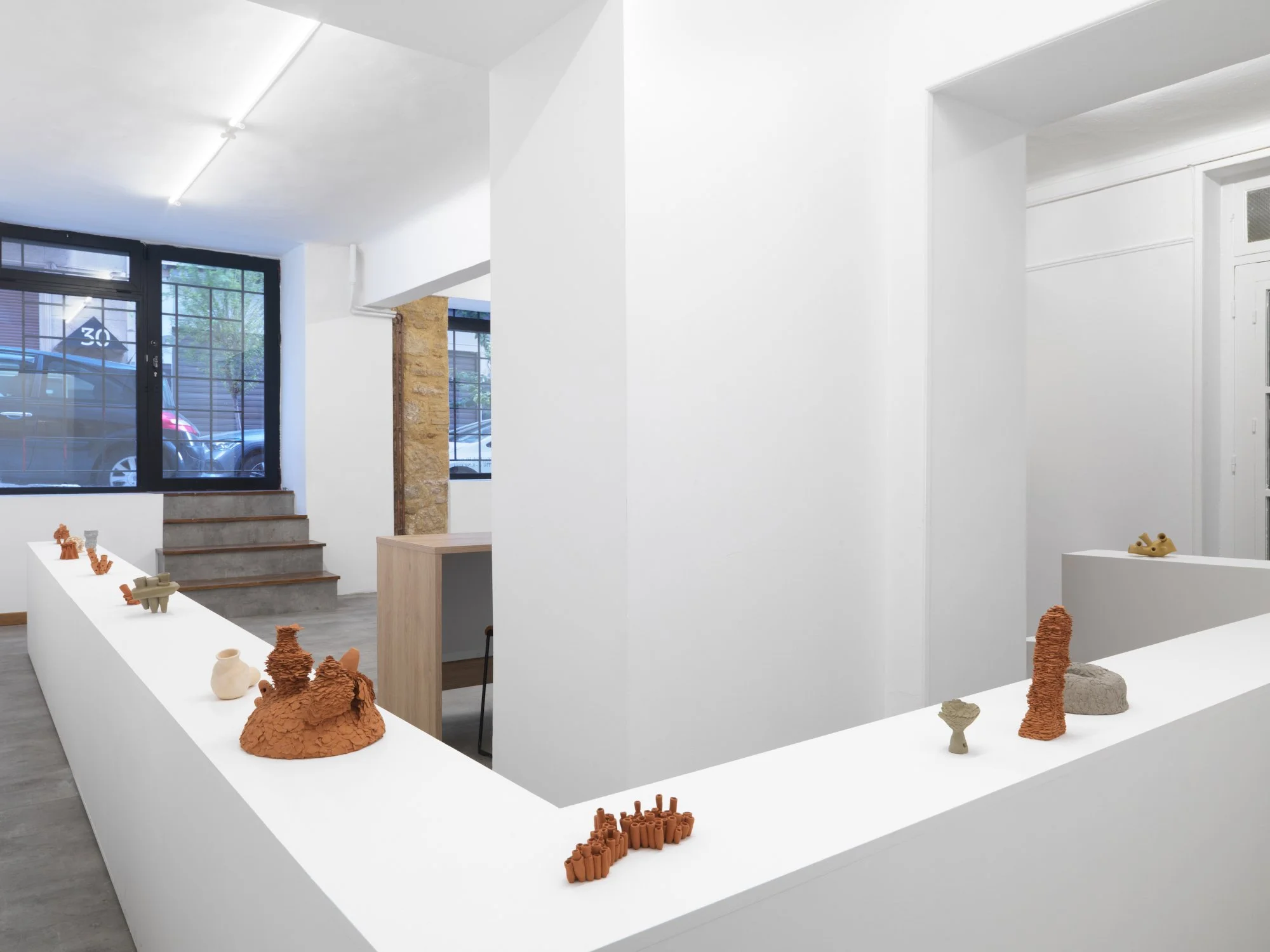
Paky Vlassopoulou, WE NEED TO DO MORE: magical thinking, 2024, installation shot. Courtesy: the artist and Callirrhoë, Athens, Greece Photo: Stathis Mamalakis.
One sees in her works for exhibitions, A day after a day after a day after a day (2023), and WE NEED TO DO MORE: magical thinking (2024), that she has an ability to creatively enter into different psychological positions or states with tremendous sensitivity and emotional capacity, whether that of an incarcerated migrant or a young imaginative child. Her historical knowledge and research, combined with craft, result in nuanced, intersectional works that are sensory, intellectual, and conceptual. Vlassopoulou's preference is for simple materials such as clay or earth, and ranges from large permanent outdoor structures such as WINDBREAKER (2024), on the island of Tinos, to small clay objects inspired by child's play for WE NEED TO DO MORE: magical thinking. The latter reminds me of early Arlene Shechet sculptural pieces with their quirky, humorous forms.
A day after a day after a day after a day originated from the time Vlassopoulou spent on Leros island, a recent site for the processing of migrants and refugees, but also former military barracks, prison, and asylum. The work featured fine porcelain plates inspired by the writings and marks left by the silent incarcerated people there. Shown serially as fragile, sometimes cracked pieces on the wall, it brought home through the familiarity of form (plates) the horror of silent messaging, isolation and abandonment in ways the ever-numbing bombardment of daily news does not. Poignant and powerful, without being didactic, it pierces through the mediated noise and our weariness.
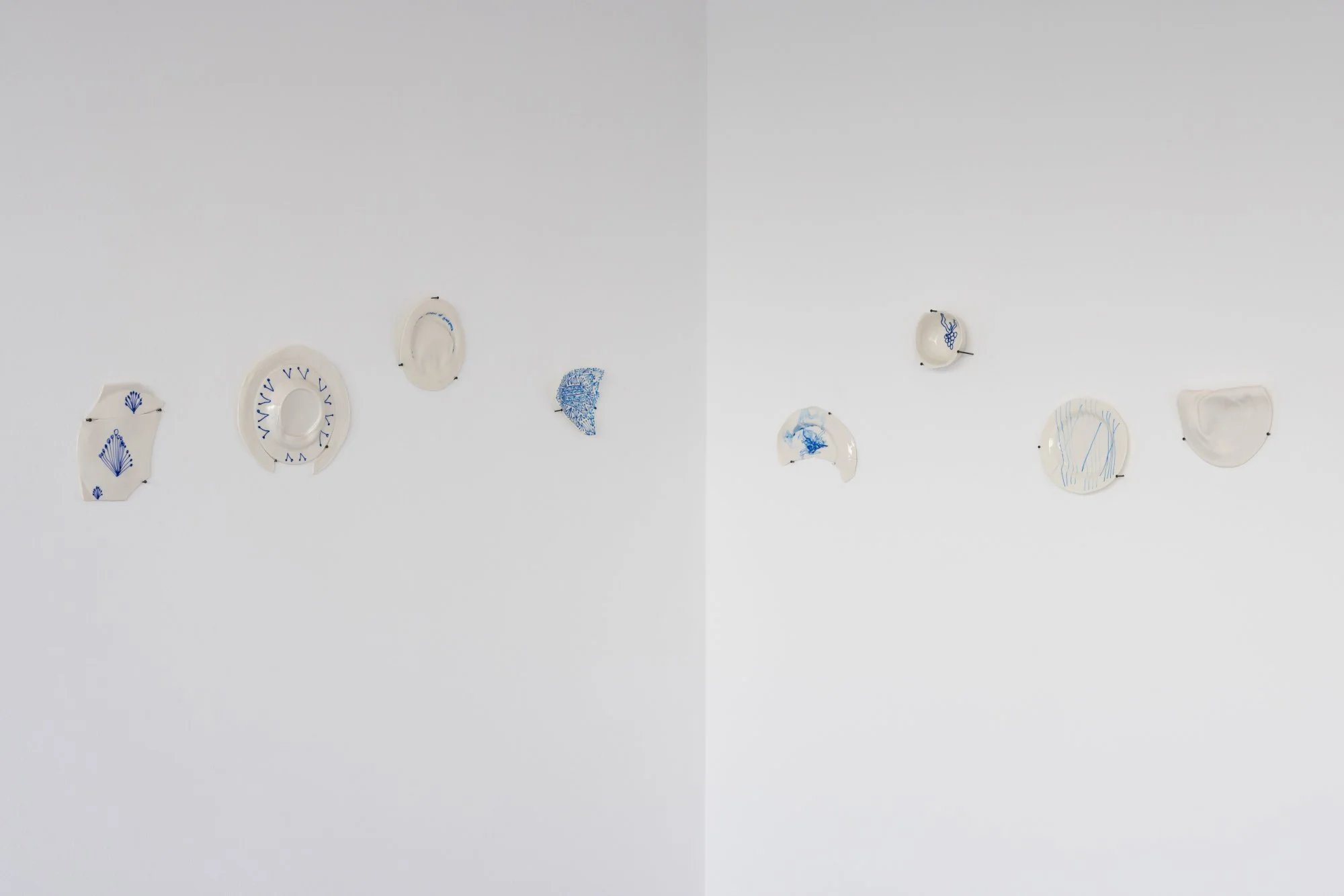
Paky Vlassopoulou, A day after a day after a day after a day, 2023-, installation shot. Courtesy: the artist and Callirrhoë, Athens, Greece. Image courtesy of Sharjah Art Foundation. Photo: Ivan Erofeev.
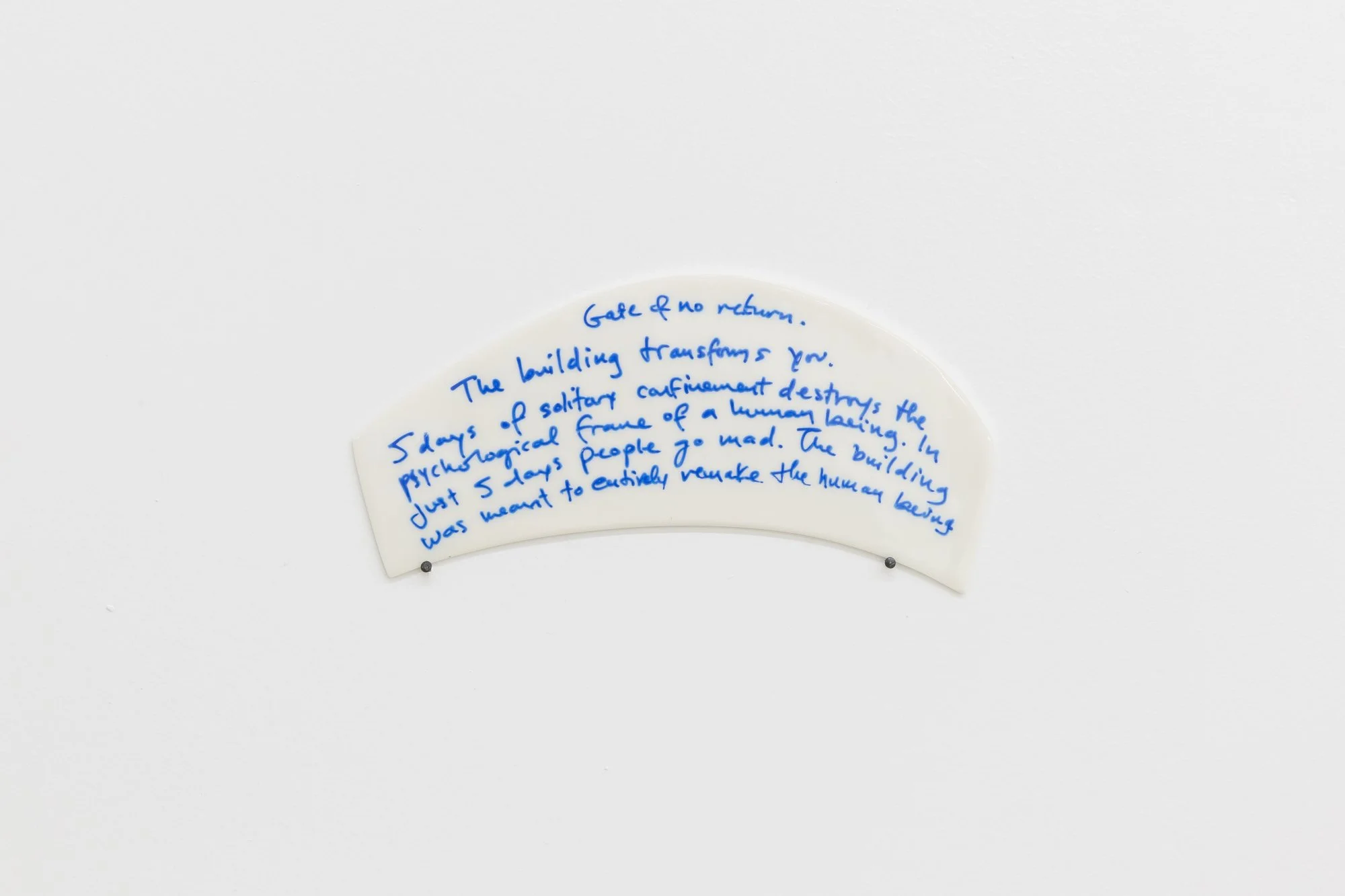
Paky Vlassopoulou, #46 (A day after a day after a day after a day), 2023-, Porcelain, ink, 22 x 12 x 0.8 cm. Courtesy: the artist and EMST | National Museum of Contemporary Art, Athens, Greece
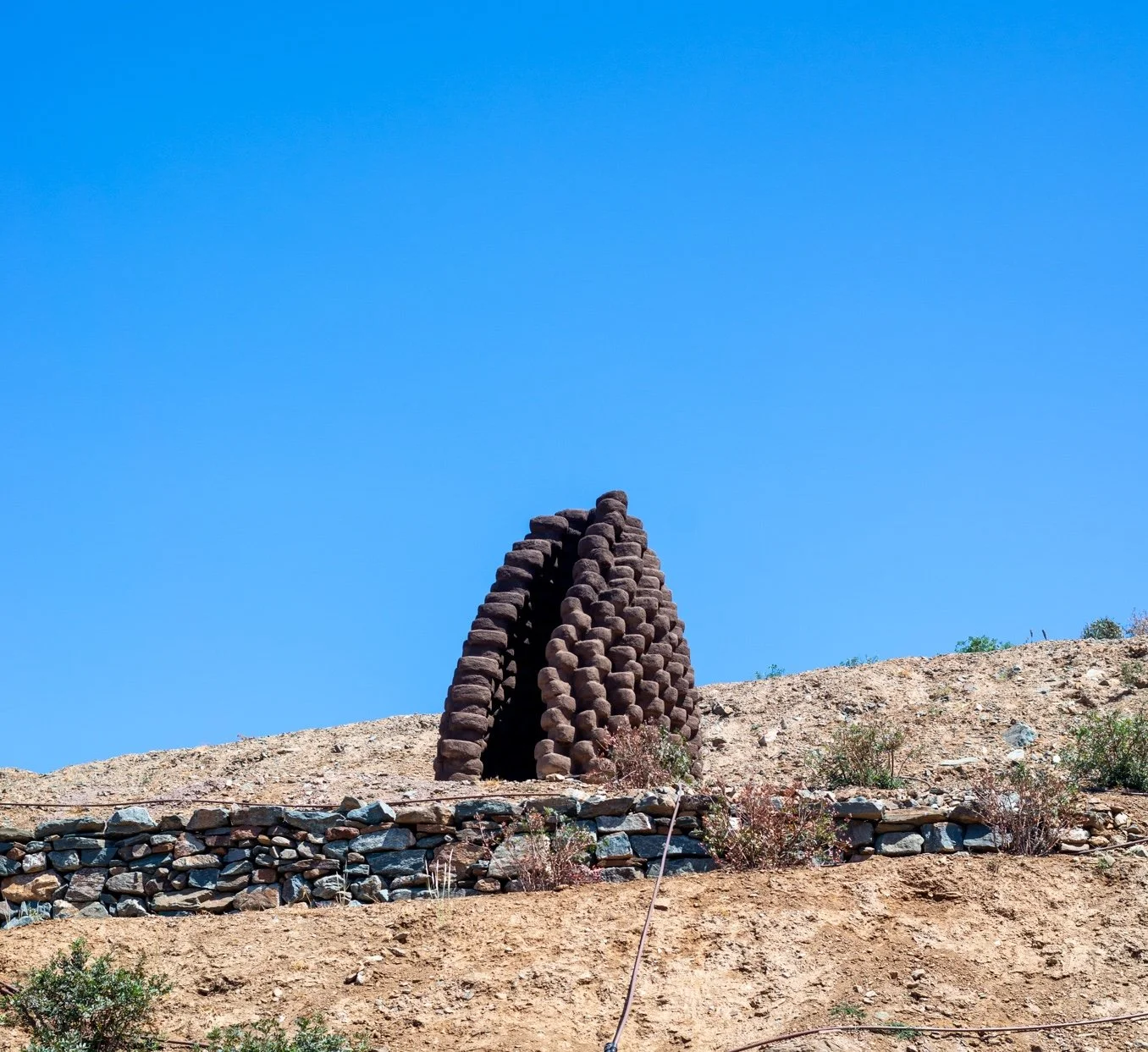
Paky Vlassopoulou, WIND BREAKER, 2024, Lime, soil, river sand, rubble, straw, peat, raw and fired umbra natural pigments, linseed oil, stones, 210 x 210 x 270 cm. Courtesy: the artist and Odera, Tinos, Greece. Photo: Ioannis Koliopoulos
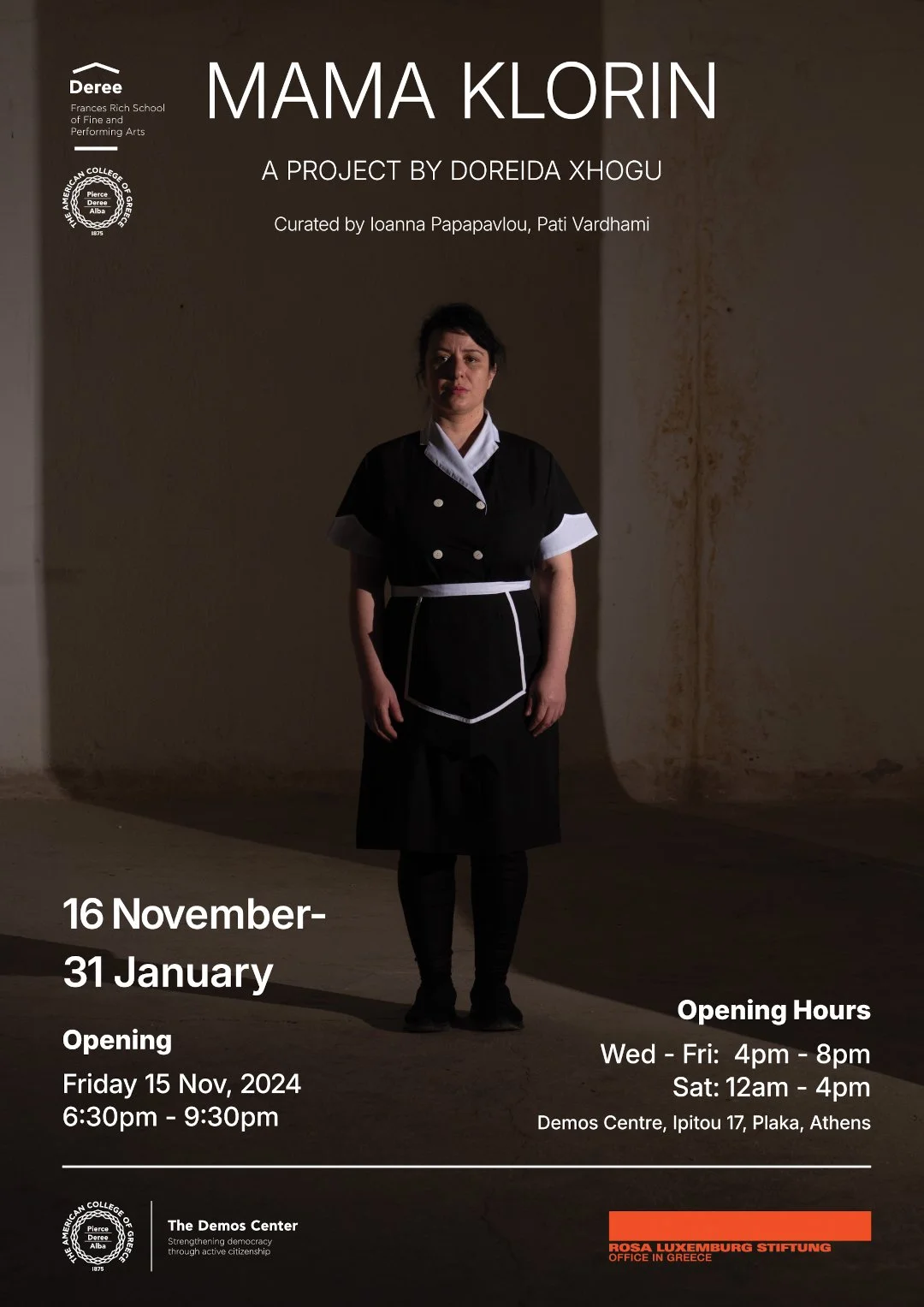
Doreida Xhogu, Mama Klorin, 2024. Exhibition poster. Courtesy the artist and the Demos Center of the American College of Greece.
Immigration and personal sovereignty are themes close to the heart of Athens-based Pati Vardhami, a curator and critical theorist who studied Contemporary Art Theory at Goldsmiths College in London. Through various exhibitions and talks, she brings the Albanian migrant experience and community into the Athens arts sector.
An Albanian migrant herself, she curated with Ioanna Papapavlou the Athens exhibition Mama Klorin (2024). An original creation of Albanian born artist Doreida Xhogu, the show presented stories and art by Georgian, Albanian and immigrant cleaners at the Demos Center of the American College of Greece. In workshops, and tours, discussions on migration, economic survival and to what degree this form of labor allows for, or determines identity and inclusion were held alongside expressive clay sculptures and still-lives on tiles. It brings to mind the American artist Mierle Laderman Ukeles' Manifesto for Maintenance Art 1969! and Touch Sanitation Performance (1979-80).
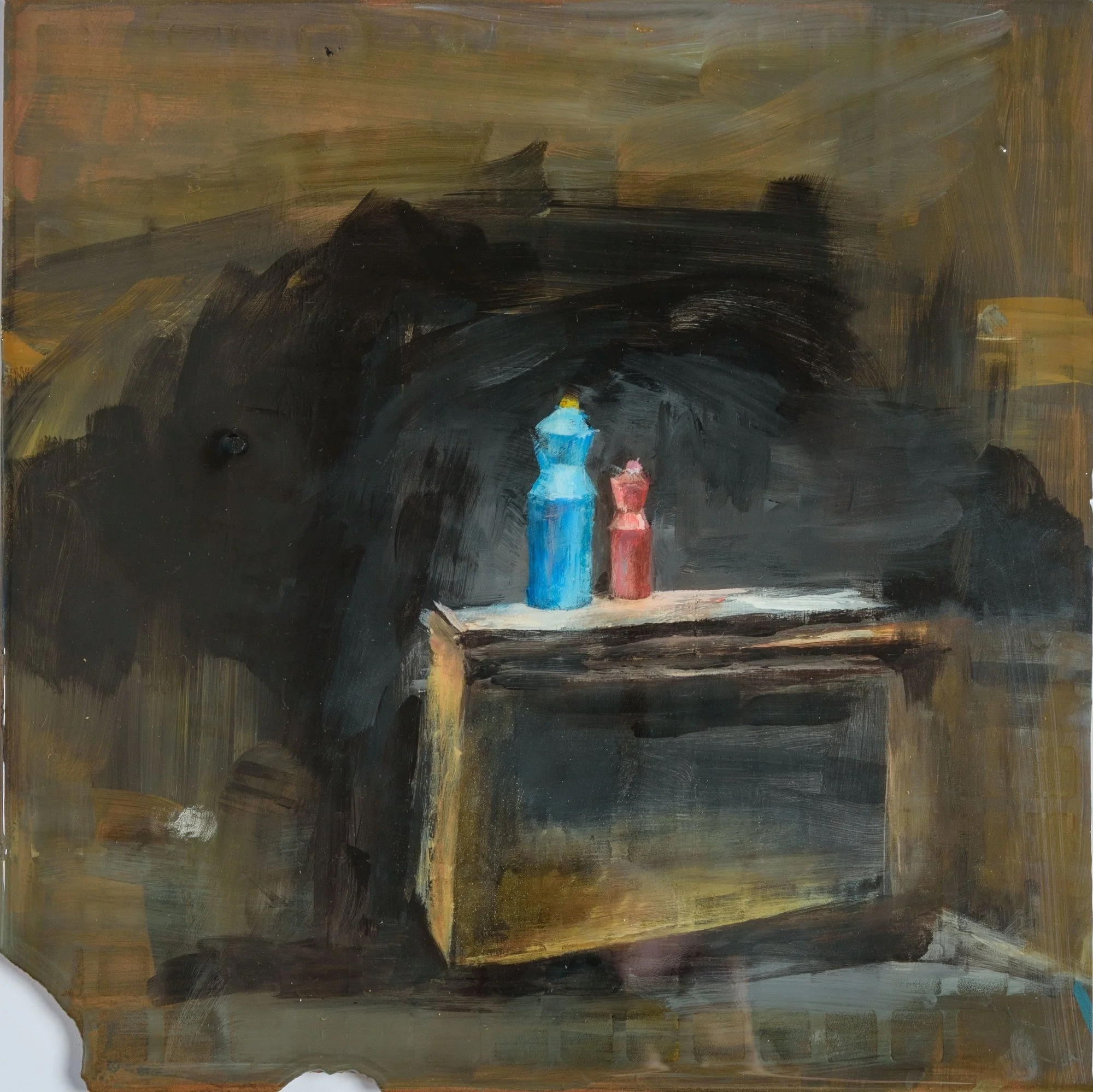
Doreida Xhogu, Dy Çufot, detail, 2018-2024. Acrylics and resin on found ceramic bathroom tile34 x 34 cm. Courtesy the artist. Photograph Thodoris Tempos.
With the slow public realization and acknowledgement of the interdependence between Greece and its Balkan neighbours, exhibitions like this bring shifting ideas around Greek nationalist identity into sharp focus. Alongside her work as a staunch activist, Vardhami, like others in Athens, puts her socially aware principles and theory into her practice.
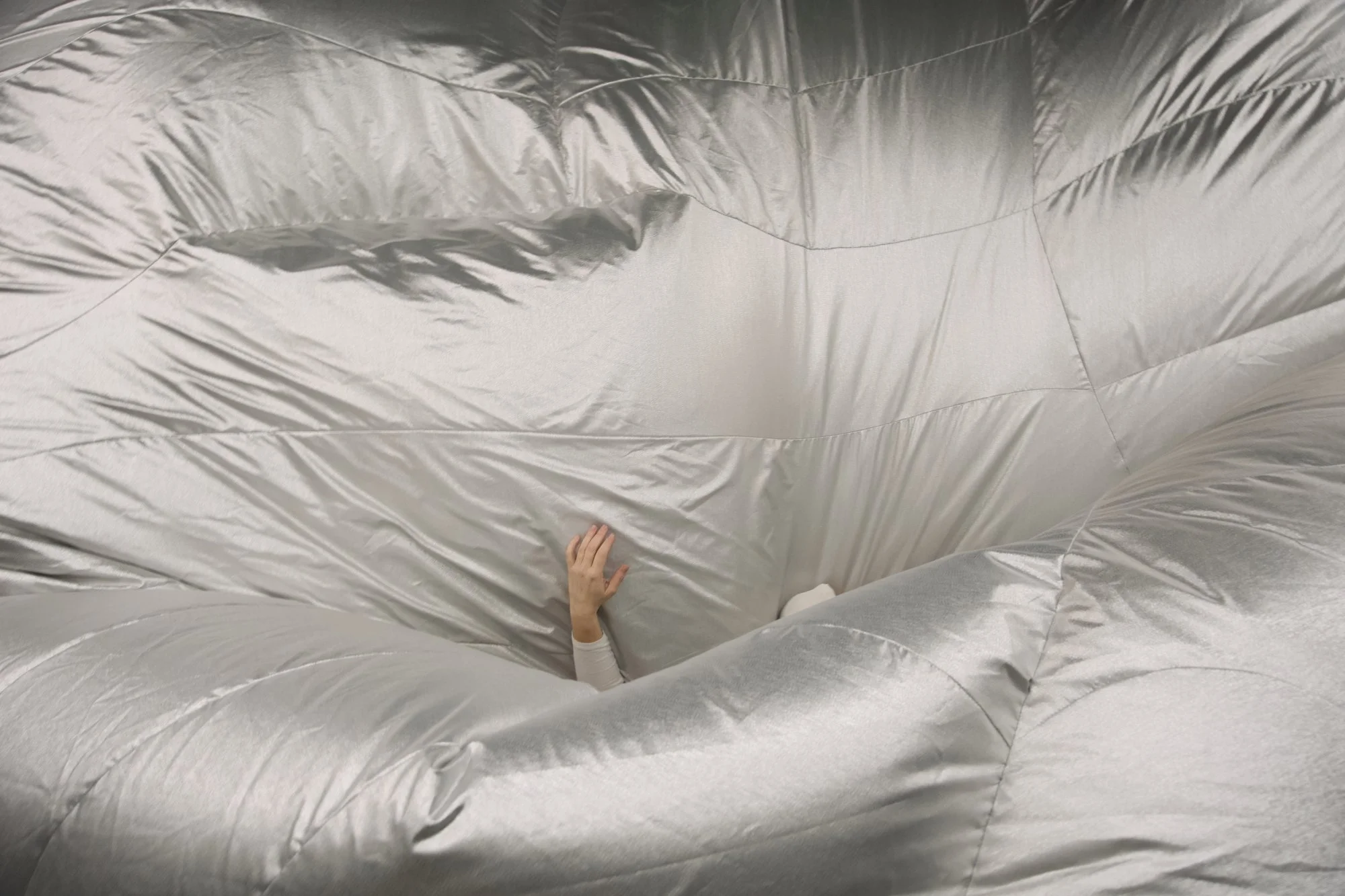
Georgia Sagri, Gone Gone Beyond, 2025, sculpture and performance, 15 January 2026. Performances Dessin, Drawing Lab x Centre Pompidou, Paris.
Georgia Sagri (b.1979) is an international artist, activist and current Professor of Performance at the Fine Art School of Athens. She plays an important role for her students, exemplifying both fearlessness and deeply felt progressive politics lived as real experience. Born in Athens, she engaged in open public activism there, and continued after her studies at Columbia University in New York, where she was one of the founders of Occupy Wall Street in New York, 2011. I remember this well, being there myself, as some of the last vestiges of free speech and right to assemble in public spaces were covertly re-delineated and withdrawn within the city.
In her work, she likes to flip things on their head, collapsing expectations around performance, notions of unfolding timelines, and fixed ideas of how artworks should 'be' or 'behave'. She also embeds into her process and works, the problematic economics within the labor of art making.
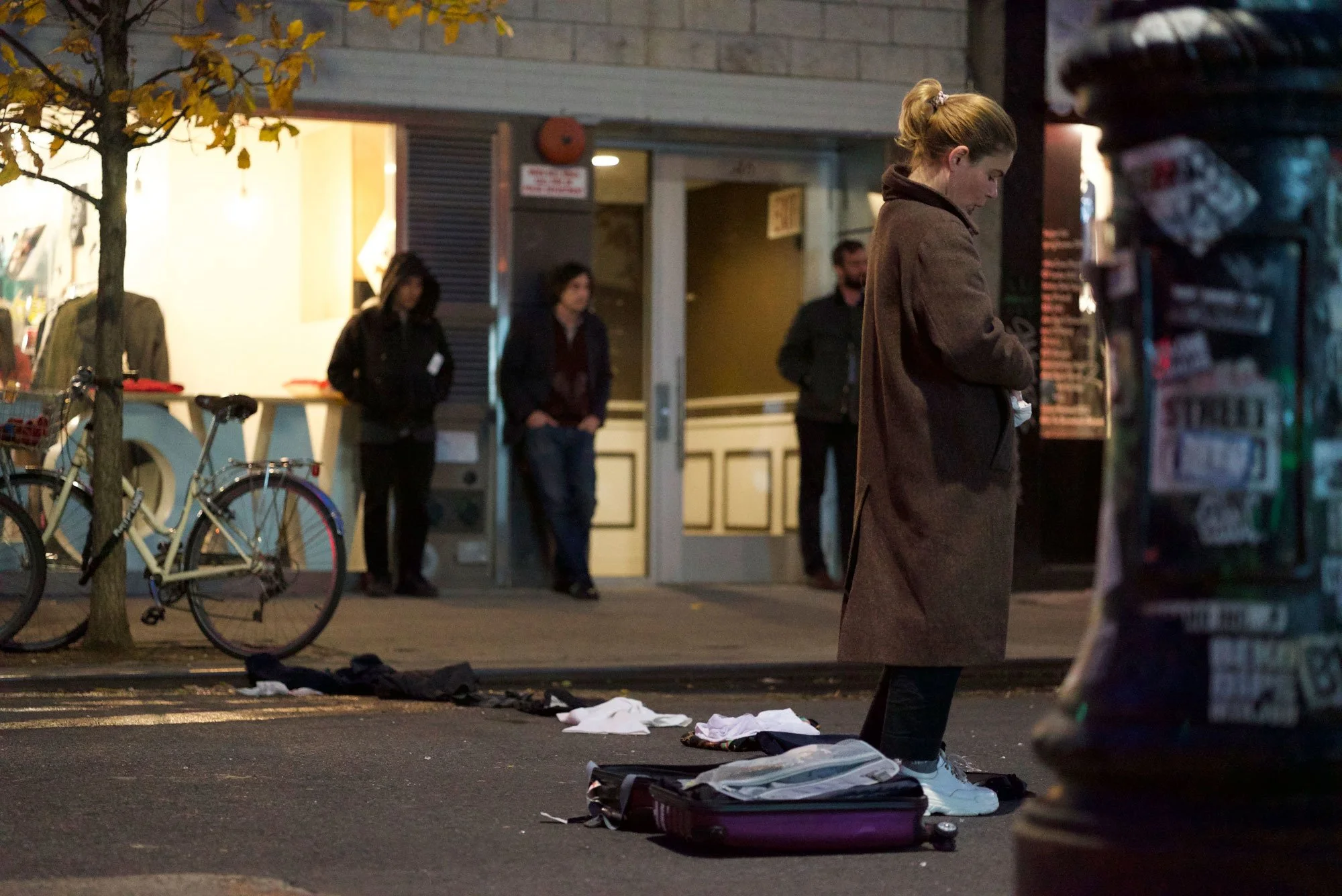
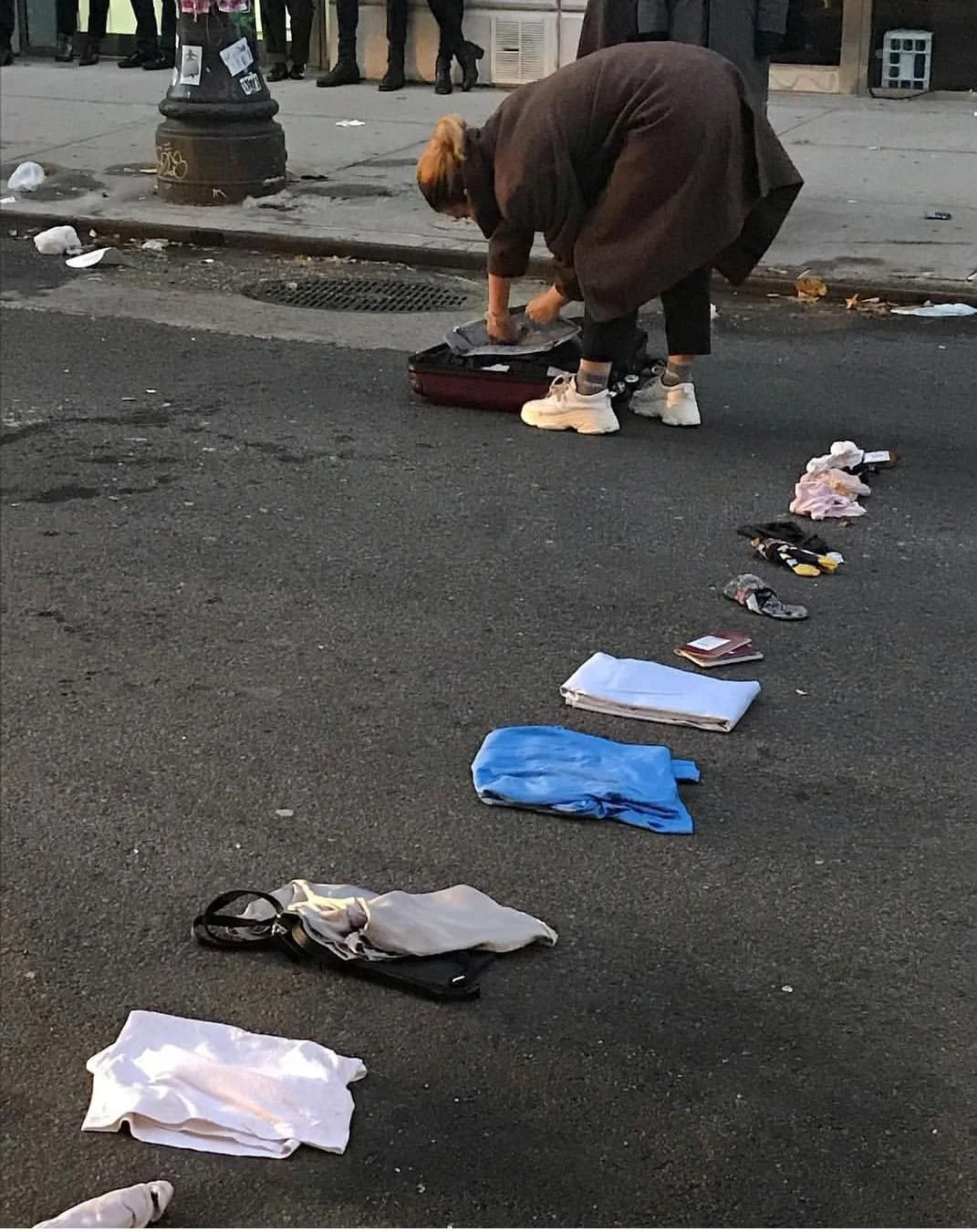
Video still: Georgia Sagri, Semiotics of the Household, 2018, HD video with sound, 1 15’ © Georgia Sagri / Courtesy the artist and The Breeder
One of her striking performances, Semiotics of the Household (2018), was part of a solo exhibition, Household in 2018 at Essex Street gallery New York, in parallel with the same-named show held at Lars Friedrich gallery in Berlin.
This particular work (which makes me smile, knowing how intense Lower East Side New York can get) involved the repetitive un/packing and scattering of her suitcase contents on Hester Street, much to the bemusement of passersby, impatient traffic, and city cops. Even though, for them, it was just another normal, crazy day, Sagri was interested in disrupting and re-configuring the daily implicit social agreement of what is 'normal' or even 'reality'.
I met her in person at her show Kore, 2025, at The Breeder gallery in Athens. The exhibition had a certain unexpected delicacy and poise alongside conceptual rigor, which I loved, so it was interesting to encounter her resolute intelligence, vulnerability, and almost martial, proud bearing when talking with her. She showed to me artworks that were forms of self-portraits: folded, black, painted clothes, a hexagonal bench centered around a hand-blown elliptical glass orb, copper pipes delivering water from outside the gallery to a small tap and stone basin inside, and large pastel fingerprint paintings that looked like pale, colorful, exhalations of breath. It felt like a very personal show about states of being, and one that allowed for a fragility and grace after battling for a long time.
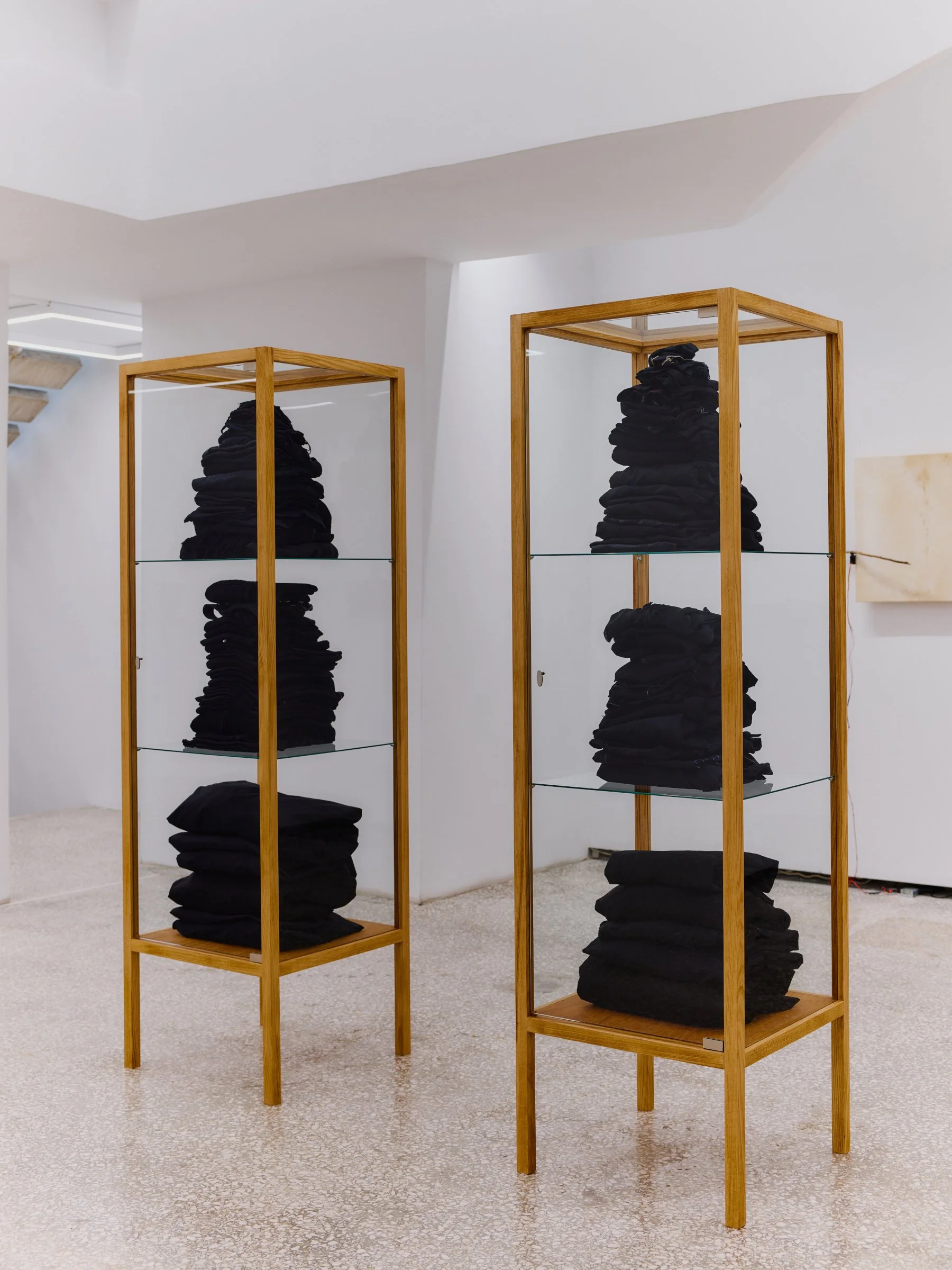
Georgia Sagri, Caryatides. Absent Father, 2025. © Georgia Sagri.
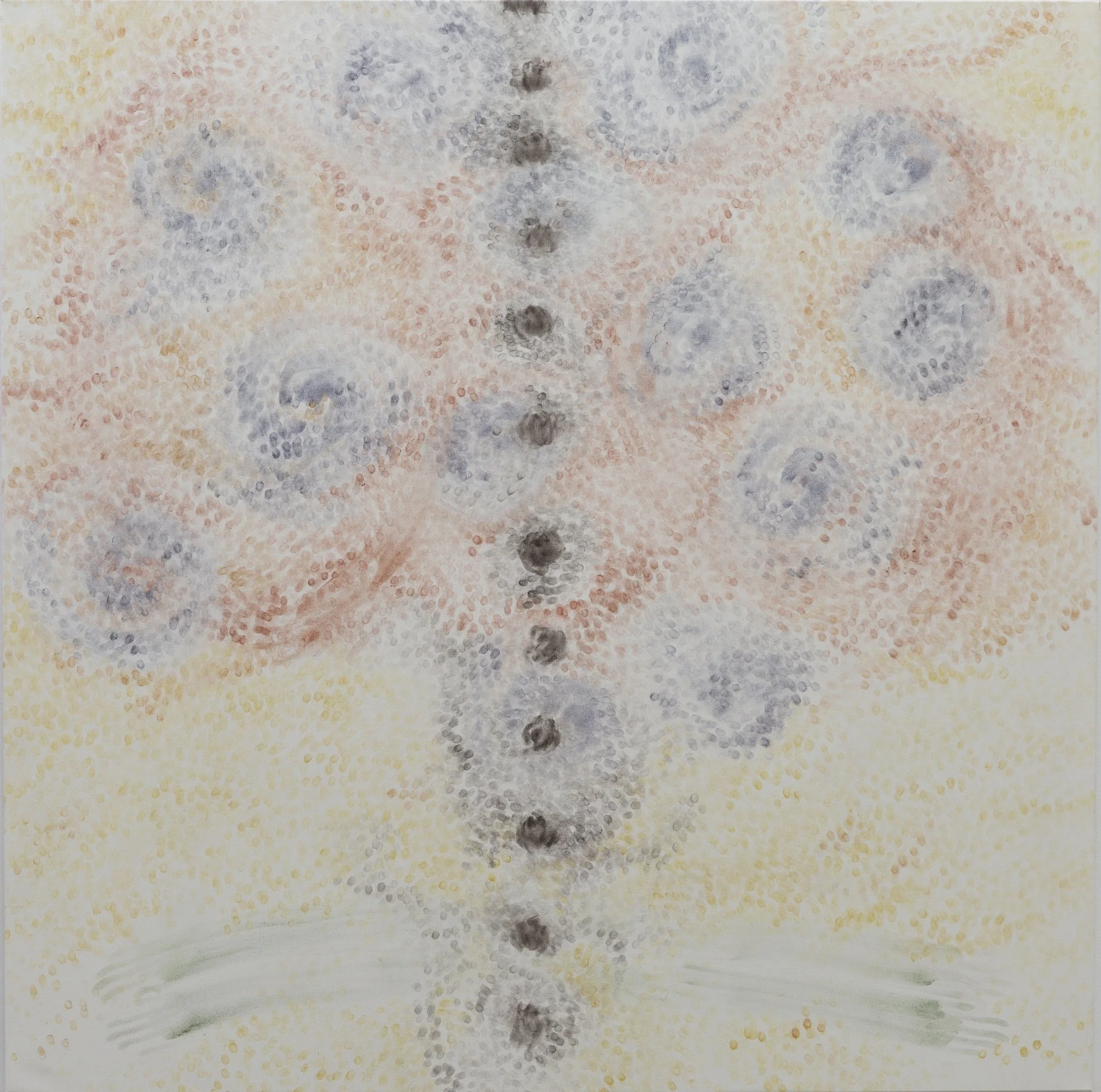
Georgia Sagri, Cosmic Lungs, 2023. © Georgia Sagri / Courtesy of the artist and The Breeder.
Athens lacks a variety of quality print or online magazines for contemporary arts criticism. Despina Zefkili, a writer and editor-in-chief of Athinorama, the leading cultural guide, is the one person who consistently reviews arts critically, publishing both in Greece and abroad. Highly respected, her penetrating articles have appeared in Artforum, ArtReview, Frieze, Artnet, and Flash Art among others. Her writing addresses the art, as well as the socio-political reverberations and consequences within Greek life. She is a member of the Temporary Academy of Arts (PAT), founded in 2014 by art theorist and curator Elpidia Karaba. PAT, through its exhibitions, education, and publishing, brings parallel knowledge and high expectations to challenge and inform existing arts institutions in Greece. In person, Zefkili has a lightness of touch and twinkle in her eye that belies a sharpness and comprehensive understanding of Athen's art eco-system, with all its shifts and needs. She is wary of the exoticization and foreign fantasies around contemporary Greek art, as she wrote in a prescient essay for Art Paper in 2016:
"Foreign curators have often celebrated the creativity coming out of Athens in recent years, not only as an affordable and romantic place of art production but also as a hub for do-it-yourself funding models and sustainable art activity."
However, she acknowledges that Documenta 14 itself shook up and acted as a catalyst for a generation of Greeks. It is clear that many of these artists produce work that easily exists with some of the best out there internationally; nevertheless, their attention, more than ever is focused on Greek socio-political issues and meaning closer to home. It will be interesting to see how the evolution of their work can remain independent to pressures due to lack of governmental funding, amidst an increasingly cynical economic drive to invest, exploit, and export the idea of Athens as a tourist and cultural hub. Like Paris, Athens suffers from stifling cliches as a kind of Disneyfied-museum of the past, with its underlying realities creating an incoherence and tension not visible to the surface art economy and national cultural identity.
On a more optimistic note, the interdisciplinary artist Corinne Silva has noticed during the last decade spent in the city that there are more opportunities for artists to exhibit serious and conceptual work. Emotionally resonant bodies of work, underpinned by rich research and an understanding of context, are appreciated. She points out that the Greek contemporary art locale lacked infrastructure and was subsequently market-led, but in recent years, new spaces of different sizes and scope have been slowly changing that. Silva comments, "Just in the past few months, I’ve seen more commercial galleries showcase socially meaningful and engaged practices. This further supports Greek artists to continue to expand the narrative."


Editor Sascha Behrendt is a writer with an in-depth knowledge of arts and culture in the US and UK. Interviews, articles and profiles include artists Amy Sillman, Stan Douglas, Arthur Jafa, as well as features on art and exhibitions in cities around the world.