
October 2026
Kissing the Muse
Writing by Janina Picard and Visuals by Saul Appelbaum
For Ahmedabad Cultural Week 2026, this article brings together prose by Janina Picard and film by Saul Appelbaum, exploring creativity, love, and surrender as ways of becoming part of nature.
“Perhaps beauty begins here: not in the finished object, but in our willingness to enter an encounter without knowing what it will produce.”
— Janina Picard
Saul Appelbaum: Can you tell us about a recent dream that left you with a feeling you couldn’t quite name?
Janina Picard: In the dream there were these huge trees, and I think there was a bird somewhere. And I woke up with a sense of there was some. I don't know what it was. Fear or anxiety for sure. It felt a bit like I'm the last person on Earth. It was me, nature, the horses, the bird. That's it. And I was in a transition space between animal and human being. I was more nature than ego. It felt scary and beautiful. There was no system for me to exist in other than the forest, the nature system.
Saul Appelbaum, Nature and Nurture, 2025
There is a peculiar moment at the beginning of any creative act when nothing has happened yet.
There’s an intuition, perhaps. A sensation. A fragment of an image. Something you cannot quite name. You don't know where it will lead, or whether it will lead anywhere at all.
And still, you lean toward it.
I have begun to think of creativity as a meeting between strangers who might, if given enough time and attention, become lovers.
The metaphor may sound extravagant. But consider what happens when two people who do not really know one another yet begin to fall in love. There is no guarantee of an outcome. No productivity metric can justify the time spent together. There is simply the strange and compelling experience of paying attention to another person; to their gestures, their silences, to what makes them laugh.
And then, perhaps, a kiss.
What could be less productive?
A kiss produces nothing we can easily measure. There is no artifact to photograph, no accomplishment to post, no applause to receive. If we approached every kiss with the question, What will this accomplish?, we would have misunderstood the nature of the experience entirely.
And yet, a kiss can change everything.
Creativity asks something similar of us.
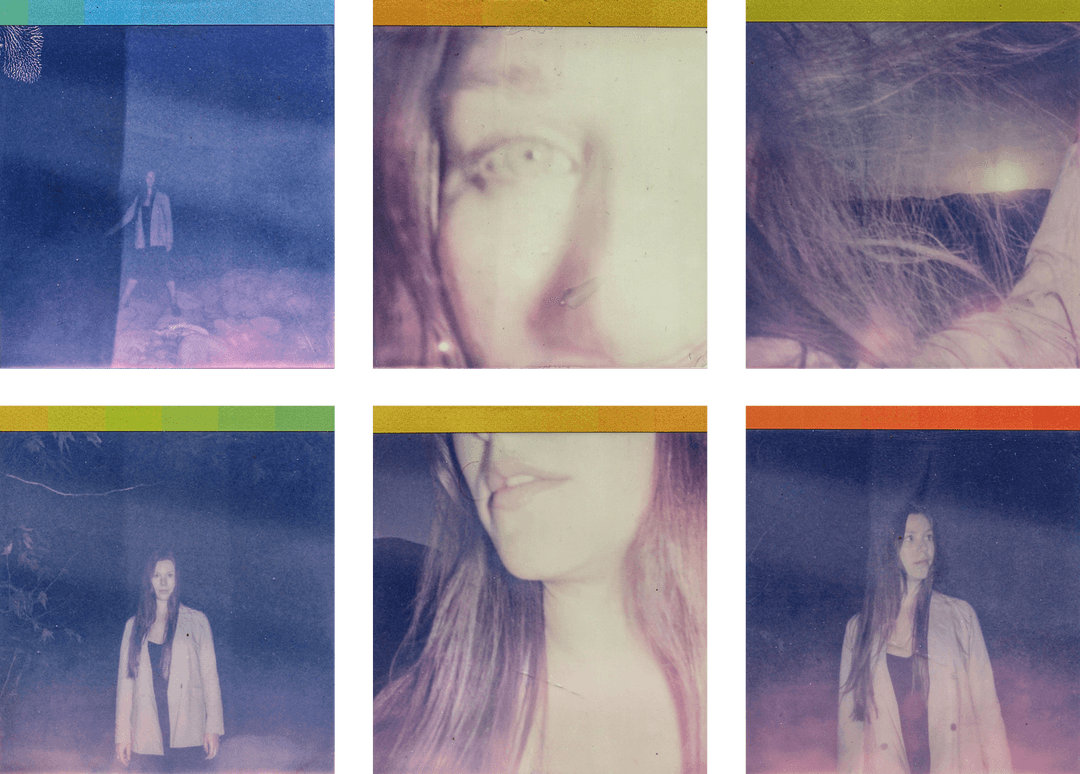
Saul Appelbaum, Nature and Nurture, Film still, 2025
To create is, in part, to open a channel into the territory of inner experience. We lean forward toward something that has not yet taken form. We allow ourselves to become receptive to an aesthetic, an image, a rhythm, a possibility for change. We don't necessarily know what we are looking for. We only know that something has caught our attention.
The temptation, of course, is to rush past this uncertain beginning. What is this for? Will it become something? Can I share it? Will anyone like it? Will my mom see it? Is this productive?
These questions are understandable. We live in a culture that has become remarkably skilled at turning nearly every human activity into an instrument of production. Joyful private moments are at the mercy of being interrupted by that all too familiar gnawing thought: I could post this. I should share this to my story.
The artist is often asked to justify their creation by its outcome: the finished painting, the published essay, the film festival run, the post that goes viral, making algorithm daddy happy.
But what if the essential creative act happens before the outcome?
What if creativity requires us to remain for a while in the kiss?
This is the strange paradox of creative work: the moments that appear least productive may be the ones doing the deepest work. The pause.
To sit before a blank page without immediately forcing it to yield something. To wander through a museum and linger before a painting without asking what it teaches us or study the wall label. To listen to a piece of music simply because something in it keeps opening a door inside us. To rearrange objects in a room because, somehow, one arrangement feels more true to the current version of you than another.
From the outside, these activities can look like indulgence, a waste of time even. But from within, if we allow it, they may feel like discovery.
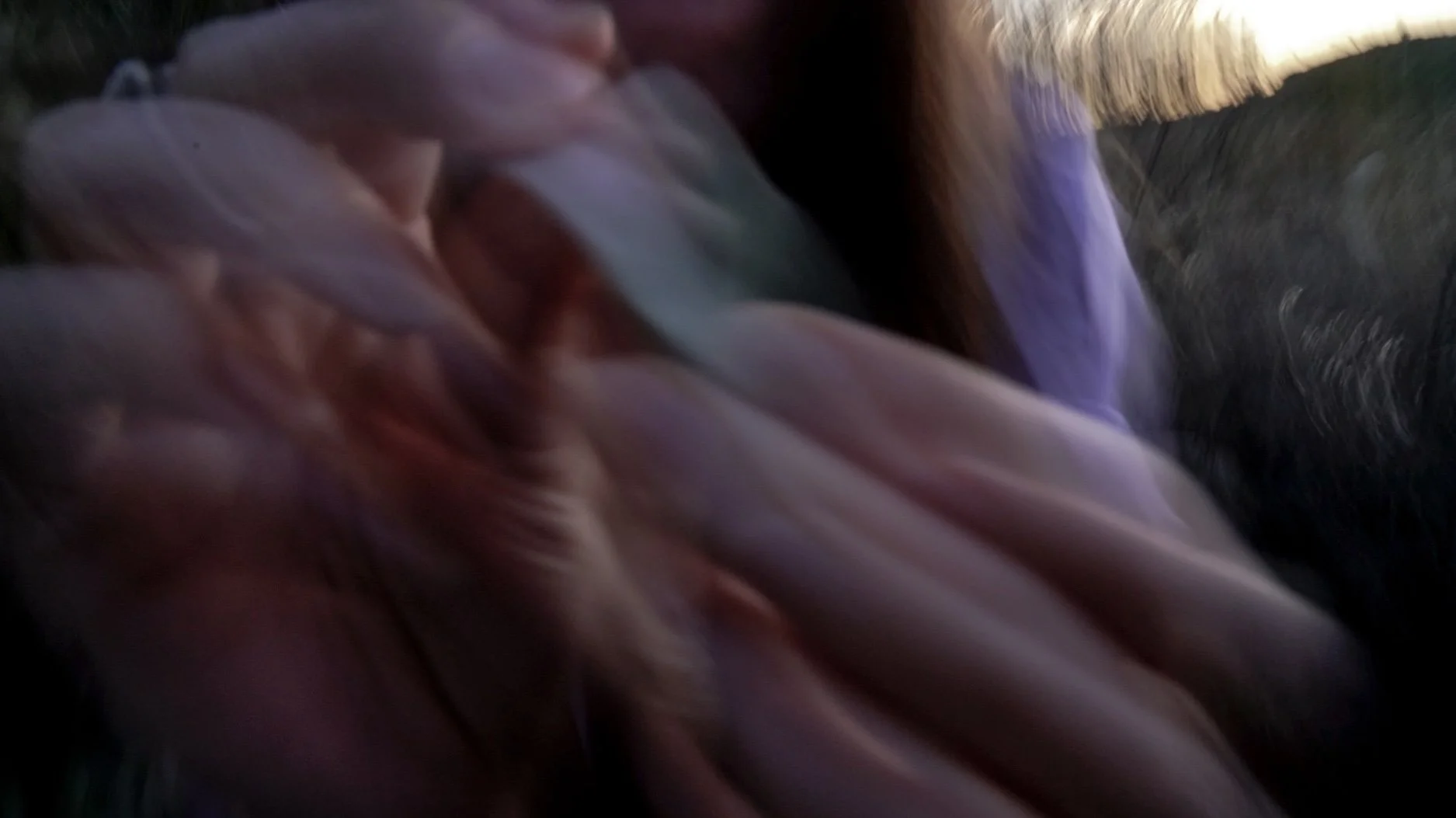
Saul Appelbaum, Nature and Nurture, Film still, 2025
Something happens when we stop demanding an immediate return from our attention. The mind becomes less managerial. Perception becomes more porous. We begin noticing things that cannot be summoned on command. Being in the moment no longer requires us to participate in a transaction.
The muse, the creative spark, does not necessarily arrive because we have worked harder. Sometimes she arrives because we have finally become quiet enough to notice that she was there all along.
This is why the creative process is less hustling and more falling in love. We surrender a certain amount of control.
We cannot force true intimacy. We cannot schedule inspiration simply because the calendar says it is time to be inspired. We can prepare the conditions for an encounter, but we cannot command the encounter itself. We can only show up, honest, ready.
And then, at some unpredictable moment, something larger may take over. A third party joins the conversation, born from the encounter.
We experience these moments as though the work has come from somewhere beyond us. But perhaps it is more accurate to say that we have temporarily stopped standing in the way of what was trying to emerge. The third body. The creation. In this sense, creativity is relational.
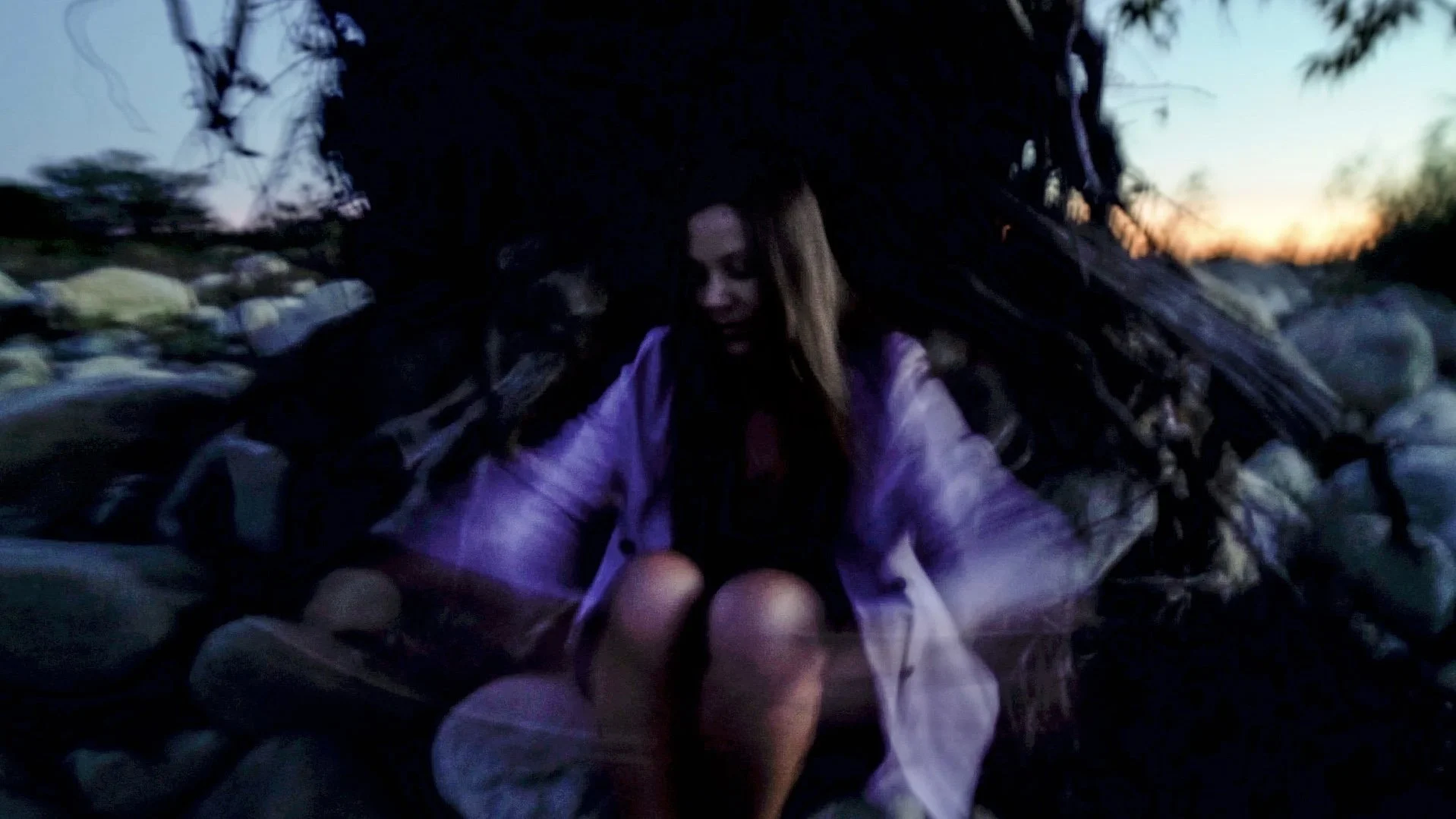
Saul Appelbaum, Nature and Nurture, Film still, 2025
This is not an argument against creative discipline. Quite the opposite. For the lover to be present with the other, the lover has to do the work to be present with themselves first. Building the house, then dancing in the kitchen.
Discipline does not eliminate surrender. It makes surrender possible. We establish the conditions under which something unexpected might occur. We return to the studio. We open the notebook. We paint yet again. We make ourselves available. Not necessarily to what we can produce, but to what is happening and what that feels like.
That distinction may be increasingly important. We inhabit an economy of constant visibility, where experiences are easily converted into evidence of having experienced them. A beautiful moment can become a picture in our camera roll before it has finished being a moment. An insight becomes a post. A creative impulse becomes content. We are surrounded by technologies and systems designed to make us faster and more efficient. We are encouraged to optimize our time, quantify our focus, share our health data with billion dollar corporations. While helpful as such, only sustainable as long as we use it to the benefit of our emotional and mental wellbeing for when the truly important things in life appear. The friend, the lover, a sunflower growing from concrete.
Some of the most meaningful human experiences resist optimization precisely because their value cannot be separated from their uselessness.
A kiss is one of them.
So is staring out a window.
So is making something no one will ever see.
The kiss is valuable precisely because it does not need to become anything else.
Perhaps beauty begins here: not in the finished object, but in our willingness to enter an encounter without knowing what it will produce.
The lover appears. We lean closer. We surrender, briefly, to the possibility that something larger might happen between us. And sometimes it does. Nothing to be gained. Everything to be gained.

Ahmedabad Cultural Week, 2026
October 23 - November 1
India
Janina Picard is a German actor, director, writer, and producer whose multidisciplinary practice spans film, television, theater, voice, and performance. Born in Frankfurt, she trained at the State University of Music and Performing Arts Stuttgart, LAMDA, and The Actors Studio in New York, where she studied with artists including Ellen Burstyn, Alec Baldwin, and Sandra Seacat. Her work moves between character, language, image, and voice, informed by experience in screen acting, theater, dubbing, radio plays, and audio storytelling. Multilingual in German, English, French, and Italian, Picard works across cultural contexts while treating performance as a form of translation between interior experience and shared image. Her creative practice extends into directing, writing, and production, including a traveling theatrical work conceived around the life and poetry of Rose Ausländer. A trained singer and black belt in Taekwondo, she brings vocal presence, physicality, and emotional versatility to an evolving practice centered on transformation.