

July 2026
Katerina Gregos
Sascha Behrendt
From the EMST exhibition Modern Love, (or Love at the Age of Cold Intimacies) curated by Katerina Gregos. Marge Monko I Don’t Know You, So I Can’t Love You, 2018. Installation, smart assistants, speakers, pigment prints. Courtesy of the artist. Photo by Panos Kokkinias.
Katerina Gregos artistic director of the National Museum of Contemporary Art Athens (EMST) in Greece talks about steering the museum, her founding principles, and recent generous and complex exhibitions. An art historian, museologist, and curator of nine art biennials, she shares addressing societal issues through shows on animal rights, the women artist visibility gap, and shining light on radical avant-garde Greek artists. Working with a tight team of forward-thinking and meticulous curators, Gregos balances the tricky, evolving role required by international art museums today. To welcome the public into a community space, alongside presenting challenging ideas through art.
Interview by Sascha Behrendt
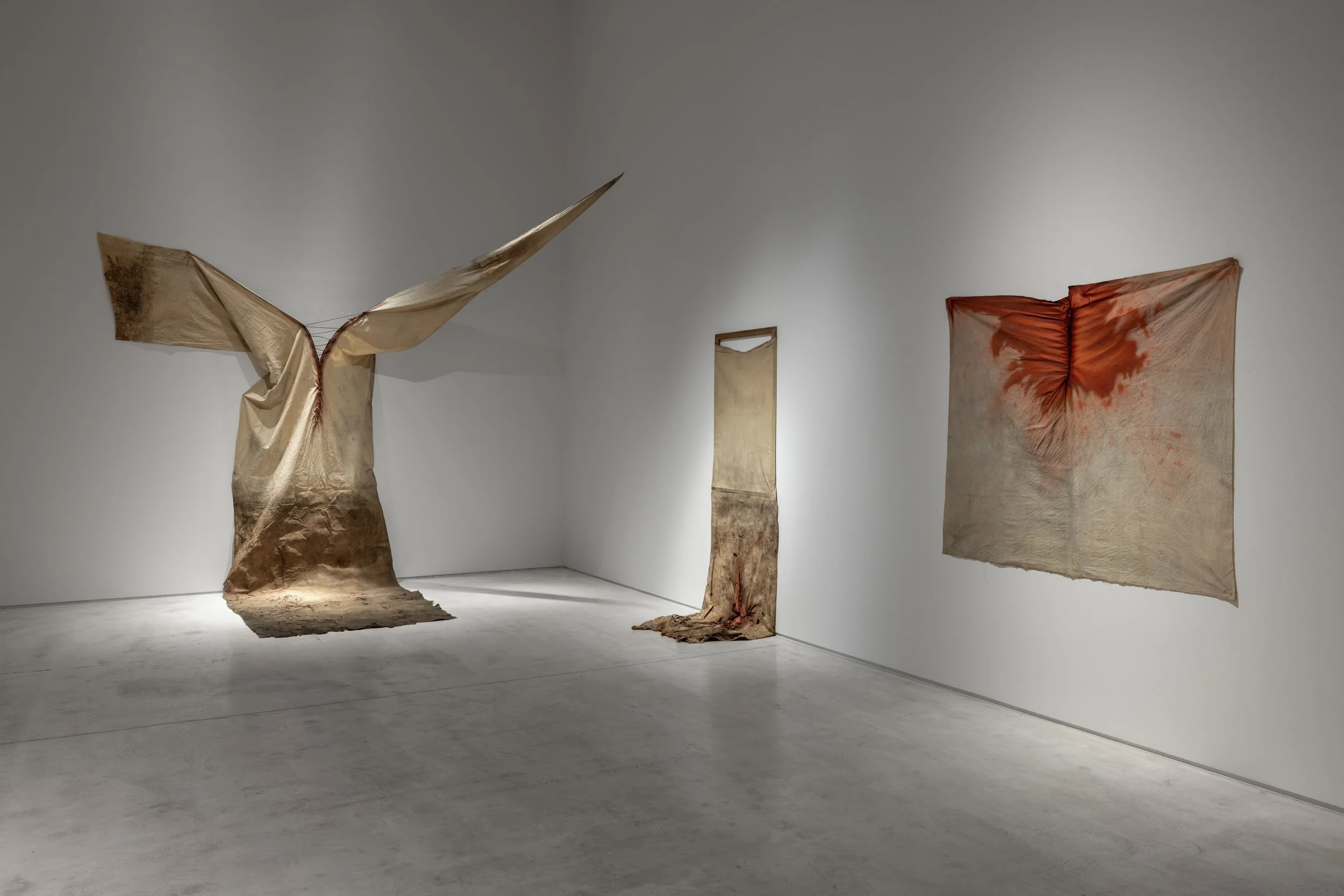
Installation view of the exhibition Stathis Logothetis: Earth to Earth curated by Stamatis Schizakis. Photo: Paris Tavitian.
Sascha Behrendt: I would love to start with your new program at EMΣT, titled The Cosmopolitans, that includes separate shows on Greek artists Stathis Logothetis, Niki Κanagini, and composer Jani Christou. I particularly liked Niki Kanagini's 1976 Manuscript series of overlapping drawings and printed typographic words and her innovative digital-print canvas, Bridal Gown, 2004. I also enjoyed the drama and passion of Logothetis's earth and red, dye-soaked fabric artworks. You will curate a culminating international group show, also titled The Cosmopolitans, opening on 11 December. What are your hopes and plans for this?
Katerina Gregos: Thank you. I'm very glad these works resonated with you. What I find particularly compelling about artists like Kanagini and Logothetis is precisely their refusal to remain confined within disciplinary or cultural boundaries. That quality is, in many ways, central to the thinking behind The Cosmopolitans.
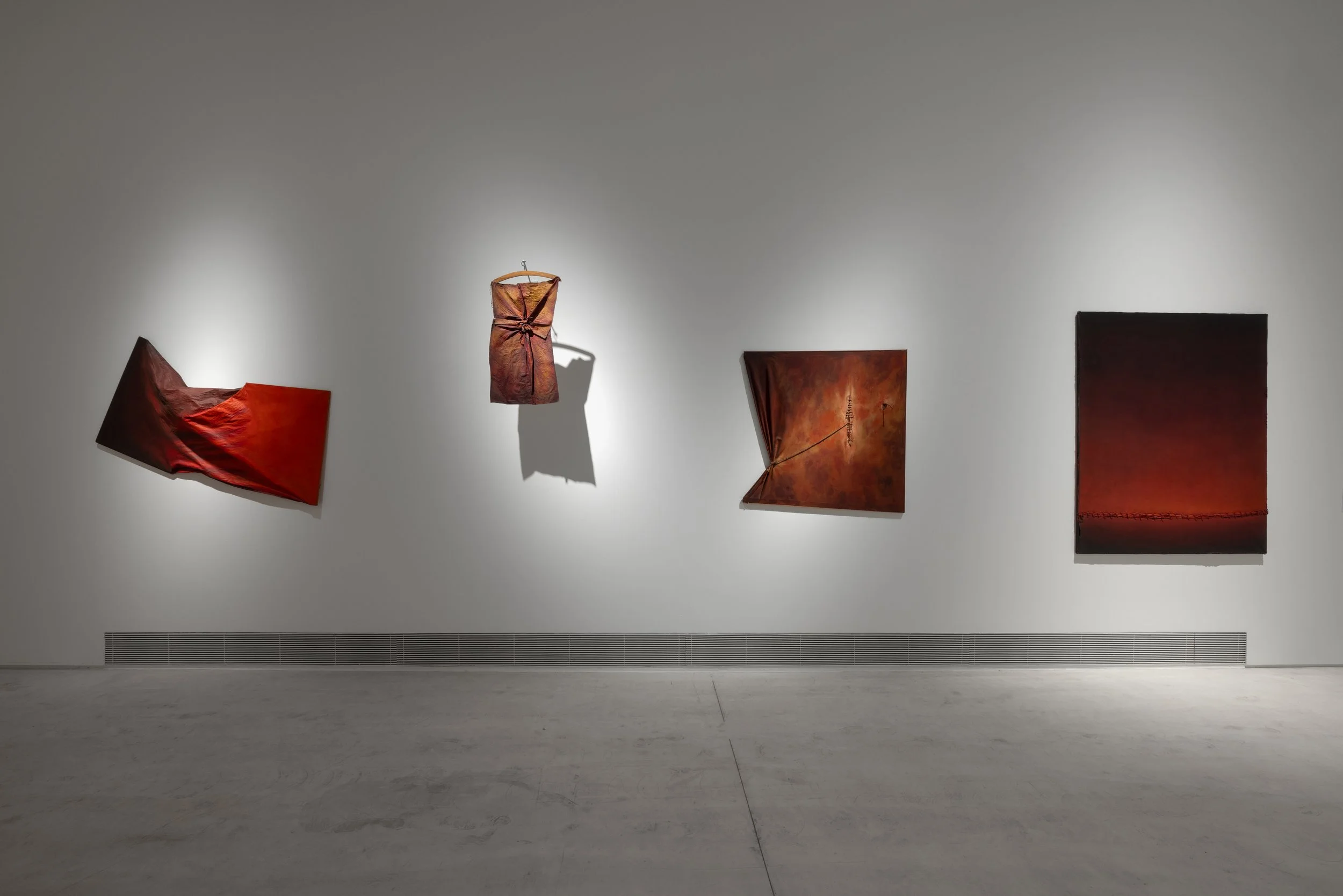
Installation view of the exhibition Stathis Logothetis: Earth to Earth curated by Stamatis Schizakis. Photo: Paris Tavitian.
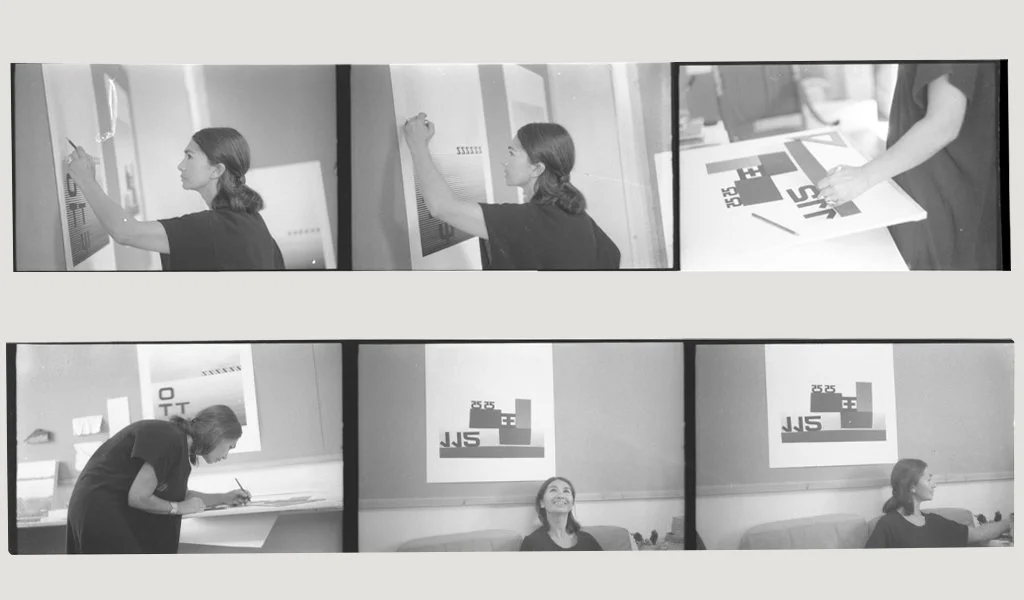
Portrait of Niki Kanagini in her studio, c.1975.
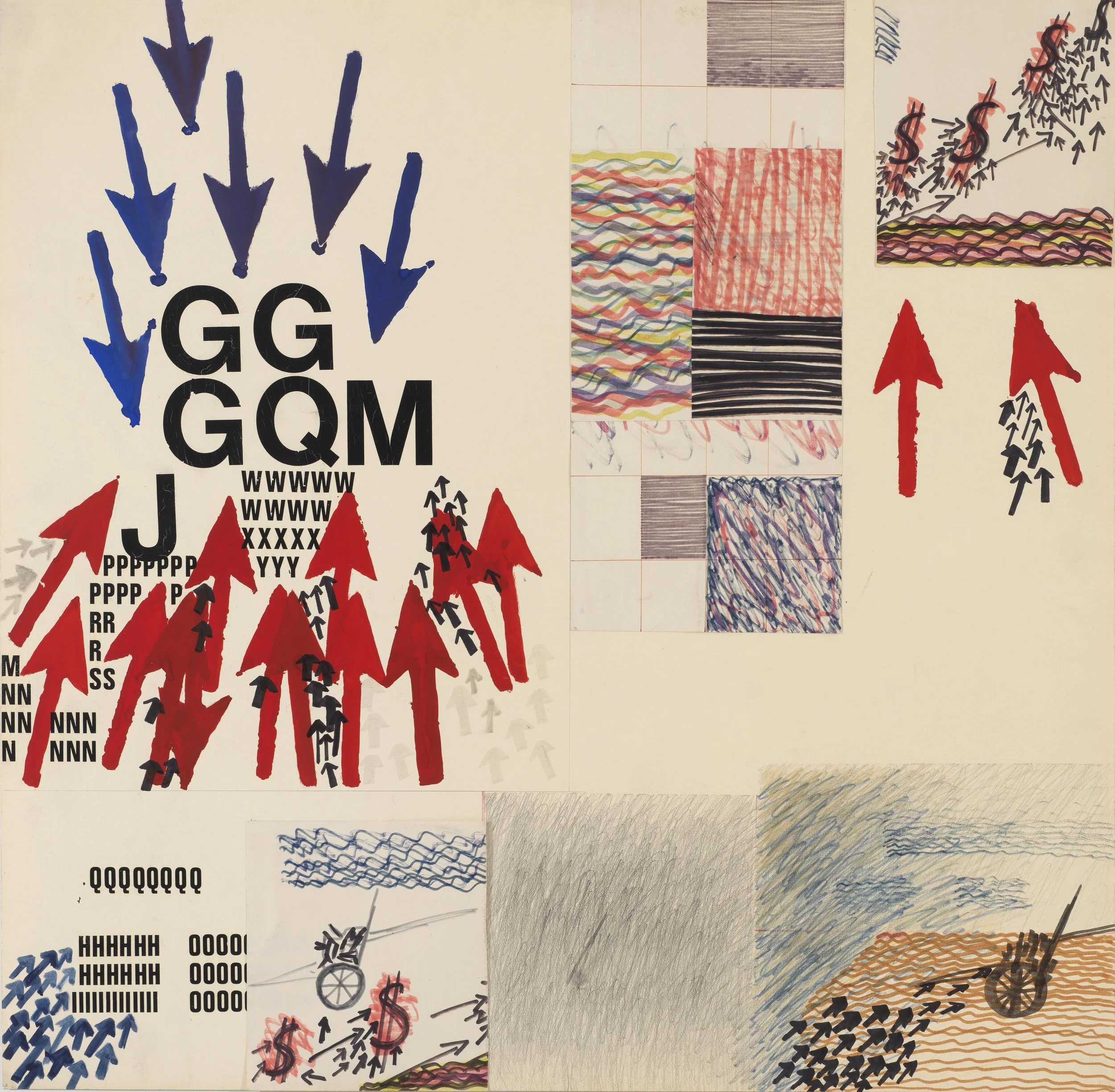
Niki Kanagini, Illustrated Manuscript, 1973-1975. Private Collection
from AN ODE TO THINGS NIKI KANAGINI, RETROSPECTIVE at EMST curated by Tina Pandi.
KG: The programme as a whole is an attempt to revisit and complicate the idea of cosmopolitanism as something historically layered, often fragile, and deeply entangled with questions of displacement, hybridity, and geopolitical rupture. In the Eastern Mediterranean in particular, cosmopolitanism has always existed in tension: it has been both generative and precarious, shaped by migration, exile, and shifting borders. The culminating group exhibition will bring together artists from across the region and its diasporas to explore these conditions from multiple perspectives. I’m especially interested in how artists engage with memory, personal, collective, and historical, and how they negotiate identities that are not fixed but relational and constantly in flux. The exhibition proposes a constellation of positions that reflect the complexity of the region at a particular and exceptional historical moment at the end of the nineteenth and the beginning of the early twentieth century, when Levantine Cosmopolitanism flourished under the dying days of the Ottoman Empire and just before the rise of nationalisms that shattered these pluralities. Ultimately, my hope is that The Cosmopolitans can offer a more nuanced understanding of coexistence, one that acknowledges both the richness and the tensions of living together in difference, which feels particularly urgent today.
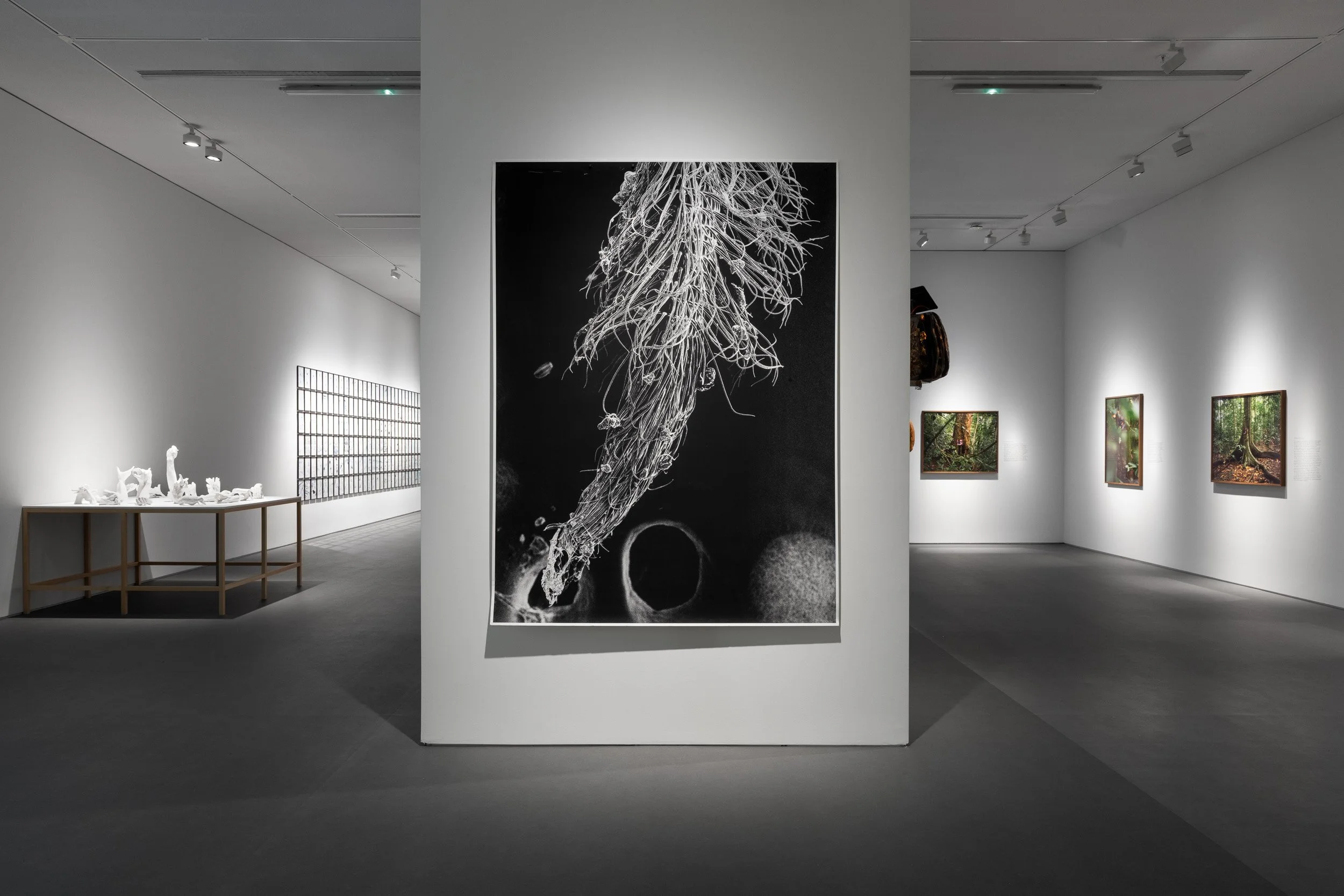
Why Look at Animals? A Case for the Rights of Non-Human Lives, 2025 curated by Katerina Gregos. Installation view (from left to right): Marcus Coates, Extinct Animals, 2018. Courtesy of the artist and Kate MacGarry, London | Simona Denicolai & Ivo Provoost, hello, are we in the show?, 2012. Collection S.M.A.K., Stedelijk Museum voor Actuele Kunst, Ghent | Anne Marie Maes, Glossa (bee tongue), 2024. Courtesy of the artist | Daniel Steegmann Mangrané, La Pensée Ferale, 2020. Courtesy of the artist and Esther Schipper, Photo: Paris Tavitian.
SB: EMΣT just closed Why Look at Animals? A Case for the Rights of Non-Human Lives. This huge, year-long exhibition, over seven levels of the museum, explored through sixty artists' works the ethical and political issues raised around human beings in their relationship to animals. Why was this show in particular so meaningful to you?
KG: It addressed what I consider to be one of the most urgent yet persistently marginalized ethical questions of our time. The way we treat non-human animals is deeply connected to how we understand power, exploitation, extraction, and responsibility within broader systems that also affect human life and the environment. Why Look at Animals? was conceived from the conviction that the marginalization of animals is not simply a matter of representation or visibility, but one of systemic injustice, industrial farming, habitat destruction, and scientific experimentation. These are not isolated practices, but part of a larger framework that normalises the instrumentalization of life. For me, the exhibition was about making those structures visible and open to critical reflection.
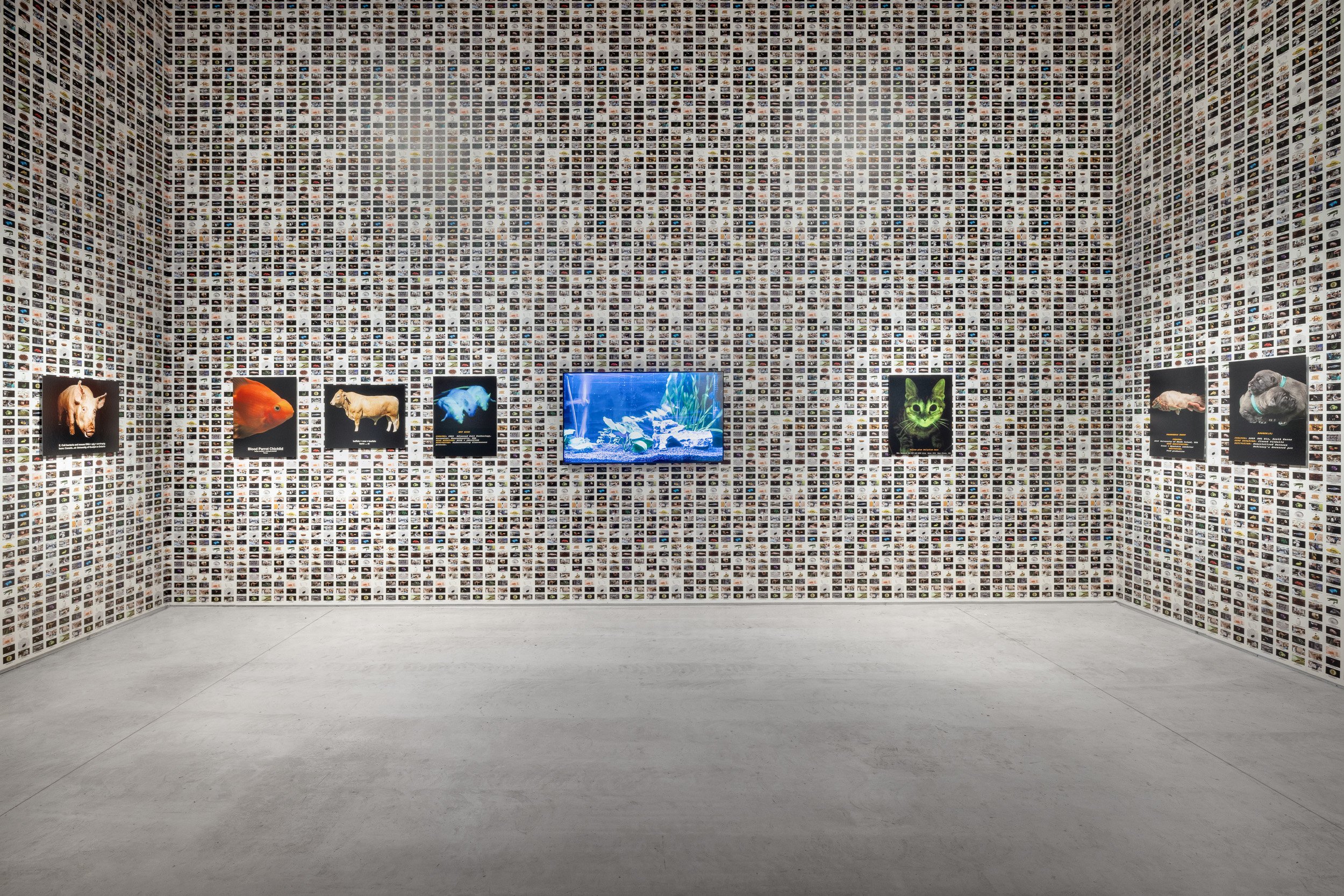
Why Look at Animals? A Case for the Rights of Non-Human Lives, 2025 curated by Katerina Gregos. Lynn Hershman Leeson The Infinity Engine, 2014 (installation view) Courtesy of the artist, Altman Siegel, San Francisco and Bridget Donahue, New York. Photo: Paris Tavitian.
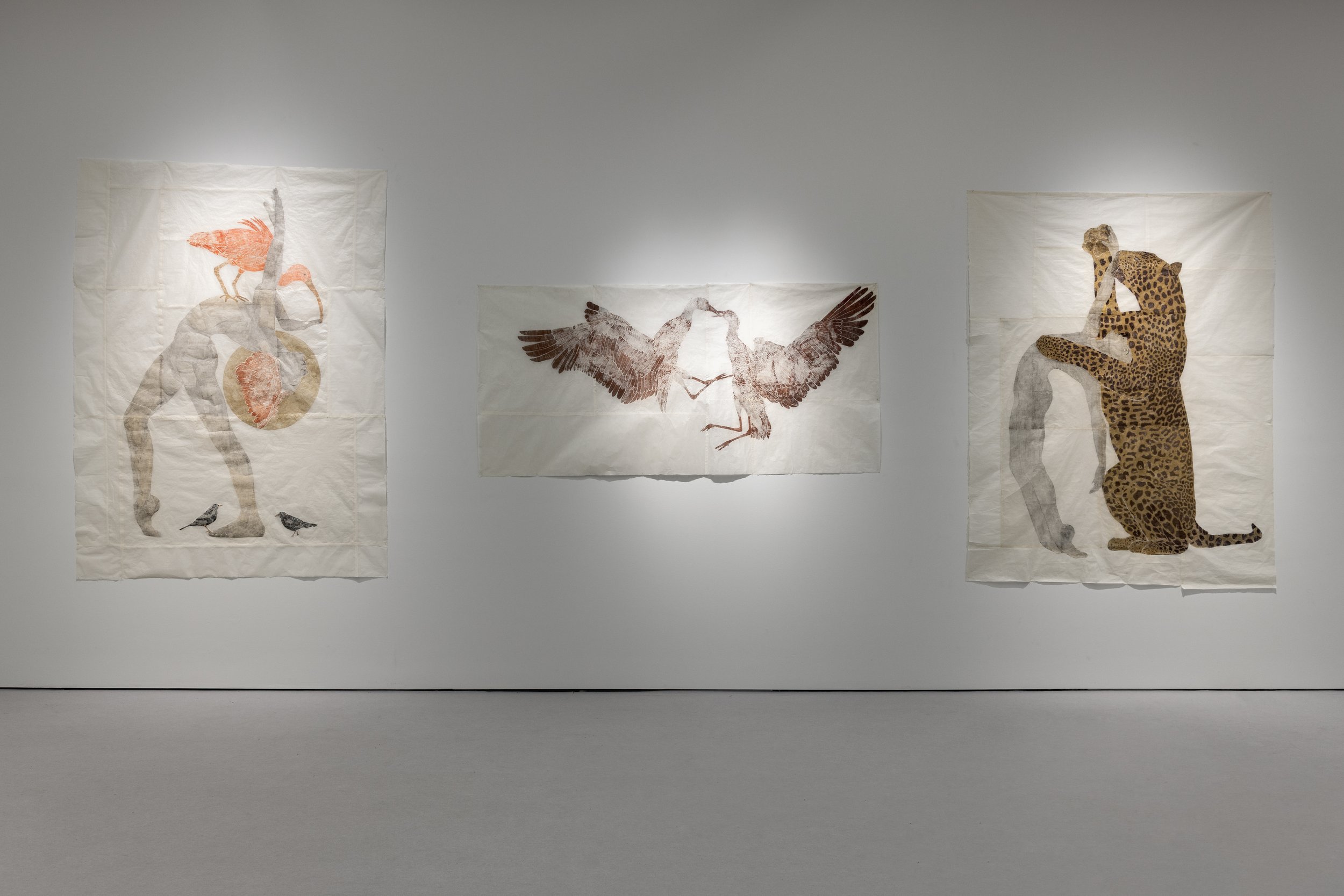
Why Look at Animals? A Case for the Rights of Non-Human Lives, 2025 curated by Katerina Gregos. Marta Roberti, Self-portrait as St. Francis talking to birds with ibis on his chest, 2024; Birds playing in flight, 2024; Self-portrait as Saint Olivia lying on jaguar, 2024. Courtesy of the artist and Sara Zanin, Rome. Photo: Paris Tavitian
What made it significant was the way artists approached these questions through a wide range of methodologies, from documentary to speculative and poetic practices. This allowed for a more nuanced engagement with the subject, one that could resonate intellectually and emotionally. Ultimately, the exhibition was an attempt to critique the catastrophic consequences of human exceptionalism and its anthropocentric view of the world and to expand the field of ethical consideration; to ask not only how we look at animals, but how we live with them, and what a more just, interdependent future might look like.
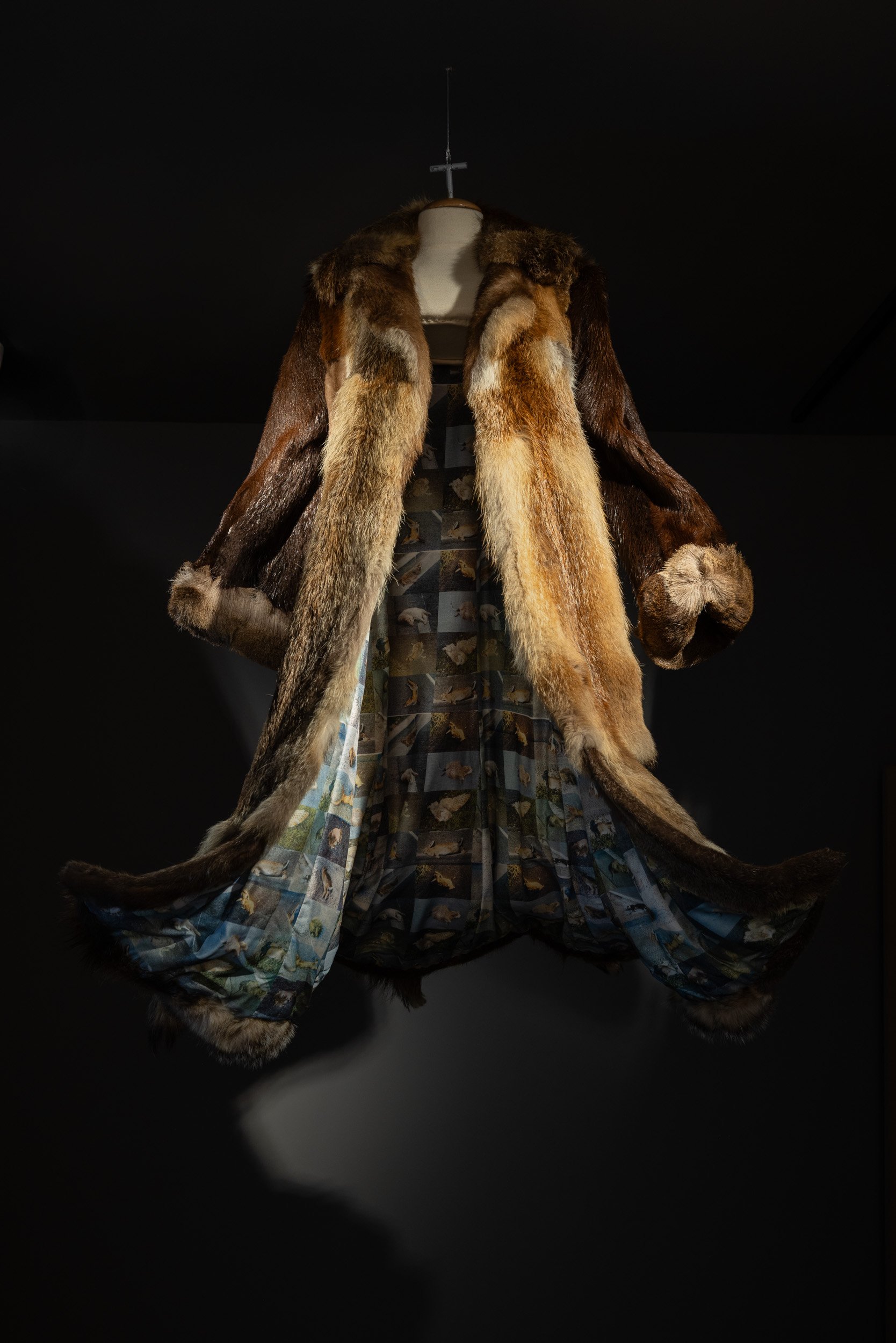
Why Look at Animals? A Case for the Rights of Non-Human Lives, 2025 curated by Katerina Gregos. Art Orienté Objet, The Roadkill Coat, 2000 (installation view) Courtesy of the artists. Photo: Paris Tavitian.
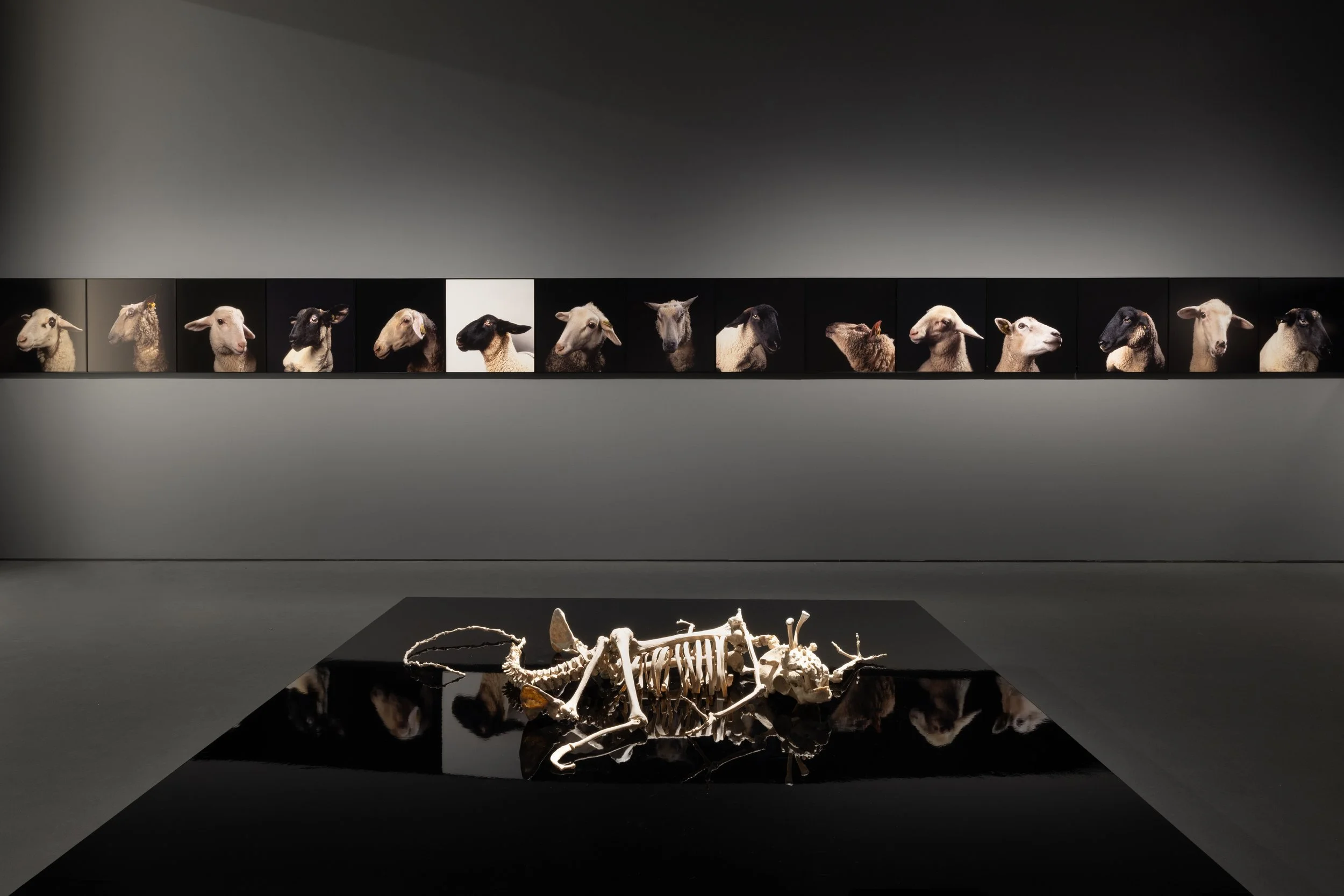
Why Look at Animals? A Case for the Rights of Non-Human Lives, 2025 curated by Katerina Gregos. Installation view (front to back): Maarten Vanden Eynde, Homo stupidus stupidus, 2008. Private collection, Slovenia | Nabil Boutros, Celebrities / Ovine Condition, 2014. Courtesy of the artist. Photo: Paris Tavitian.
SB: Growing up, were relationships with animals formative for you?
KG: I grew up in a house with different animals and a deep love for non-human life. So, the interest in this subject stems indeed from a formative personal bond but also from my long-standing interest in urgent political matters, and the question of animal rights is one of those most marginalized of issues. It developed further through a growing awareness of the profound contradictions in how we relate to different species. What has always struck me is the arbitrariness of these distinctions: the fact that some animals are loved and protected, while others are subjected to systematic exploitation and violence. That realization, for me, was more formative than any single relationship. It prompted a deeper reflection on the ethical frameworks that underpin these hierarchies, and on how culturally constructed they are. So, while personal experience may have played a role, my engagement with the subject is ultimately more ethical and political. It’s about questioning deeply ingrained assumptions and recognizing that our relationship to animals is not separate from broader questions of justice, coexistence, and responsibility.
SB: You have been steadfast in your interest as a curator over the last 20 years on the relationships between art, ethics, ecology, human and non-human rights, and politics, to name a few, and have a staggering resume to show for it. I have heard that your family background had an important progressive influence on you and your thinking early on. How was that so?
KG: Yes, my parents were both very progressive for their generations. My mother went to art school and was a veritable product of the 1960s. My father was very politically minded and had a strong sense of social justice, which I absorbed quite naturally growing up. Both had an attentiveness to the world, especially the natural world, and an ability to notice inequalities. They were also very strong personalities, very opinionated - ‘nothing if not critical’ - and encouraged independence of thought. I was never told what to think, but rather encouraged to ask questions, to be curious, and to form my own opinions. That kind of intellectual openness is something I value deeply, and that has certainly shaped my approach as a curator. Looking back, what they taught me was an understanding of the interconnectedness between things and people, but also more broadly between systems, structures, and forms of life. That awareness later found its way into my work, particularly in the way I approach exhibitions as platforms for engaging with complex social, political, and ecological questions.
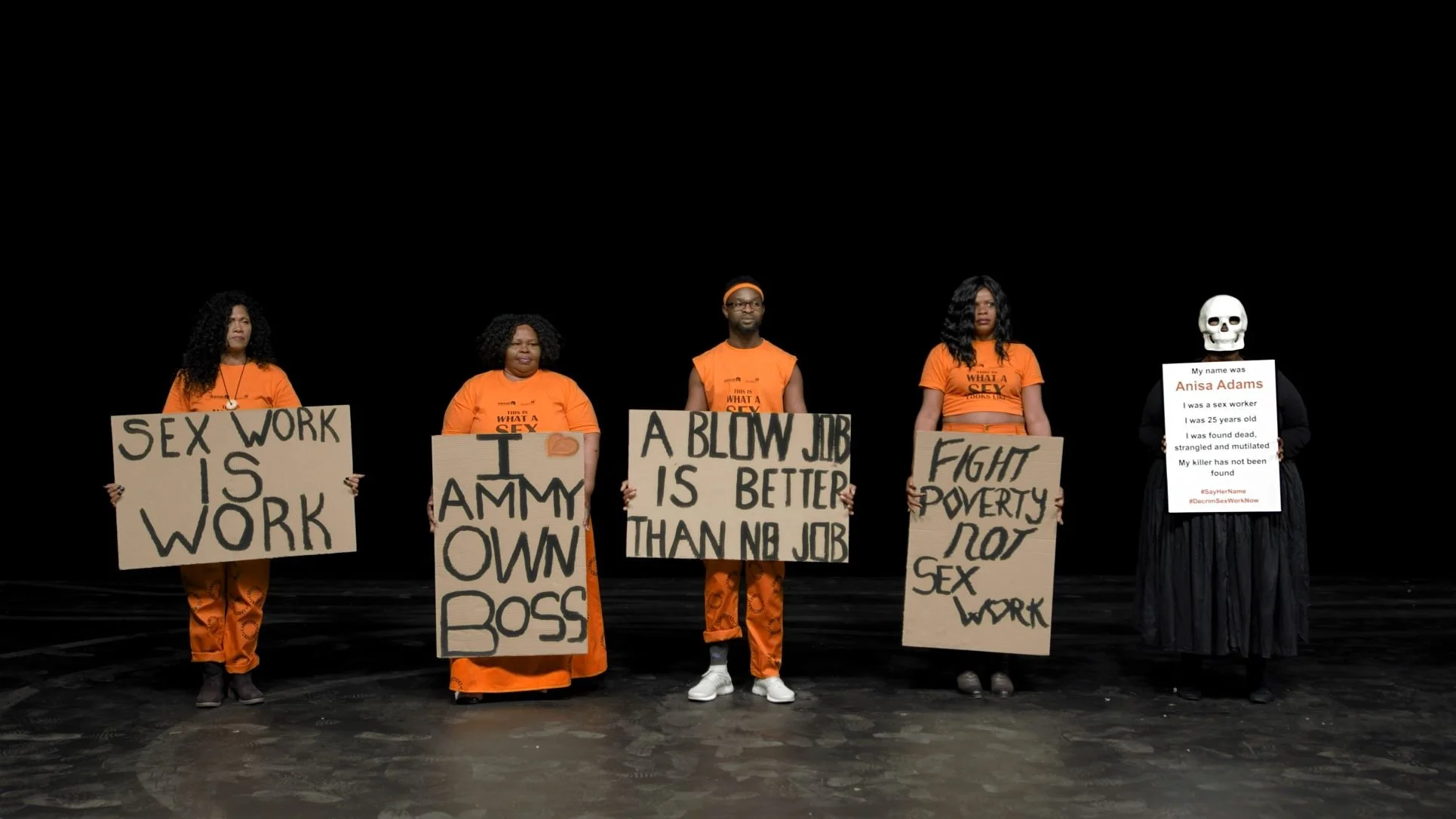
From the EMST exhibition Modern Love, (or Love at the Age of Cold Intimacies) curated by Katerina Gregos. Candice Breitz, TLDR, 2017 (video still) 13-Channel Video Installation Commissioned by the B3 Biennial of the Moving Image, Frankfurt am Main Courtesy of the artist.
SB: Are there particular curatorial projects that you feel grateful for having experienced that prepared you for your current role?
KG: There are quite a few, but I tend to think of them less in terms of individual milestones and more as part of a cumulative process. Each project has contributed something, whether it was a new way of thinking about exhibition-making or a deeper understanding of how art can engage with urgent social and political questions. If I had to single out a few, working on large-scale, research-driven exhibitions was particularly formative, such as Leaps of Faith, which I co-curated with Turkish curator Erden Kosova in 2005 - the first international arts exhibition that happened on both sides of the divided city of Nicosia, a year after the border opened following the invasion of Turkey in 1974 and subsequent illegal occupation. Projects that required bringing together diverse and often opposing positions across geographies and disciplines taught me how to construct a narrative without imposing a single viewpoint. That has been very important in my current role, where complexity and plurality are essential. At the same time, exhibitions that dealt explicitly with political and ethical issues, whether around democracy, labour, ecology, or systems of power - such as Okwui Enwezor’s exceptional documenta 11 in 2002 - helped shape my conviction that contemporary art can function as a space for critical reflection and public discourse, rather than simply aesthetic experience. Projects like these collectively prepared me to approach EMΣΤ not just as an exhibition space, but as a platform for engaging with the complexities of the present in a meaningful and responsible way.
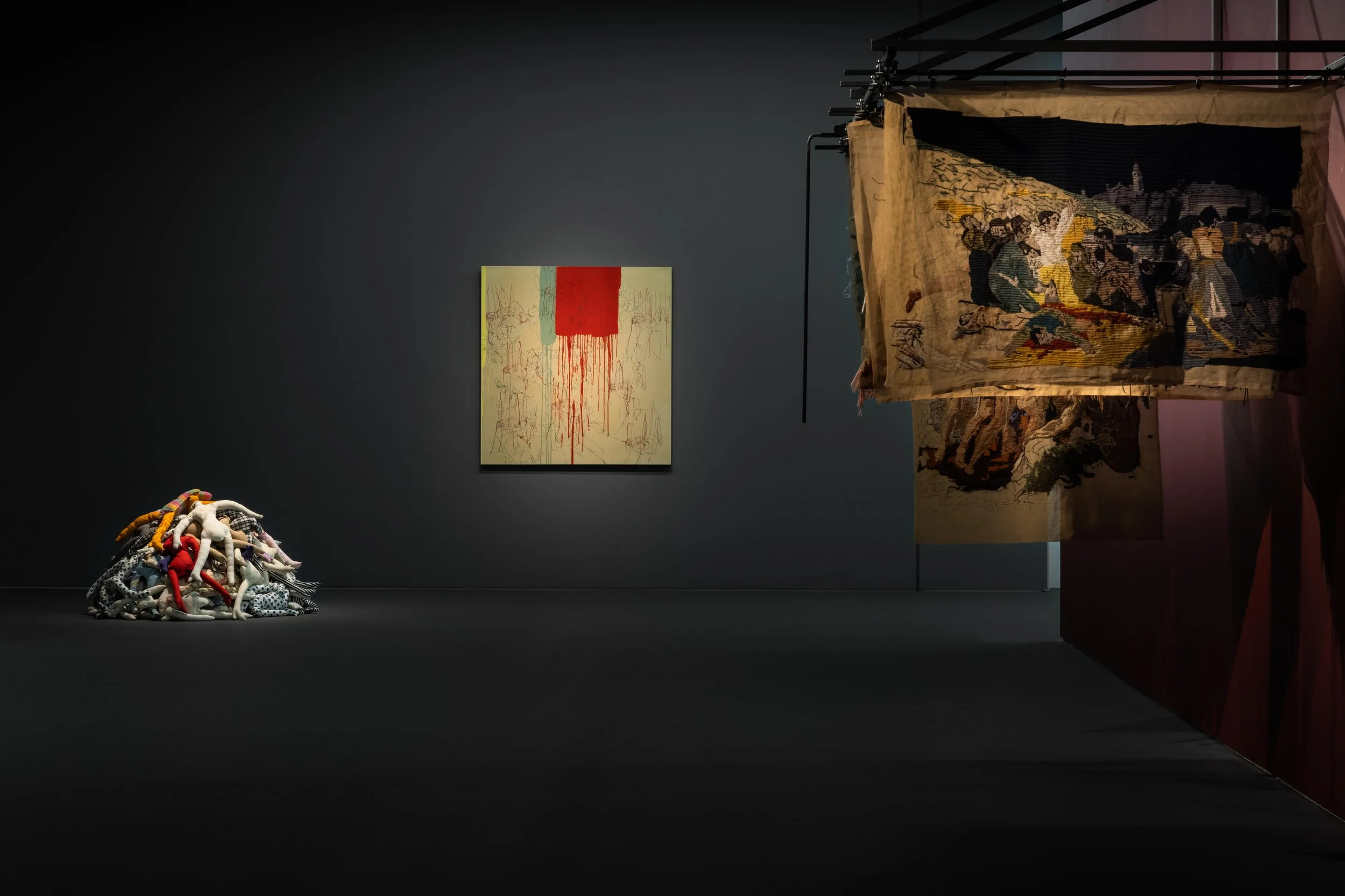
Installation view of the Collection exhibition: WOMEN, together, ΕΜΣΤ Collection, works by Maria Loizidou and Ghada Amer. Presented as part of the D.Daskalopoulos Collection Gift, and Bertille Bak. Photo by Paris Tavitian.
SB: You have made bold moves at EMST, holding a series of corrective exhibitions titled WHAT IF WOMEN RULED THE WORLD that featured artists such as Penny Siopis, Susan Meiselas, Yael Bartana (her video Two Minutes to Midnight feels so relevant right now), and Mary Reid Kelly amongst many others. The museum has created curatorial mentorship and residency programs to support local Greek practitioners and has switched from receiving mostly donated Greek art for the museum collection to buying works directly from contemporary artists. So, what unique role do you feel EMST plays now in the context of the Athens arts arena, and how did it start?
KG: Well, first of all, we have to consider that it is a museum that is a relatively new one in the history of European museums. It officially began in 2000, and it had a rather difficult start. In the first couple of years, it was a nomadic institution, operating out of the Megaron Concert Hall and then the Athens Conservatory. Its founding director, Anna Kafetsi, needs to be credited with putting the museum in place with very, very few resources and support in terms of funding. So, the budget for many years was for a Kunsthalle rather than a museum. Within that time frame, she did some excellent work, both with temporary exhibitions and slowly putting together a collection, but with a really difficult framework behind it, both politically and economically - including Greece’s crippling economic crisis which lasted almost a decade. Today, with better state support for the museum and with it becoming fully operational within its permanent premises, ΕΜΣΤ went from being a more marginal stakeholder to occupying a key position in Athens, Greece and the wider region. The museum is now not only the leading national institution for contemporary art and visual culture in Greece, but also one of the flagship institutions in Southern Europe and the Eastern Mediterranean. And of course, its position is solidified further by the many complementary artist and curator run spaces in Athens, private institutions as well as galleries. The landscape is so much richer than it was 20-30 years ago.
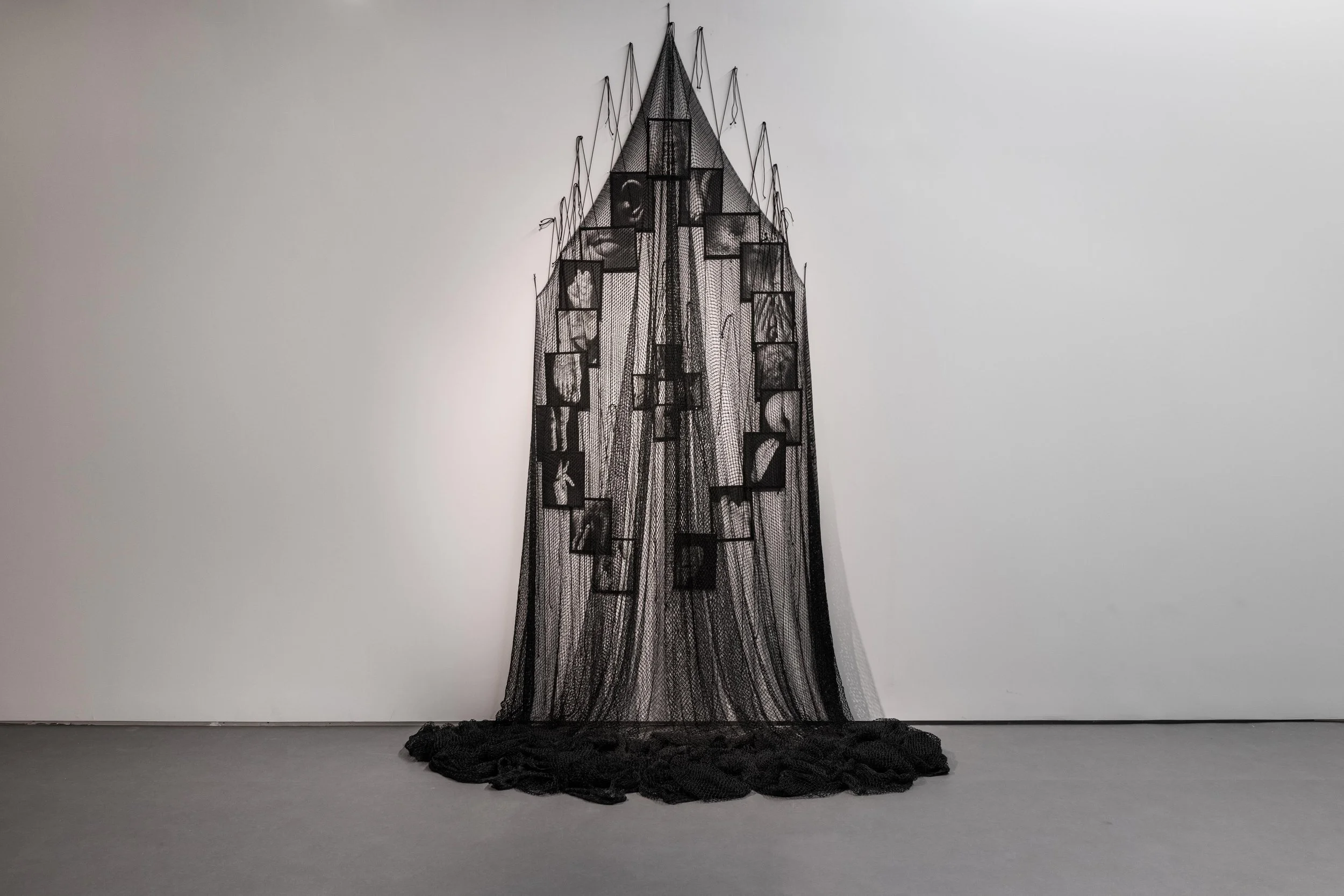
Installation view of the Collection exhibition: WOMEN, together, ΕΜΣΤ Collection, work by Annette Messager. Presented as part of the D.Daskalopoulos Collection Gift. Photo by Paris Tavitian

Installation view at ΕΜΣΤ Penny Siopis. For Dear Life A Retrospective, 2024 curated by Katerina Gregos. Photo by Paris Tavitian.
SB: These private institutions, as well as galleries, are helping the arts in Athens grow now.
KG: Very much so. Things have changed quite a bit in the last few years. When it was time in 2015 for the museum to finally move into this extraordinary building - a historical, modernist industrial landmark, built in the 1950s by Takis Zenetos - it was right in the middle of the financial crisis. There was no money, with on-off programming, so the museum was in a kind of limbo. When I arrived in 2021, the museum had been without a director for three years. Prior to that, in 2017, EMΣΤ became globally known because it hosted documenta, which was good for Athens, no doubt, perhaps less so for the museum, as it was not a recognition achieved on its own merit. The collection had been installed in 2019, but there were no temporary exhibitions or public program. By the time I arrived in 2021, there had been a huge lack of continuity and consistent programming. I was charged with re-booting the museum, putting it into full operation, and giving it a new lease of life. And the challenge of writing an entirely new chapter for the institution is precisely the reason I took the job.
SB: Could you see clearly the direction it needed to go in?
KG: Oh, yes. When I was first approached, I asked to do an audit to get to know what I was getting into. So, I took four five months of my life, researched, talked to the staff, other colleagues in museums, and thought about every aspect of the museum. I realized many things needed to be addressed, but I had a very clear vision about what I wanted it to be, in terms of its collection and programming. We are a 100% publicly funded museum, so it was essential to find ways to fulfil this public role via the kinds of exhibitions and programming that we do. It was important to me to put together a program with a strong sociopolitical role that is grounded in progressive and civic values, alongside the production of new forms of knowledge. Also, an awareness around issues that we believe matter in the public debate right now, like democracy, rights, the environment, and cultural issues - the commons in general. In addition, it is very important for us to promote not only international but also, in particular, Greek artists. We are a national museum, but we're not a local one, so we negotiate between the local, national, and international. The fact that we were founded in the year 2000 gives us the perfect pretext to say that we're a 21st-century museum, which means we look at the present and towards the future. Our character is decidedly public - we are not an elitist institution but one that welcomes everyone who wants to come. Everything is very democratic. Openings and most of our public programming are free for everybody. Paying events are priced very reasonably, like our film program, which is only four euros. In all these ways, we're trying to fulfil our civic role. The other thing that makes us different from other museums is that our temporary exhibitions program is conceived in terms of thematic cycles, as we really like to tell stories. And our collection, rather than trying to collect a ‘best of’ international art, focuses on the wider geopolitical area around Greece: the Balkans, the Middle East, North Africa, and the Mediterranean and SE Europe in general.
SB: I'm curious what your take is on the creativity and sensibility of art that's being made in Greece now.
KG: That's a difficult question. It's like saying, is there a specific trend? I wouldn't say that there is something specific here. I think you find all sorts of different things, just like elsewhere. But one is more likely to find studio-based practices or post-internet work rather than research-based practices.
SB: I'm picking up that social relations here are incredibly important.
KG: Yes, in everyday life, it is very important. But what is lacking in this country are precisely these research-based art practices. Ones that look into the very rich histories and diasporas of the wider region. The 400+ year Ottoman occupation has led to a denial of our more Easternly, hybrid identity and a decidedly Western-centric perspective, which was advantageous for Greece politically and economically, but has led to problems with identity bias. It's time to revisit these issues and the wider geographical entanglements of Greece with its neighbours, including the Balkans, which we consider ourselves outside of. In addition, the histories of Hellenism in Egypt, the Black Sea, and Pontus remain largely unexamined in contemporary Greek art practice, while the myth of the unbroken link with the classical past has only started to be critically re-examined. We are very interested in re-visiting these histories, among other things, and this will happen in both the re-hang of our collection in June, entitled South by Southeast, as well as the exhibition The Cosmopolitans later in the year.
SB: So at EMST you are trying to correct, add nuance, and acknowledge the regional historical complexity even-handedly. There has been some progress on this subject within academia, and now by you within the realm of a museum. If you're operating in a national and international way, you can do that.
KG: Yes, and also these are stories that I think people want to hear. These are traumas that are relatively recent, and they need to be acknowledged.
SB: It is wonderful that EMST has the resources and the space to address these important cultural and historical experiences.
KG: I think what's really exciting is that, finally, contemporary culture is coming out from under the shadow of the Acropolis, so to speak. And this is not only contemporary art but also theatre, dance, and music. EΜΣΤ I am happy to say, is one of the actors contributing to institutional and artistic renaissance in Athens and beyond.
SB: Without wanting to romanticize the difficulties, amidst the struggle and gaps, unusual and original creativity is happening in Athens
KG: There’s a raw energy here and also a certain sense of freedom which expresses itself in often ad-hoc ways. A freedom to speak, a freedom to occupy public space. And this is becoming quite unique, especially if you consider what is happening elsewhere, with increasing limits being put on democracy, freedom of expression, and freedom of movement.
SB: In light of all this, in your view, how have things changed over the last ten years, what heartens you?
KG: A lot has changed over the past decade, although not always in linear or predictable ways. What is encouraging is that contemporary culture in Greece, and in Athens in particular, has gained a much stronger visibility and confidence. There are now multiple actors contributing to the ecosystem, from institutions and foundations to independent spaces, and this has created a more dynamic and porous environment. At the same time, Athens has become a place of exchange, where different trajectories and perspectives intersect. This has brought a certain energy and openness that wasn’t always present before. Of course, there are still structural challenges, and the situation is far from ideal. But what gives me hope is precisely this sense of momentum, the feeling that there is a cultural field in formation, one that is becoming more self-aware, more connected, and perhaps more willing to confront its own complexities.
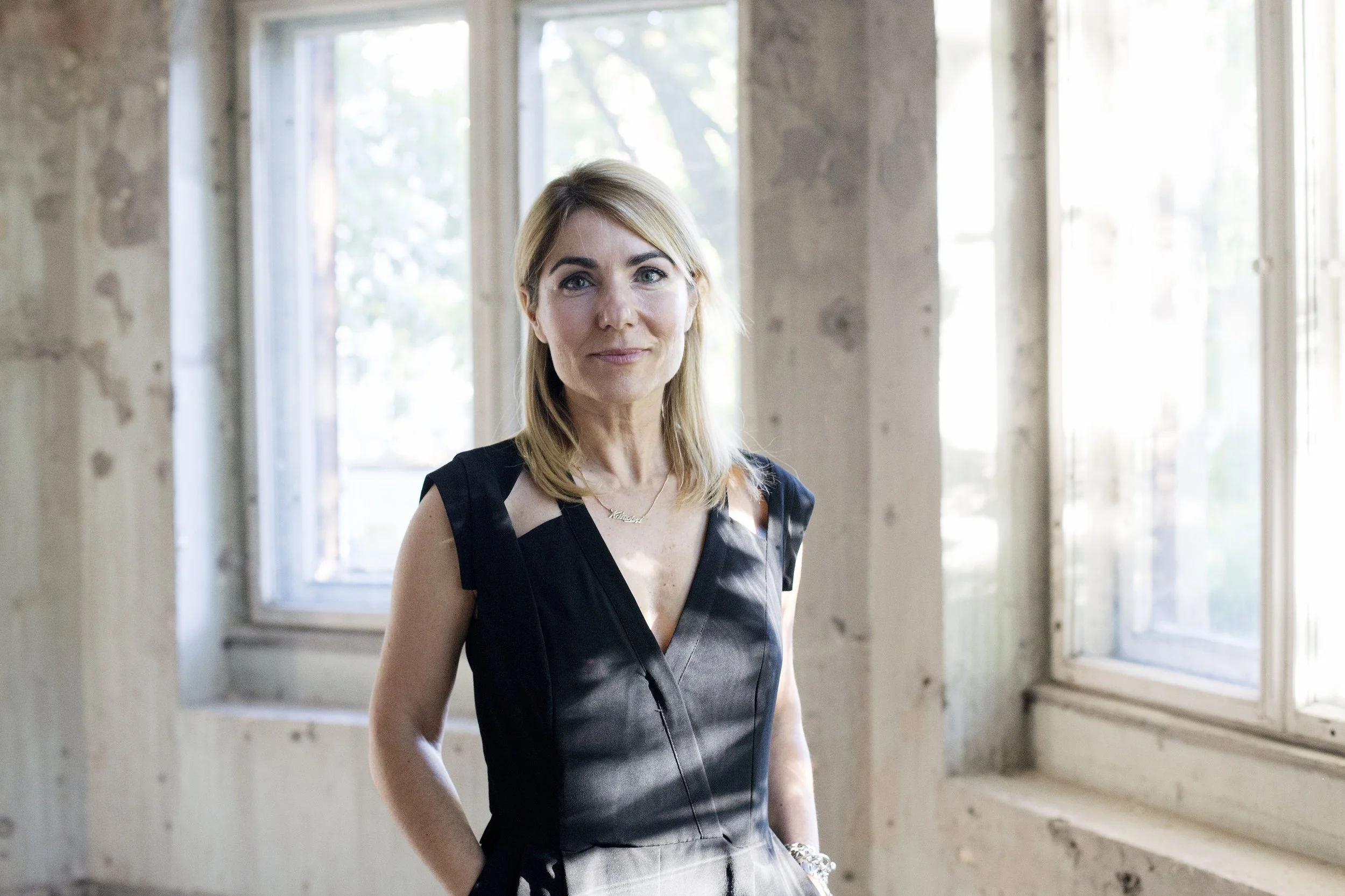
Katerina Gregos. Photo by Kristina Madjare.
An Ode to Things. Nina Kanagini. Retrospective
Stathis Logothetis: Earth to Earth
April 2- November 8, 2026
National Museum of Contemporary Art Athens
Athens
Greece


Editor Sascha Behrendt is a writer with an in-depth knowledge of arts and culture in the US and UK. Interviews, articles and profiles include artists Amy Sillman, Stan Douglas, Arthur Jafa, as well as features on art and exhibitions in cities around the world.