May 2026
NEW INC's Y12 Art & Code
Artists, Systems & Machines
Elodie Goldberg Jacquemain
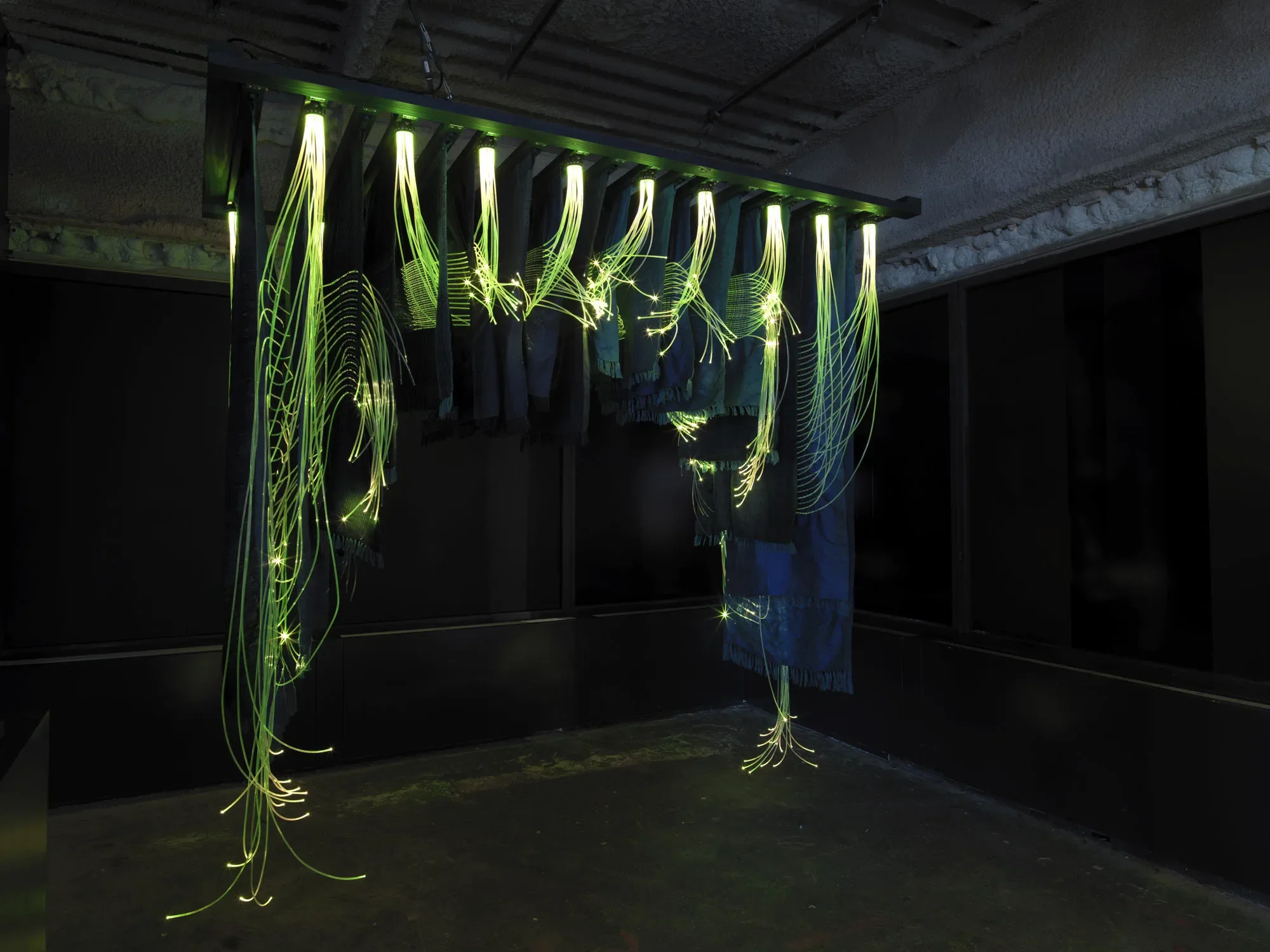
DEMO2024: Inherit, Yield, Regenerate, 2024. Exhibition view: WSA, New York. Photo: Dario Lasagni
The Art & Code track, a collaboration between Rhizome and NEW INC, is a space for artists, designers, researchers, and technologists to redefine the artistic landscape through internet-based practice. At a moment when algorithms and AI are omnipresent and our realities are now shaped by the digital, the Art & Code members (and practitioners working broadly across art and technology) reveal how our systems, aesthetics, and experiences are shaped not only by what we ask of the machine, but also by the tools we choose to build with.
I interviewed six members of NEW INC’s 2025–26 Art & Code track about the tools they engage with and build within their individual practices. Rather than treating technology as neutral, each artist reveals it as something constructed and open to reinterpretation.
“A lot of what I'm drawn to is what I think of as negative space: the histories, hidden labor, and infrastructures that surround a technology but rarely get centered. Who built this, and under what conditions? What values are embedded in it? What does it promise versus what does it actually deliver, and who bears the cost?”
— Anna Zhang
Designer, researcher, and artist Nicci Yin questions what gets normalized in digital behaviors. She publishes through her studio practice SHIFT CMD prototypes that make our interactions with interfaces visible and strange. By treating the internet browser as the main portal through which one accesses the web, Yin foregrounds the browser itself as a playground for choreography, creating a new kind of stage for collaborative creation: one that no longer requires a physical venue, but instead unfolds directly on the screens within our own homes and intimate spaces. Her Site Studies are a collection of web experiments: “a website that highlights what you didn't select”, “a website that only works when two people are near each other”, etc., all of which track, log, and record user interaction to create outputs. These browser-based prototypes reveal, through participatory interaction between the artist’s script and the user’s movements, the embedded nature of data collection in our everyday use of online interfaces. Like many forms of art shaped by the conditions of their contemporary moment, these works also raise questions about how we consume digital experiences and how much of the outside world we allow to enter our private spaces through technology. Questions of consent and surveillance become integral elements of the experiment. For projects that require users’ permission to either track gaze or capture sound through the computer’s mic, questions of co-authorship are purposefully left pending.
Like Yin, Anna Zhang approaches digital systems not as fixed infrastructures, but as sites that can be rewritten and reimagined. Zhang is an artist and creative technologist whose practice explores our interaction with AI, algorithms, and digital platforms—and how these systems shape our sense of reality while also offering possibilities for emancipation through recontextualization. By doing so, she demystifies the fatalistic belief that technologies are simply happening to us. Her work instead offers perspectives of resistance: futures aren't inevitable; they're designed, negotiated, and therefore have the potential to be redesigned.
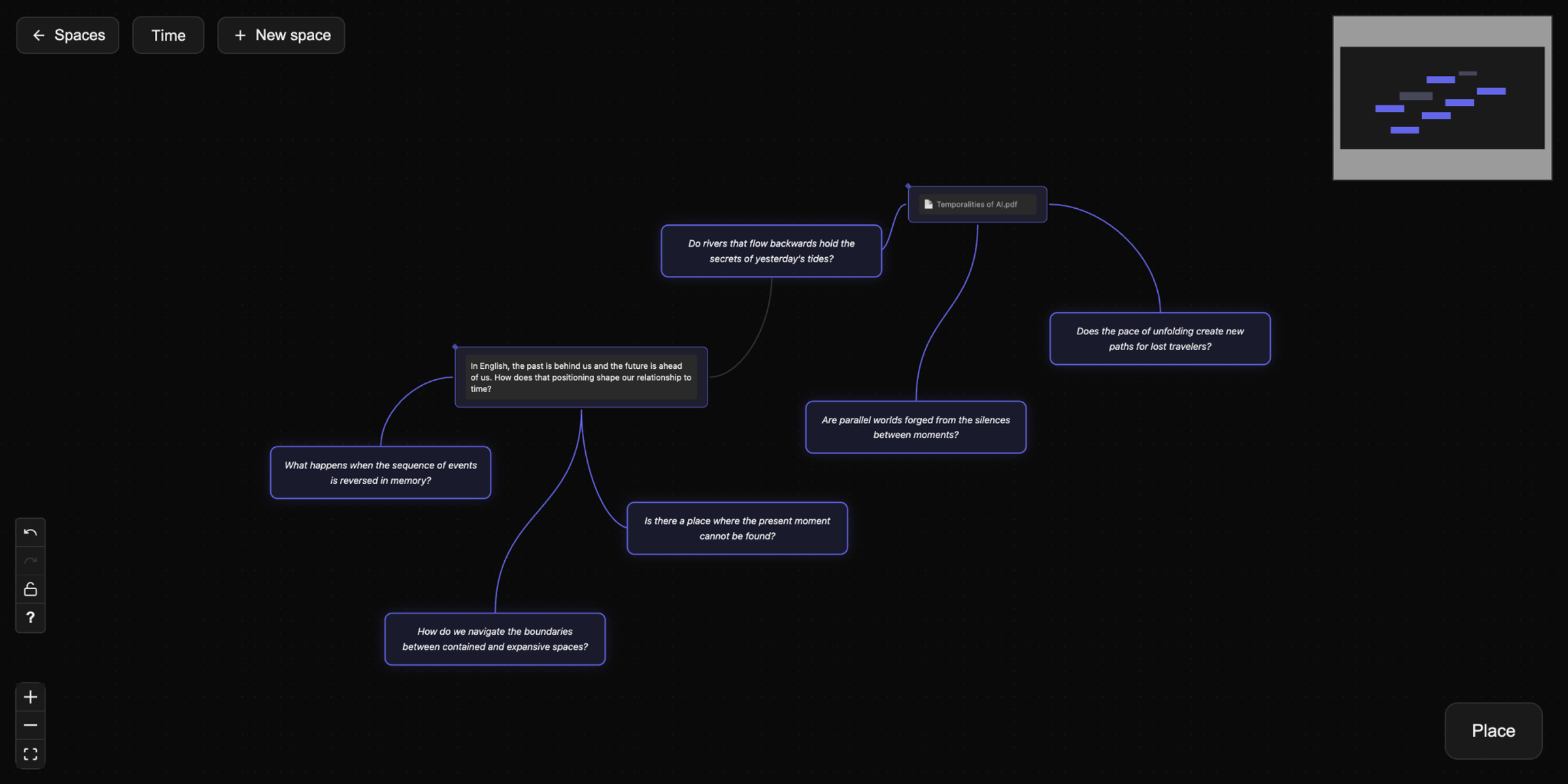
During her time at NEW INC, Anna Zhang has been working on a project called Prompted, a response to AI being marketed as a productivity tool optimized for speed and efficiency. Prompted generates questions instead of providing straightforward answers. It is inspired by the I Ching, tarot, Brian Eno and Peter Schmidt’s Oblique Strategies, and Marshall McLuhan’s DEW Line card deck, tools that offer something to reflect on rather than simply delivering an answer. Her preference for rhizome-like outputs over direct responses highlights the agenda we have been fed by AI: that faster always means better. By directly illustrating the philosophical concept of the rhizome, developed by Gilles Deleuze and Félix Guattari to describe a non-hierarchical and decentralized network, the project also reflects how critical thinking is often not linear. It requires moving back and forth, questioning blind spots, and paying attention to surrounding elements rather than arriving instantly at a single conclusion. By rewriting a model, Anna Zhang gets to decide what matters, offering a direct critique of the increasingly manichean logic promoted by AI systems, where every question is expected to produce one clear and definitive answer.
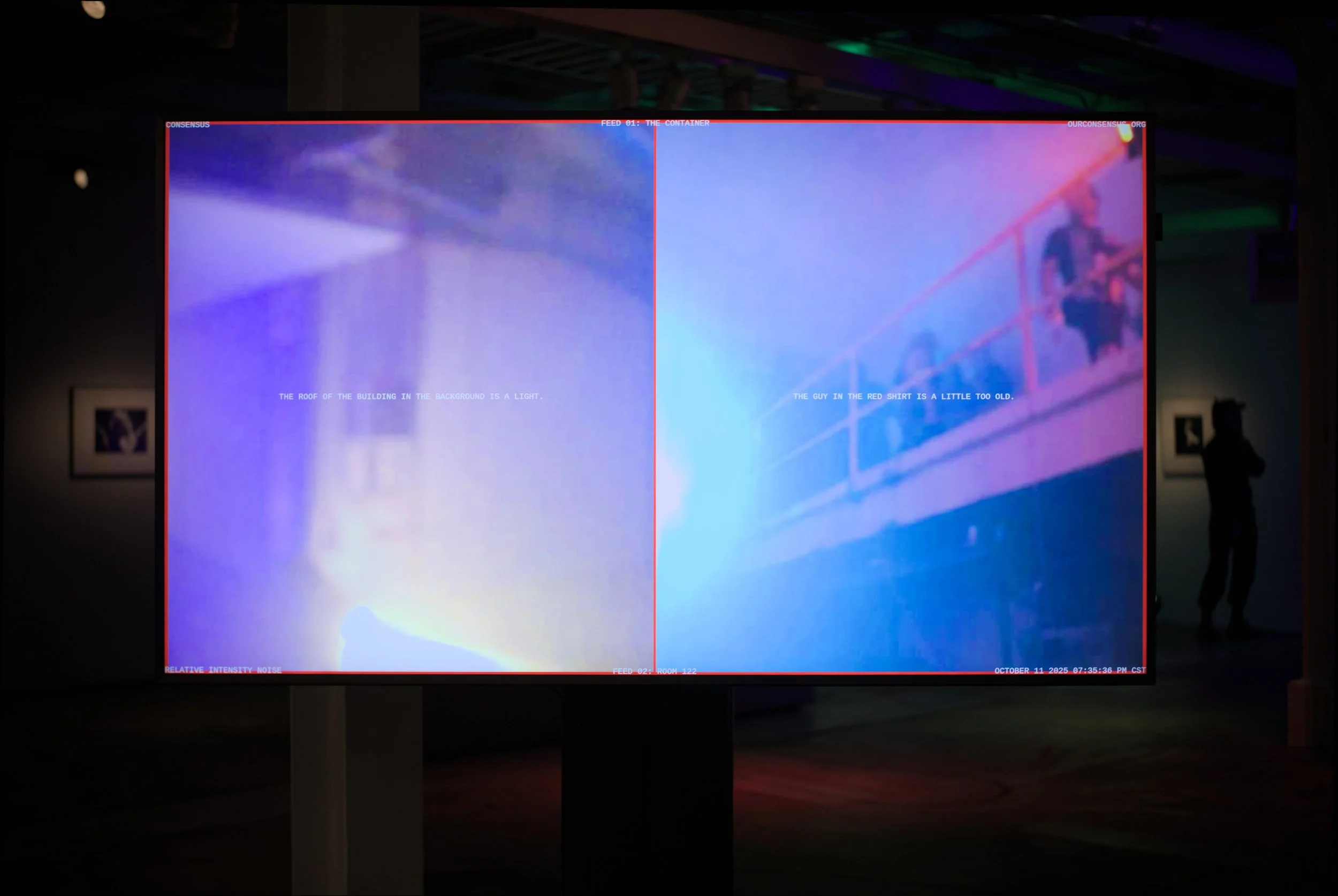
X. A. Li, Consensus, 2025-ongoing. Multi-channel video, custom web application, open-source machine learning models, webcams, Raspberry Pis, live events, viewers. Website at ourconsensus.org during live events.
Questions surrounding systems and opacity also emerge in the work of artist and computer scientist X. A. Li, who describes their process as “tool-agnostic” but conceptually precise. In technology-based fields especially, creative practices are often tied to designated tools, with each task seemingly requiring a specific software, platform, or system imposed as the standard way of working. By remaining tool-agnostic, Li resists allowing the tool itself to define the practice. Instead, the work asks of the tool what is needed conceptually, rather than adapting ideas to the limits or expectations of a predetermined medium. In her practice, uncertainty is not treated as a flaw to eliminate, but as a material of the work itself. Her authorship is defined through observing systems over long durations and across various settings.
In Consensus, a site-specific installation unfolding across a museum, open-source machine learning models continuously caption videos and count crowds in real time to generate an ongoing record of a performance festival. The meaning and visual character of the work shift depending on where and when it is encountered—whether the viewer is in the museum or watching it online, and whether they are engaging with the work in real time or after the fact. Once the events conclude, the website collapses into a dry artifact. The browser itself becomes part of the artwork: in the final website, its plain, clinical, default appearance produces a sense of factual history, and that very “ugliness” becomes an aesthetic with its own associations.
Where X. A. Li examines the instability of digital documentation, Karlie Zhao works across code, textiles, and language to foreground the tension between digital speed and physical slowness. Her practice often places fast computational systems alongside labor-intensive forms of making: mediums that sit at opposite ends of the spectrum. In projects like whitephosphorus.info, she uses the web as a space for mapping and archiving white phosphorus attacks, turning technical systems into tools for exposing political and environmental realities. Alongside this, she works with textiles and hardware. She uses microcontrollers and handmade processes, and introduces a slower, repetitive rhythm that contrasts with code. In an increasingly fast-paced, technology-driven world, her work reflects a growing human need to slow down and regain a sense of balance in relation to the speed at which both we, and the systems around us operate. Her textile and hardware pieces embody this contradiction and solution we continuously strive for, between acceleration and stillness. Within this context of creative coding, Karlie Zhao often allows ideas to emerge from errors. She treats glitches not simply as problems to fix, but as openings toward new directions.
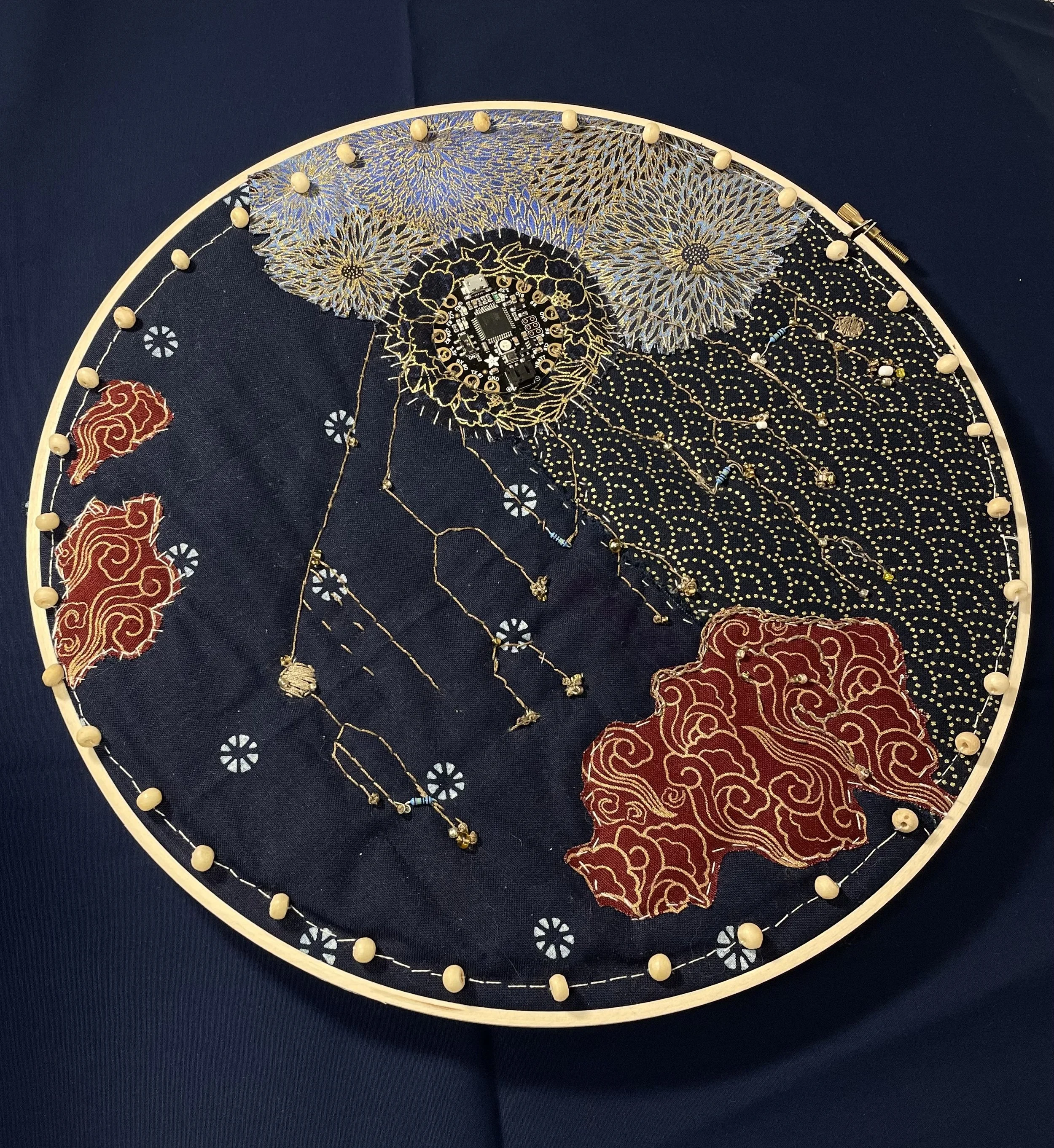
Karlie Zhao, Sounding Textiles, 2023-ongoing, Embroidery with conductive threads and beads, bespoke software, microcontroller, speaker, custom display frame.
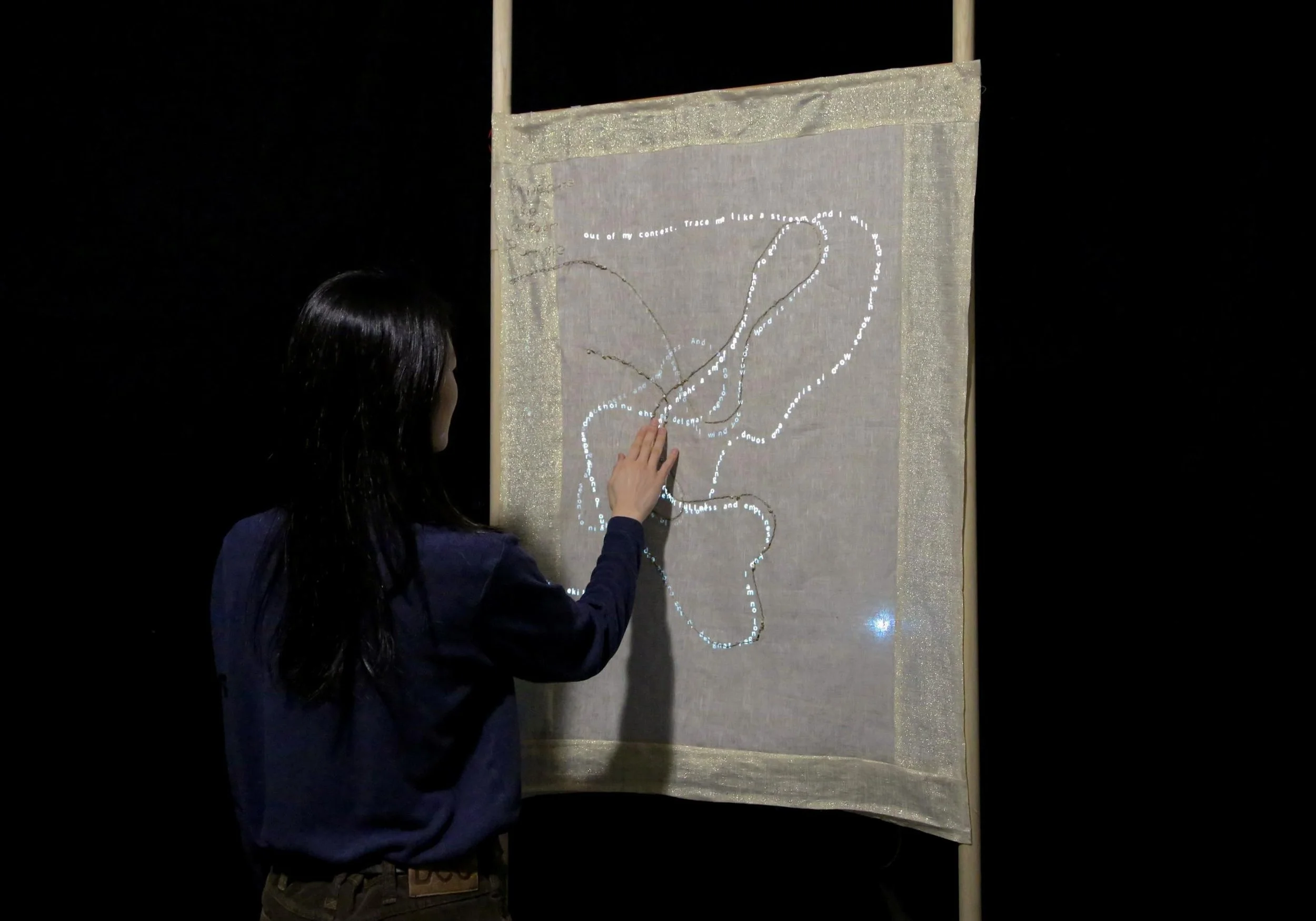
Karlie Zhao, Thread in the Air, 2024, Textile tapestry with interactive graphics and sound, Embroidery with conductive threads and beads, bespoke software, microcontroller, projector, speaker, custom frame. 35’’ x 24’’
“I keep making connections between artist and machine, artist and labor, labor and machine.”
— Tara Kelton
Questions of labor become central in the work of Indian-American artist Tara Kelton. Based in Bangalore, a city that has supplied digital labor to the global North for decades, Kelton investigates the often invisible human work hidden behind algorithms and interfaces that present themselves as automated. Though she comes from a background in programming, Tara rarely uses the same medium twice, instead adapting her methods to the systems each project seeks to examine.
In a series of works for a solo exhibition, Tara Kelton explores rest as an act of resistance against systems that colonize workers’ bodies. Mouse jigglers are anti-surveillance devices used by remote workers to simulate continuous computer usage. Mouse Jiggler (2025) uses pre-owned smiley-faced stress balls purchased on eBay and placed on top of slowly rotating mouse jigglers. In the same vein, another work developed in 2025, Microrest, invites viewers to donate and offer rest to microworkers through a custom interface. Microworkers complete small, repetitive digital tasks. Kelton describes microwork as a form of hyper-efficient labor extraction, in which workers’ eyes must remain fixed on the screen and their wrists constantly moving in order to train AI models, the same models that may eventually render this labor obsolete. Although technology has continuously expanded the ways in which money can be generated (cryptocurrency, dropshipping, live streaming, etc.) the underlying structures of work and exploitation have never been fundamentally rethought. Instead, these systems often reproduce the same extractive logics through other technological means. In this context, Kelton’s work resonates with Tricia Hersey’s Rest Is Resistance, which frames rest as a radical refusal of capitalist and white supremacist systems that measure human value through productivity. Rest, in Kelton’s practice, becomes not simply a form of recovery, but a political act that challenges the demand for constant digital availability and uninterrupted efficiency.
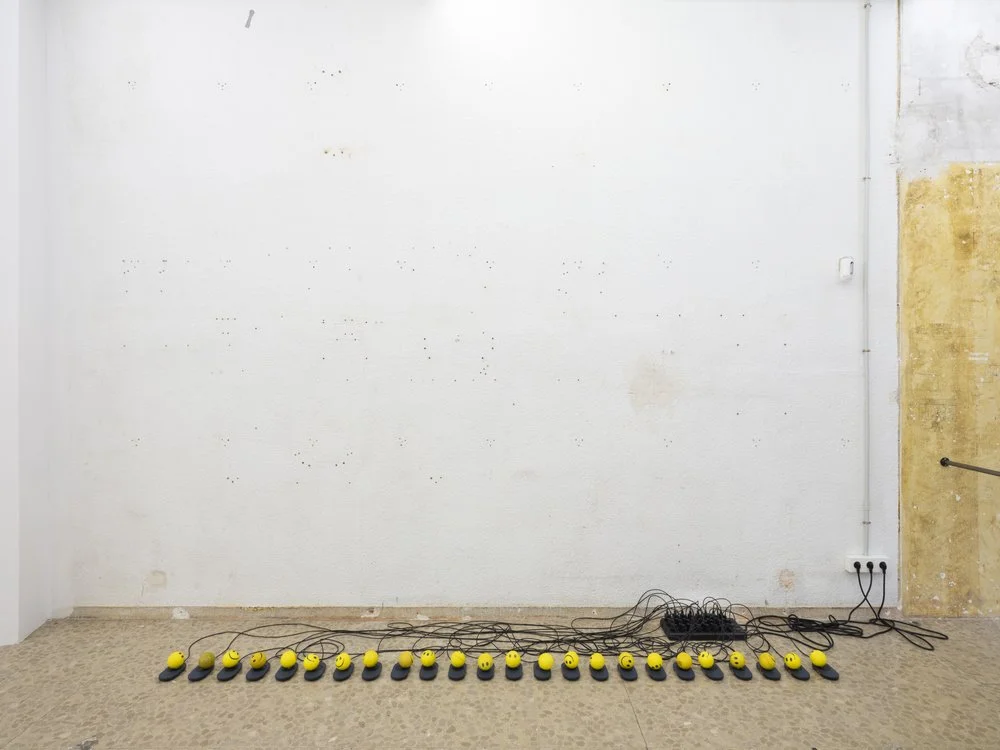
Tara Kelton, Mouse Jiggler (2025), pre-owned stress balls. 10' x 1'18". Photo by Aleix Plademunt.
Aurora Mititelu similarly examines systems of power, though through a practice that moves between computational structures and social imaginaries. She works with software and hardware alongside conceptual systems such as gender, identity, space, and social dynamics. Her practice exists between CGI culture, installation art, and critical theory, shaped in part by growing up in post-socialist Eastern Europe during the early internet era, when an influx of images of success, beauty, and freedom began reshaping collective aspirations.
In Abel & I (2024), an interactive simulation centered around her romantic relationship with Abel, the synthetic male version of herself, Mititelu constructs an environment where a virtual avatar receives and responds to texts sent by viewers of the installation in real time. What would normally feel direct and human is instead redesigned as something processed, and rendered through graphic software and code. The work reflects how deeply technology now occupies even the most intimate areas of our lives, mediating the ways we communicate, desire, and relate to one another. At the same time, it reveals the contradiction of these systems. Technology can be used to create feelings of closeness and connection, but can simultaneously be used to distance ourselves from vulnerability of intimacy. By introducing an avatar partner into the relationship, Mititelu transforms what would traditionally be seen as an intimate exchange into something uncanny and emotionally distant.
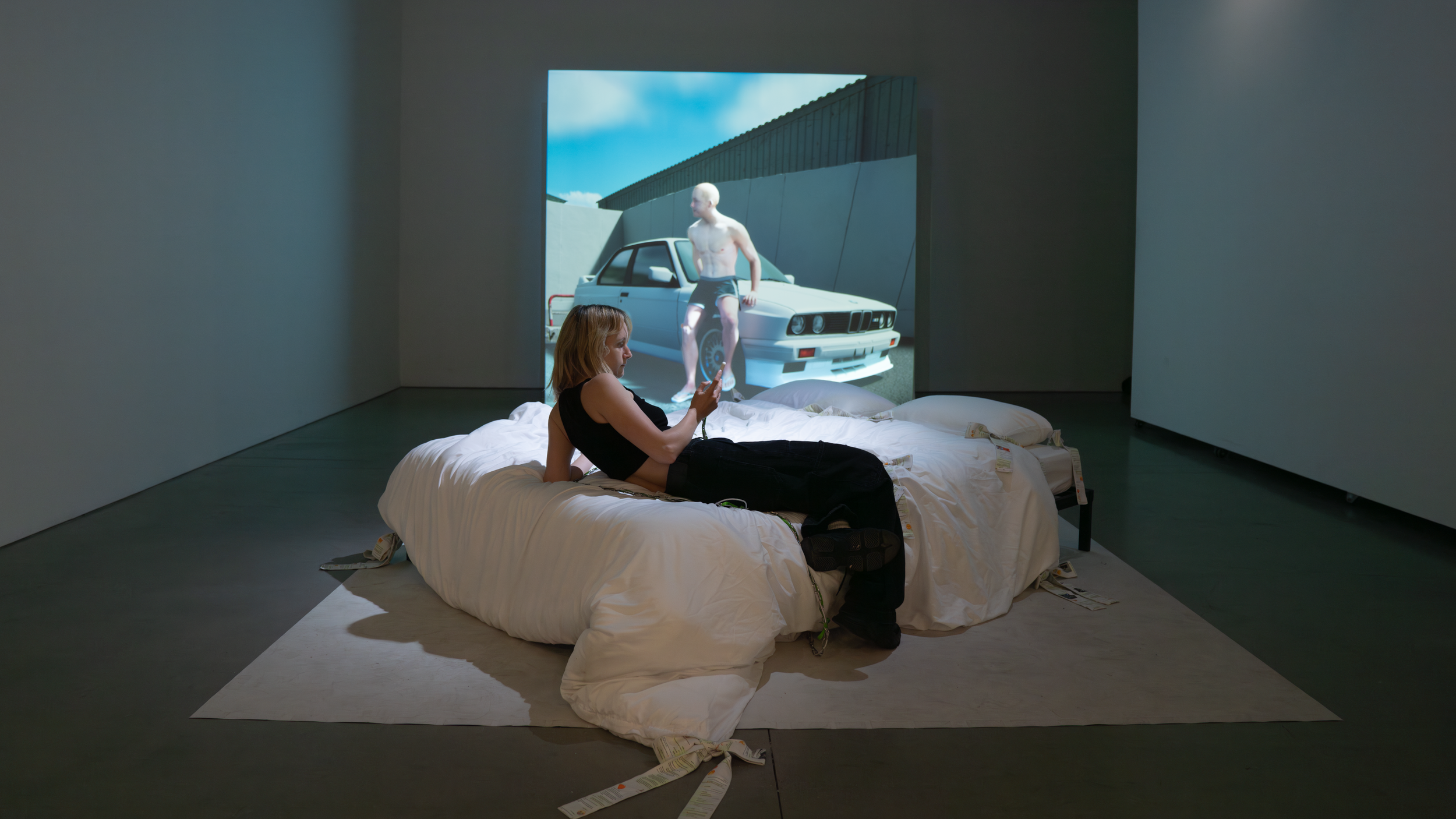
Aurora Mititelu, Abel & I, 2024, Interactive Installation / Simulation.
Across their different practices, these six artists utilize contemporary technologies not to use the innovation for itself, but to expose and question societal structures that long predate digital systems: labor exploitation, surveillance, intimacy, power, and identity. Their works reveal that what we ask of machines is never neutral or simple, but deeply entangled with human desires, fears, paradox, and dynamics of power. Every interaction that takes place through an interface or within an algorithm becomes a translation of human intention, that simultaneously reflects and reshapes the world that produced it.

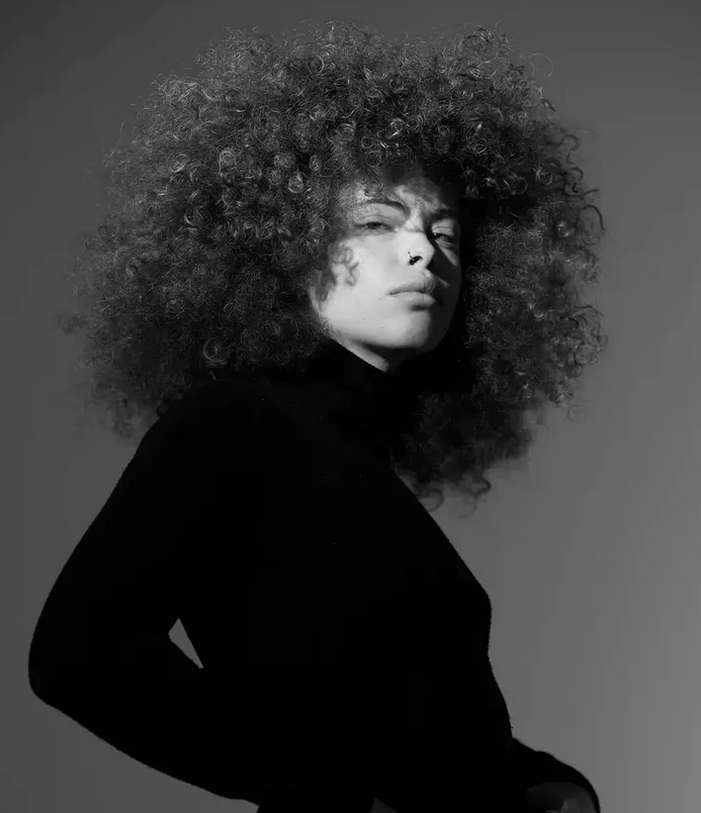
Elodie Goldberg Jacquemain is a Los Angeles-based designer, coder, and researcher whose practice weaves together open-source software, critical theory, and the poetics of translation. Trained in “design numérique”, Goldberg Jacquemain's work inhabits the space where code and language meet, interrogating how design is not only a technical or aesthetic discipline, but a linguistic and political act.