
November 2026
An Ode to Friendship
Poetry, prose, and micro-film by Janina Picard about Claudia Hill, with an introductory micro-interview between Saul Appelbaum and Christiana Mavromatis Arnold
Cover Photo by Lilli Moors
we close our eyes so we may see
this comes to you in a time of upheaval, of loud noise, of a life urging you to listen to the outside voices as a matter of survival.
it comes with a question.
what if this game asks but one thing of us: to live every moment from the heart and thereby weave ourselves back into the fabric of being alive,
being human, surrendering to nature‘s will.
In the act of surrender we find the dream: hovering beneath our waking mind, waving hello, waving goodbye.
A red thread of images that want to be seen, but never solved.
Images to be felt somatically. Images that want to be spoken to, invited to take a seat at the breakfast table, and given a way to exist in the world through poetry, painting, film, or the artist's work.
To source material from the depths of that quiet inner well, rather than the heights of an increasingly loud superintelligence, might be one of the most regenerative and revolutionary artistic practices of our time.
– Janina Picard
Saul Appelbaum: What makes something valuable?
Christiana Mavromatis Arnold: Commitment. The investment of time, energy, effort, and ultimately, a part of ourselves, is what makes something valuable. Whether it's a work of art, an article of clothing, a relationship, or a life, value is directly proportional to what has been put into it. Even unsuccessful endeavors are valuable when they've demanded extraordinary effort. Even ugly things are valuable when they've taken tremendous time to create. Even relationships that failed are profoundly valuable when built on genuine love, attention, and heartfelt investment. A sentence fragment scrawled in a handwritten note has more value than a wise maxim printed in a store bought card. Value has nothing to do with the outcome and everything to do with the commitment behind it, what it took to make it, sustain it, experience it. It's wholly independent of the outcome, it's reflective of measure of human investment. The time we've given, the energy we've expended, the care we've taken. It's what was sacrificed in exchange. Something becomes valuable because our commitment to it has made it matter.
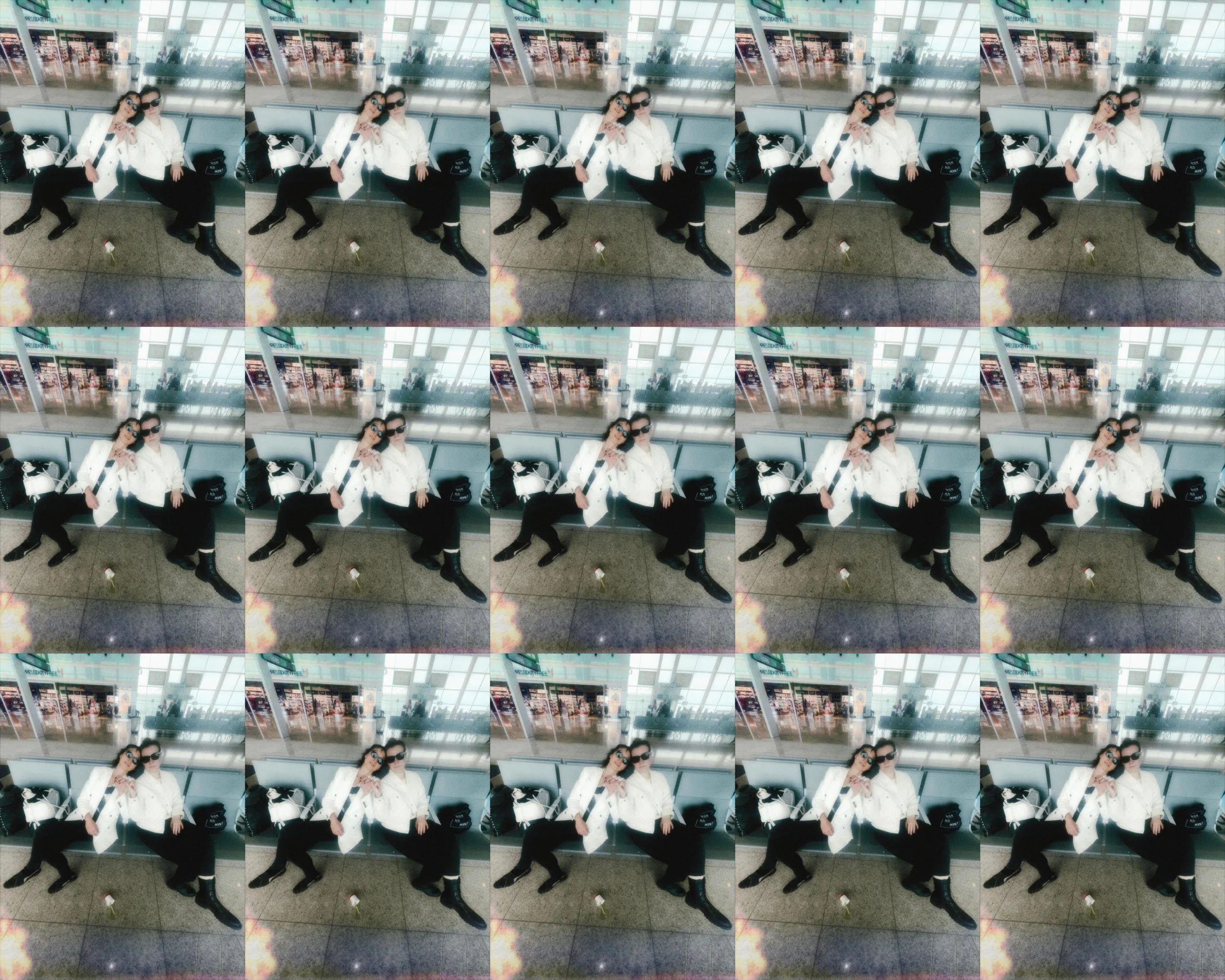
Janina Picard, featuring Claudia Hill, Human Matrix, 2026
One rainy afternoon some years ago; the accuracy of linear time seems rather irrelevant here - I met Claudia through the dreamspace. It was one of those encounters in which life seems to align through the smallest, most inconsequential decisions. One little choice to have my tea here rather than there. An introduction through a mutual friend. A rain shower. And suddenly, I found myself in her art studio.
I still remember the dress I wore that day. The smell of her textiles, warmed by the post-rain sun through large windows, and her caring smile. It was friendship at first sight, though perhaps remembrance is a more accurate word. As if we had met before, somewhere in a liminal space.
Here we were, in Berlin Mitte, at the corner of Choriner Straße, beginning our companionship in the flesh.
I don't think there is a higher art form, a more valuable work of art, than the creation of a true friendship.
Since that afternoon, we have held one another through life's many ups and downs. We have travelled, laughed and cried together, and dreamed many a dream. We share our visions for one another, our nightly dreams, our meals. We cook together, in and out of the kitchen.
Over time, a friendship can become its own kind of living artwork. Not something we make once and then admire from a distance, but something we continually tend to, revise, nourish and inhabit. It has its own seasons, its own rhythms, its own language. It is a composition that neither person could have made alone.
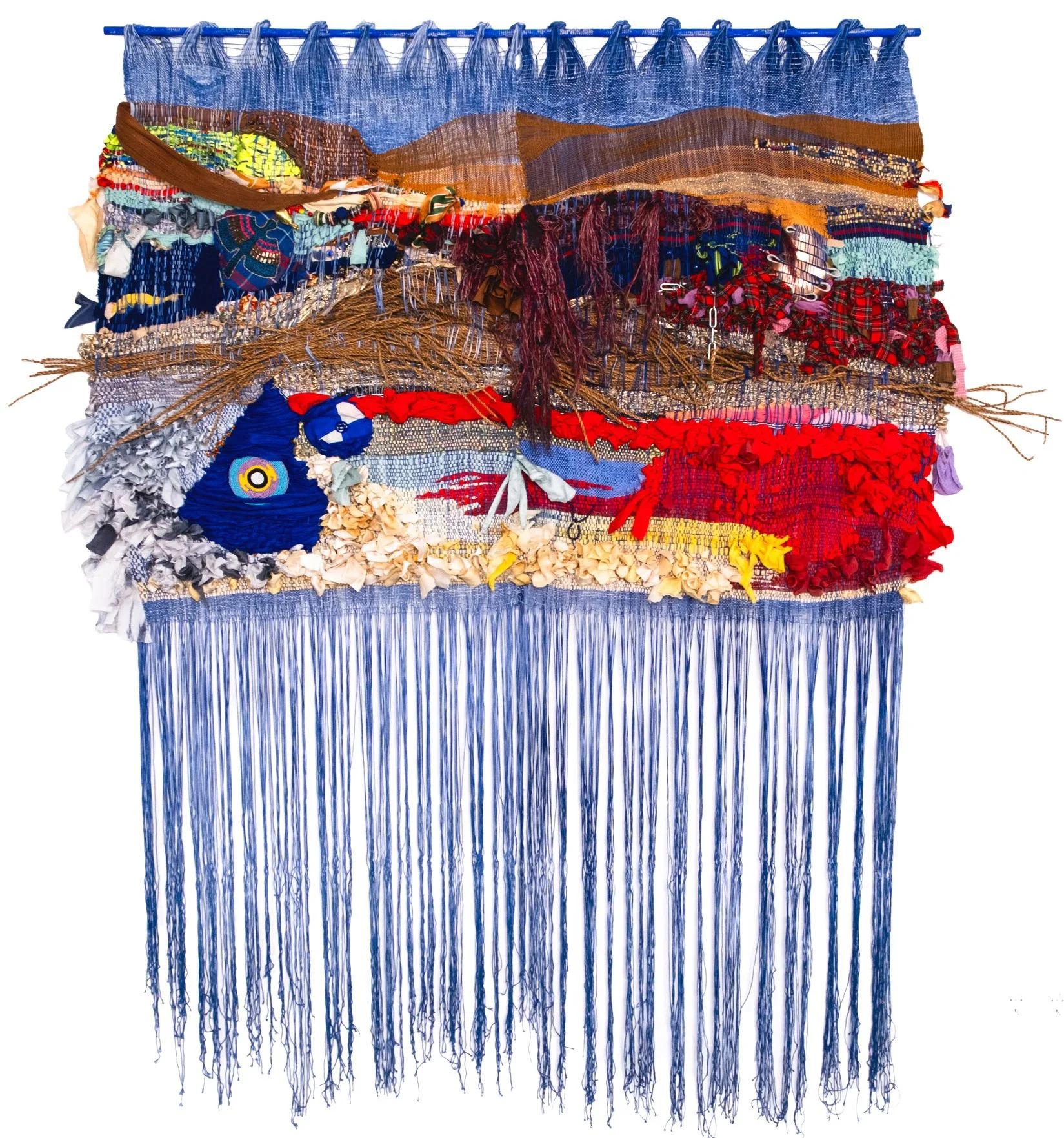
Claudia Hill, Freedom, Textile, Rattan, Metal, Leather, Beads, Buttons, Seed Pods, Candy, Wool, Cotton and Metallic Yarn 95 cm × 170 cm (excluding fringe; 180 cm high including fringe), 2025
My friend Claudia is an artist rooted in textile and weaving. She weaves large tapestries, exploring, through the material language of threads, the possibilities of connectivity. Her practice is concerned with what happens when separate elements are brought into relation: how individual materials, histories and gestures can become part of a larger composition without losing their particularity.
I find myself returning to this image when thinking about friendship.
Perhaps we, too, are continuously weaving. Bringing our separate histories, our particular colours, our losses, our joys and our dreams into a shared fabric. We do not necessarily have to agree on the pattern, nor do we need to know what the finished image will look like. There is a certain intelligence in the process itself, a trust in the movement of the hands, in the material, in what wants to emerge. A beautiful tapestry does not erase the individuality of its threads. It depends on their differences. Some cross, some disappear into the weave, some hold the structure together from behind. Each has its own tension, its own texture, its own place within the whole. Each thread is a needed contributor to what makes the whole a work of art.
There is a particular generosity in not trying to solve another person. In allowing them the dignity of their own mysteries, contradictions and transformations. We live in a culture that has become remarkably skilled at defining things, judging others and letting artificial intelligence analyze our most vulnerable thoughts. There is little patience for the unformed, the contradictory, the things that have not yet acquired a name.
And yet, so much of what makes life worth living begins precisely there.
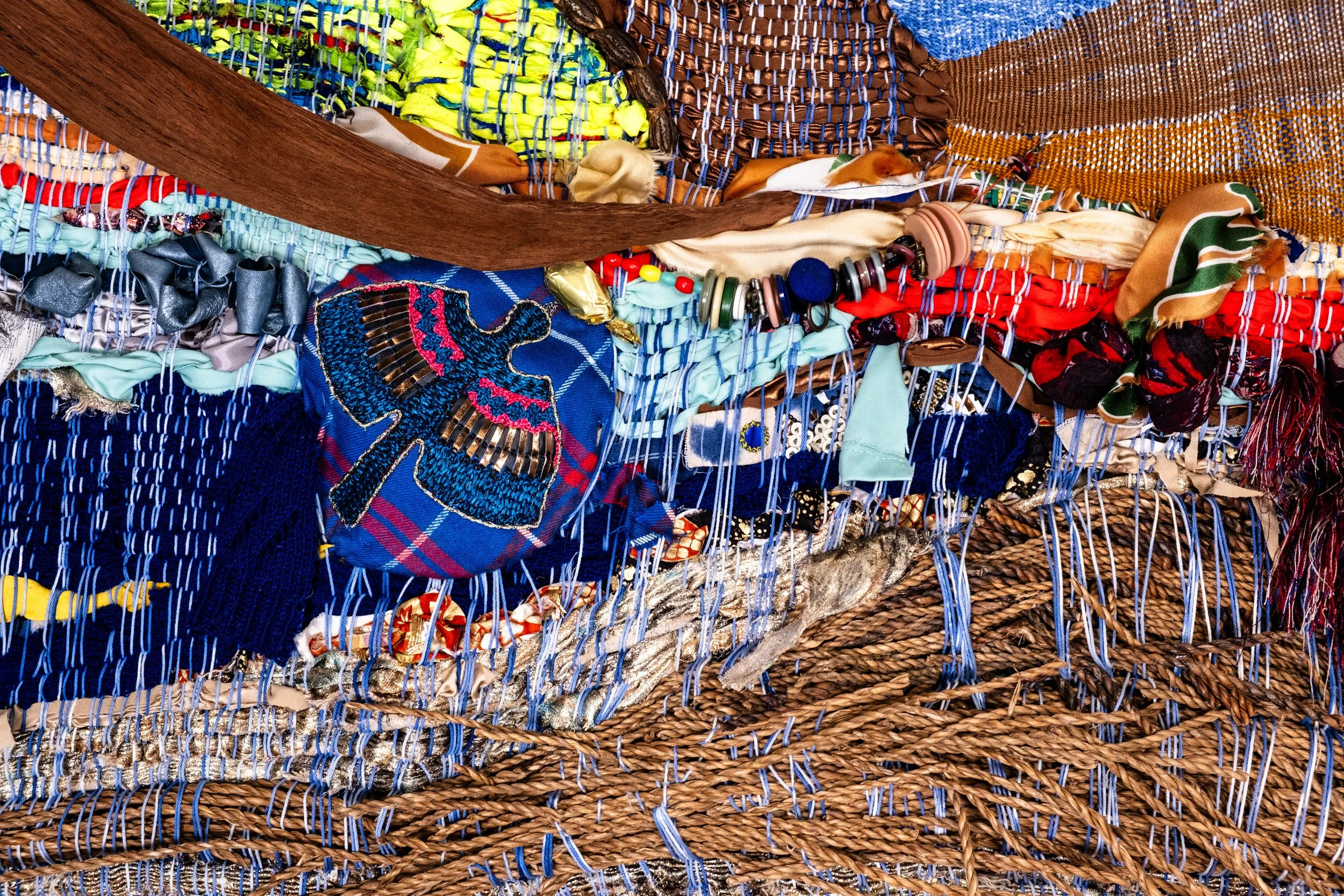
Claudia Hill, Freedom, Detail, Textile, Rattan, Metal, Leather, Beads, Buttons, Seed Pods, Candy, Wool, Cotton and Metallic Yarn 95 cm × 170 cm (excluding fringe; 180 cm high including fringe), 2025
A friendship can become a sanctuary for this unformed material. A place where an idea can be ridiculous before it becomes brilliant, where a desire can be expressed before it becomes a plan, where a dream can be shared without the obligation of making it come true. There is a particular intimacy in being able to speak about something that does not yet exist and having another person receive it as though it already belongs to the world.
This is how entire empires are sometimes born: not through declarations, but through conversations. Through long breakfasts, aimless walks, late-night exchanges, shared silences and the strange feeling of recognising something in another person that you had not yet been able to recognise in yourself.
Friendship expands the imagination because it allows us to borrow one another's eyes. We encounter different ways of seeing, different relationships to time, different possibilities of being. Another person's enthusiasm can awaken something dormant in us; their curiosity can make a familiar landscape appear entirely new. We begin to inhabit realities that might never have occurred to us alone.
In this sense, friendship is not merely companionship. It is a creative force.
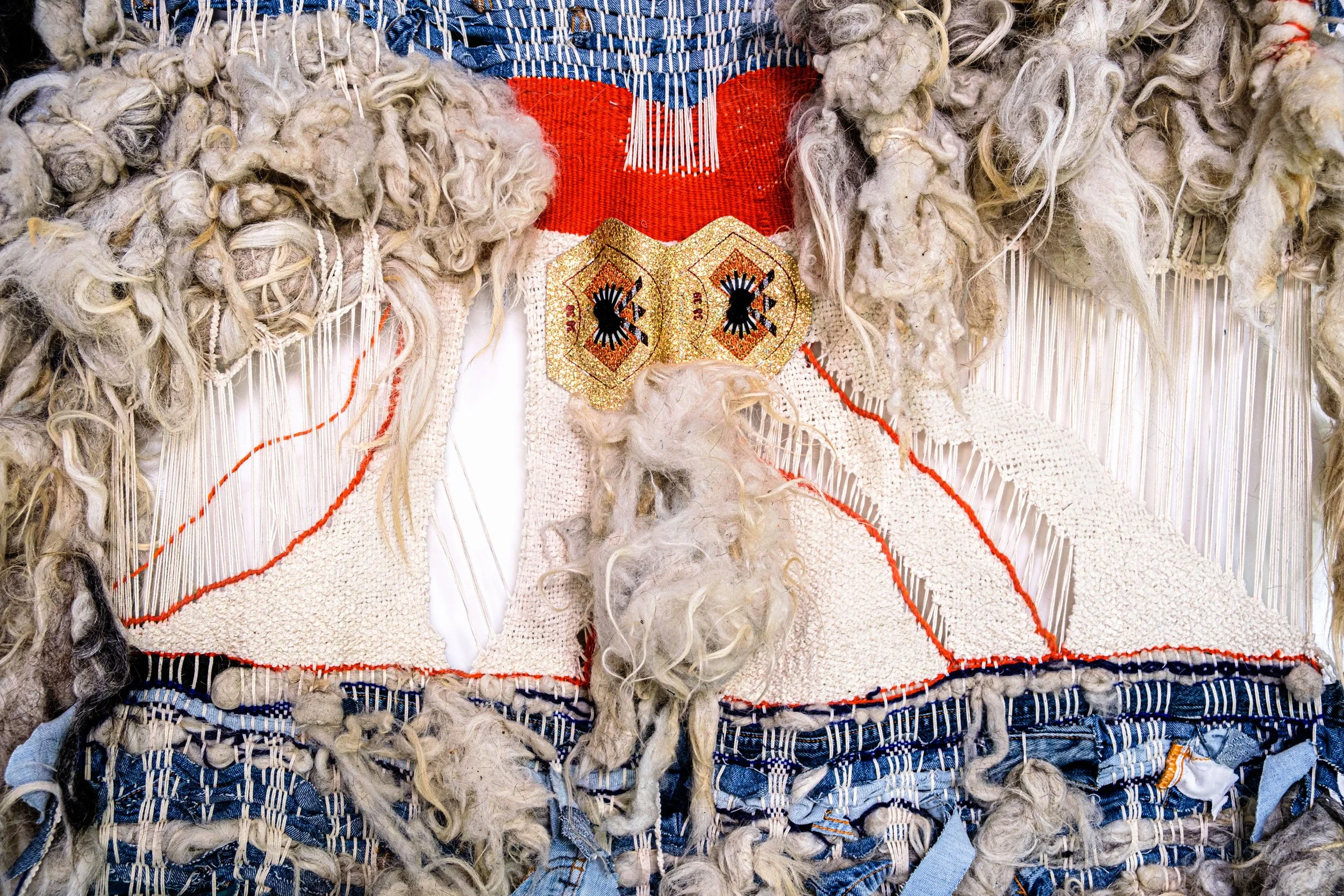
Claudia Hill, Handling with Care, Wool, Denim, Leather, Cotton Yarn, 240 cm × 200 cm (excluding fringe), 2024
This might be why certain encounters feel almost like remembering a dream. There is an immediate familiarity, not necessarily with the person themselves, but with a version of ourselves that seems to emerge in their company. We are reminded that imagination is not an exclusively private faculty. It is relational. It moves between us, takes shape in the space of encounter, and is nourished by the willingness to remain open to what neither person could have anticipated.
This has particular significance for the artist. Artistic practice is often described as an individual pursuit, an attempt to give form to something that originates within. But the conditions that allow art to emerge are rarely solitary. Behind an artwork there may be a friendship, a conversation, a lover, a stranger, a teacher, a community or a fleeting encounter that has left an image behind. Creating art is a form of seeking to belong. The artist may work alone, but the imagination is continually in dialogue with the grid surrounding them, with the inner well, with God.
To create is, in some sense, to enter into a relationship with the unknown. To follow an intuition without knowing where it leads, to give attention to something that has not yet become visible. It requires a willingness to surrender control, to let the material speak back, to allow the work to surprise its maker.
Is this not also what friendship asks of us?
To listen without solving. To accompany without directing. To believe without demanding proof. To stay curious about the person in front of us, even after years of knowing them. To understand that intimacy is not the end of discovery, but perhaps its beginning.
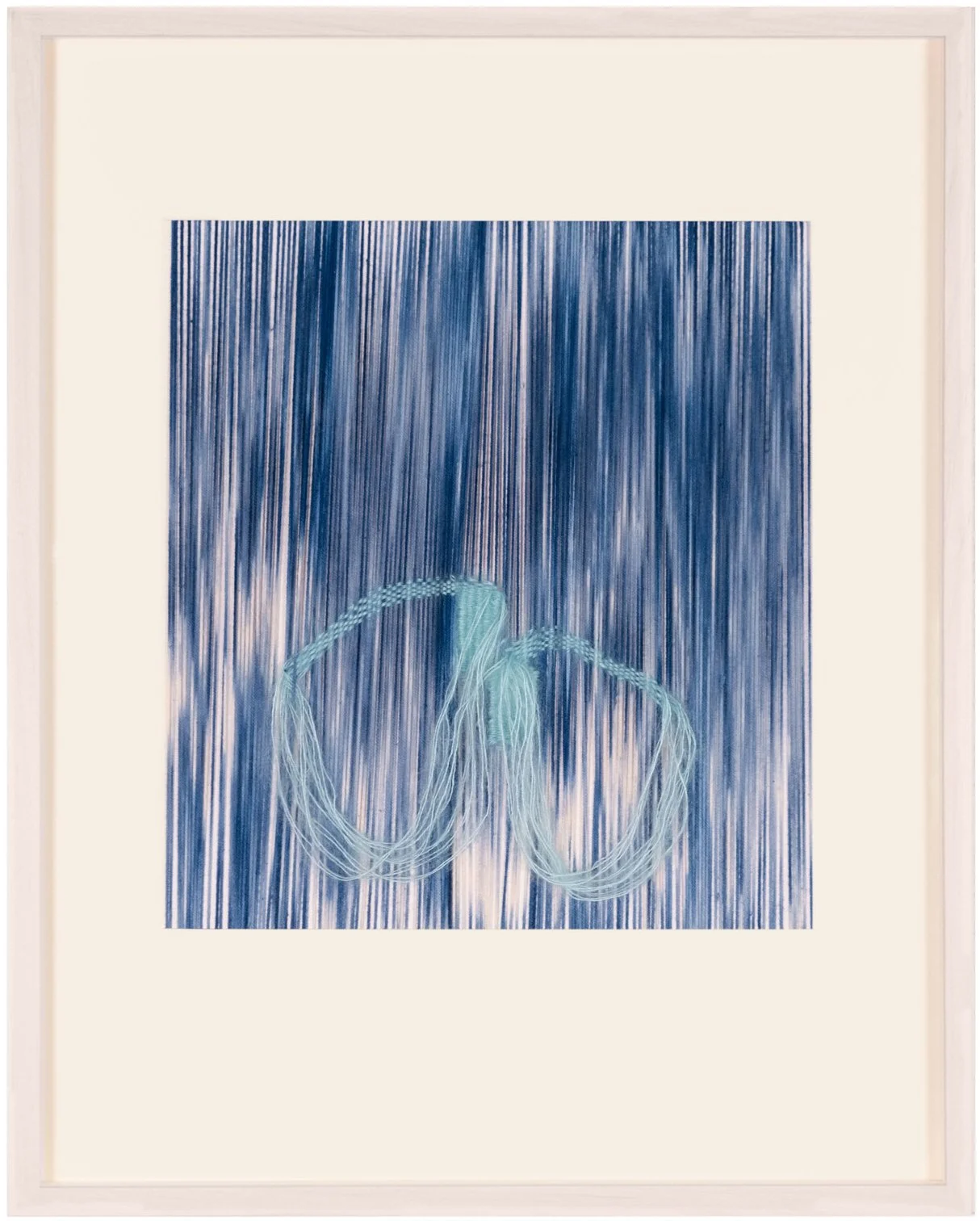
Claudia Hill, We Walk Together, Handwoven cotton and wool on archival mount board, Whitewashed wooden frame with museum glass 50 cm × 40 cm (framed), 2026
I think about Claudia's loom, about the repetitive movement of weaving, the passing of one thread through another, the patience required to make something that cannot be hurried into existence. There is a quiet resistance in this kind of work. Against speed, against the pressure of immediate results, against the idea that value must always be measured by productivity or visibility.
I believe that our friendships need the same protection. Time that is not accounted for. Conversations that do not have an objective. The freedom to wander, to dream, to be occasionally unproductive together. The permission to let something unfold without knowing what it is becoming.
I return, in my mind, to that afternoon in Berlin. The rain, the studio, the textiles, the dress I wore, the sunlight finding its way back into the room. A series of small decisions that, viewed from a distance, seem to have conspired towards something neither of us could have planned.
I wonder how many such encounters pass through our lives unnoticed. How many dreams wave hello and goodbye beneath the surface of our waking attention. How many friendships are waiting for us somewhere in the fabric of the world, requiring only that we take a different turn, accept an invitation, stay for another cup of tea.
What if this game asks but one thing of us: to remain receptive to what wants to find us. Friendship is a beautiful expression of receptivity — the ongoing creation of a space in which two people can continue to dream, to change, and to become.
We close our eyes so we may see.
And sometimes, when we open them, someone is already there, holding the other end of the thread.

Claudia Hill is a Berlin based artist whose interdisciplinary work is rooted in textile, weaving and performance. Before focusing on her art practice, Hill worked extensively in fashion and costume design. From 1998 to 2011 she ran her own fashion label, presenting internationally in New York, Tokyo, Paris, Berlin and other cities. Her work in performance includes collaborations with choreographers and companies such as William Forsythe, The Wooster Group and Meg Stuart.
Hill uses weaving and textile as primal forms of creation to explore material, transformation and forms of connection. Her work ranges from woven paintings to large-scale sculptural tapestries and collaborative weaving projects.
Recent presentations include Here We Leave Solid Ground at Kate Werble Gallery, New York (2024), Weaving Roots at Bärenzwinger, Berlin (2022), Protozone7: Zones of Kinship, Love & Playbour at Shedhalle, Zurich (2022), and her solo exhibition Social Fabric Earth Return at Efremidis, Berlin (2021) to mark the publication of the eponymous book. Her work has also been presented at mumok Vienna, Paris Internationale and HAU Hebbel am Ufer Berlin. In 2025, Hill conducted artistic research with the Centro de Textiles Tradicionales del Cusco and Quechua communities in the Peruvian Andes.
Janina Picard is a German actor, director, writer, and producer whose multidisciplinary practice spans film, television, theater, voice, and performance. Born in Frankfurt, she trained at the State University of Music and Performing Arts Stuttgart, LAMDA, and The Actors Studio in New York, where she studied with artists including Ellen Burstyn, Alec Baldwin, and Sandra Seacat. Her work moves between character, language, image, and voice, informed by experience in screen acting, theater, dubbing, radio plays, and audio storytelling. Multilingual in German, English, French, and Italian, Picard works across cultural contexts while treating performance as a form of translation between interior experience and shared image. Her creative practice extends into directing, writing, and production, including a traveling theatrical work conceived around the life and poetry of Rose Ausländer. A trained singer and black belt in Taekwondo, she brings vocal presence, physicality, and emotional versatility to an evolving practice centered on transformation.
Christiana Mavromatis Arnold is currently Executive Creative Director at DEPT®, and has 15+ years of experience driving global transformation across tech, luxury & lifestyle brands. She has owned digital across 90+ markets, defined brand strategy for $6 billion Fortune 500, and led multi-disciplinary orgs as large as 120+.
Specializing in merging creative & commerce, she aligns brand storytelling, digital experience, and scalable creative operating models to elevate brand equity while delivering measurable revenue growth & market share expansion.
Partnering with founders, CEOs & executive leads, she infuses cultural relevancy & resonance into heritage positioning, modernize brand platforms & unlock full-funnel commercial impact at global scale.
Her brand roster includes Cartier, COACH, Compass, Duolingo, Estée Lauder, Johnnie Walker, Peloton, SoundCloud, Snapchat, and Stuart Weitzman.